On this page
Leprosy, also called Hansen's disease, is curable today, and the World Health Organization says it does not spread through casual contact. In the 1860s, most European doctors thought it was inherited. Gerhard Armauer Hansen, a doctor in Bergen, Norway, found the bacterium that causes it. This post covers how he worked, why proof was so hard, the serious mistake he made, and how his finding reached India. For the treatment and immunology side, see our posts on Alice Ball and Indira Nath.
Why was Bergen the place to study leprosy?
A 1964 biography in Leprosy Review explains that in the 19th century Norway had the highest prevalence of leprosy in Europe. By the middle of the century there were 2,850 patients in a population of 1.5 million, and Bergen had several leprosy hospitals. Hansen was born in Bergen on 29 July 1841 and qualified in medicine in 1866.
Worked example: how common was leprosy in Norway?
Prevalence per 10,000 people = (cases ÷ population) × 10,000.
2,850 ÷ 1,500,000 = 0.0019.
0.0019 × 10,000 = 19 per 10,000.
The WHO leprosy fact sheet defines elimination as a public health problem as fewer than 1 case per 10,000 people. Norway at mid-century was about 19 times that level. A common slip is to multiply by 1,000 instead of 10,000 and get 1.9, a rate per thousand.
Where did the idea of infection come from?
According to a 2010 article in Leprosy Review, Hansen had read an 1869 book by the Dutch doctor Charles Louis Drognat Landré, based on leprosy cases in Surinam, which argued that contagion was the only cause. In an 1872 paper Hansen disagreed with parts of it but wrote, in the article's translation, that it was "Drognat Landré's book that made me aware that our research had not paid sufficient attention to the question of infection".
What did he find in 1873?
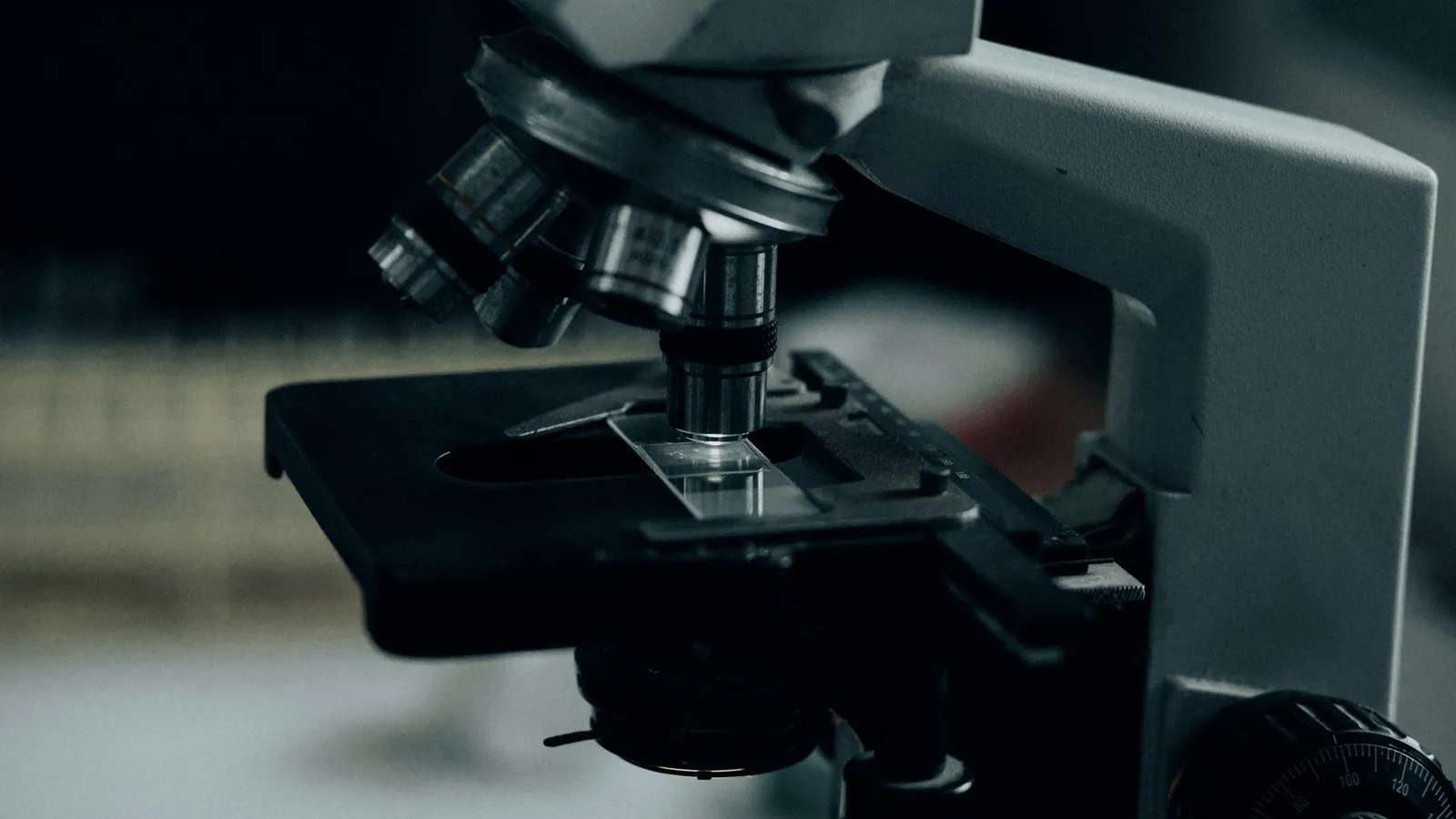
Hansen saw small rod-shaped bodies in leprosy nodules and then found them routinely in his patients' lesions. A 2024 short report in Leprosy Review marks 28 February 1873 as the date of the discovery. In his 1874 report on the causes of leprosy, the 1964 biography notes, he stated that rod-like bodies were present in the nodules, but held back from calling them proven causes.
He had good reason. Scientists then expected a disease germ to be grown in pure culture and to reproduce the disease in animals. Hansen tried many times to grow the bacillus and to infect rabbits, and failed. Those expectations later became Koch's postulates, and leprosy is a well-known case where they could not all be met. A 1963 note in Medical History records that after Hansen learned Robert Koch's new staining method in 1879, he could show the bacilli much more easily.
What went wrong in 1879?
The same 1963 note reprints the court judgment. On 3 November 1879, desperate for stronger proof, Hansen used a knife that had just cut a nodule from one patient to place material in the eye of another patient, a woman with a different form of leprosy. He had not asked her permission or told her what he was doing. She later told the court the eye hurt for seven weeks, which Hansen disputed.
In court Hansen admitted he had no right to do it without consent. On 31 May 1880 the Bergen court removed him from his post as resident physician at the leprosy hospital. He kept his national role as medical officer for leprosy until his death in 1912. Today no research on people is allowed without informed consent. His case shows why.
How did his discovery reach India?
The 2024 report tells this part. In 1873 Henry Vandyke Carter of the Indian Medical Service visited Bergen and was the first foreign visitor Hansen showed the organisms to. Carter came back convinced that leprosy spread between people and pressed for leprosy asylums and surveys, including a house-to-house survey in Kathiawar. Sanitary officials in India resisted, holding that leprosy was hereditary. In 1897 the First International Leprosy Congress in Berlin resolved that leprosy was infectious and caused by Hansen's organism. India passed the Lepers Act in 1898.
Today, the WHO says leprosy is curable with multidrug therapy of dapsone, rifampicin and clofazimine, and that India is one of three countries still reporting more than 10,000 new cases a year (2024 data).
Was there really a fight with Albert Neisser?
Many books say the German scientist Albert Neisser tried to steal Hansen's discovery. A 2026 study in Medical History re-read both men's papers and found that Neisser's first publication explicitly credited Hansen. The "theft" story came from a misreading by Hansen's biographer, though the two men did compete and became enemies.
What can a student take from Hansen's way of working?
Read widely and argue with what you read. A book from Surinam changed his question.
State the gaps in your own evidence. He delayed claims he could not yet prove.
Never let a goal excuse a shortcut on people. His court case is a lesson in consent.
Check famous stories against the sources. The Neisser myth lasted a century.
If bacteria, staining and immunity are hazy, the Fermi Concept Library covers every concept in physics, chemistry, biology, mathematics and computing, so you can review them one by one.
Next step: list Koch's postulates in your notes and mark which ones Hansen could and could not satisfy for leprosy.