

On this page
Leprosy is caused by a bacterium, and it is curable. Yet the same bacterium produces very different illnesses in different people. Some patients' immune systems hold it in check; others barely react. Indira Nath, an immunologist at the All India Institute of Medical Sciences (AIIMS) in New Delhi, spent much of her career on that difference. This post covers her path, her science and what students can learn from it.
What is leprosy?
The World Health Organization's leprosy fact sheet describes it as a chronic infectious disease caused mainly by Mycobacterium leprae, affecting the skin, peripheral nerves, the lining of the upper airways and the eyes. Left untreated it can cause progressive, permanent disability. It spreads through droplets from the nose and mouth during prolonged close contact with an untreated case, not through casual contact such as shaking hands or sharing meals. It is curable with multidrug therapy, and early treatment can prevent disability.
It is still a live issue. WHO reports around 200,000 new cases a year worldwide, and says that in 2024 Brazil, India and Indonesia each reported more than 10,000 new cases. People affected also face stigma and discrimination.
Who was Indira Nath?
The Indian National Science Academy's fellow profile (read via an archived copy) gives her early path. Born Neti Indira Rao, she earned her MBBS at AIIMS, did hospital training in the UK, and returned to AIIMS for an MD in pathology. A Nuffield Fellowship in the UK in 1970 exposed her to the new field of immunology. She chose to work on infectious disease, especially leprosy, which was a major concern in India. In London she worked with John Turk at the Royal College of Surgeons and R. J. W. Rees at the National Institute for Medical Research.
Back at AIIMS she joined G. P. Talwar's Department of Biochemistry, which had just started immunology research in India, moved to the Department of Pathology in 1980, and in 1986 became head of AIIMS's new Department of Biotechnology, which she founded. After retiring in 1998 she continued as INSA S. N. Bose Research Professor, later serving as dean of a medical school in Malaysia and as director of the Blue Peter Research Centre of LEPRA in Hyderabad.
What did her research ask?
The INSA profile sums up her research around three themes: why the immune system fails to respond in some patients, how leprosy reactions and nerve damage happen, and how to tell whether the leprosy bacillus is alive. That last question matters because M. leprae cannot be grown in a lab culture, so scientists need other markers of viability.
The central puzzle is the spectrum of disease. In tuberculoid leprosy, T cells respond to the bacillus. In lepromatous leprosy, T cells show an antigen-specific unresponsiveness, called anergy. Her group's papers track this question across decades. One 1986 review title states it directly: Reversal of T cell unresponsiveness in lepromatous leprosy.
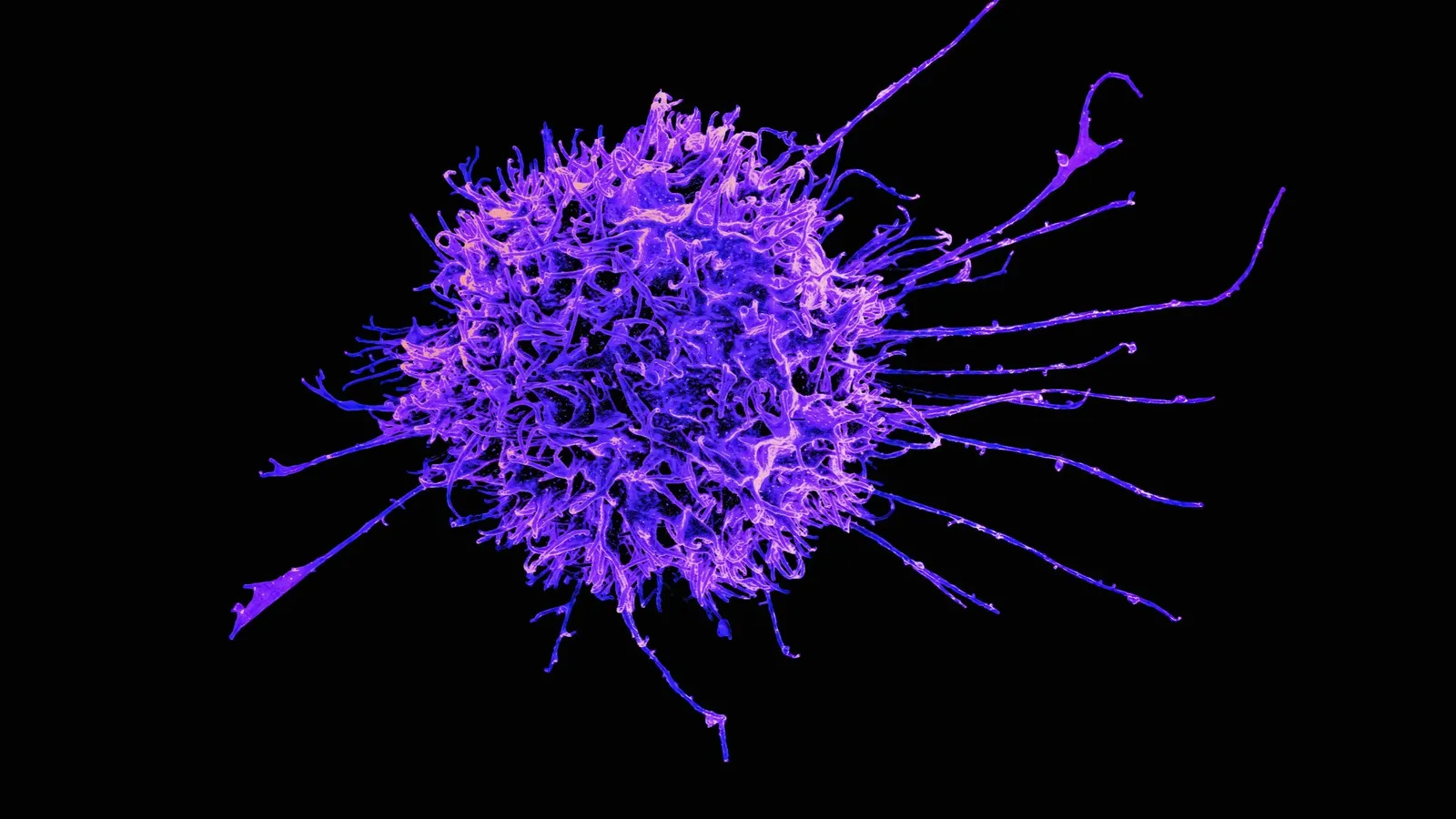
A later paper shows the kind of evidence she gathered. In a 2014 study in PLoS Neglected Tropical Diseases, C. Saini, V. Ramesh and Indira Nath compared 28 freshly diagnosed patients with borderline tuberculoid leprosy and 28 with lepromatous leprosy. Regulatory T cells, a type of T cell that dampens immune responses, were increased in the lepromatous patients and carried the signalling molecule TGF-β. The authors concluded these cells may turn down T cell responses and help explain the anergy of lepromatous leprosy.
How was her work recognised?
The INSA profile lists her honours, including the Shanti Swarup Bhatnagar Award (1983), the L'Oréal-UNESCO Award for Women in Science for the Asia-Pacific region (2002) and France's Chevalier de l'Ordre National du Mérite (2003). The Government of India's list of Padma awardees (archived copy) records a Padma Shri for Prof. Indira Nath in 1999. The International Society of Nephrology, which had invited her to give a plenary lecture, published an obituary noting that she died on 24 October 2021, and that she had mentored many students and worked on education, science policy and the challenges facing women in science.
What can a student take from her way of working?
Pick a problem that matters where you are. She chose leprosy because it was a major concern in India. Real problems close to home make strong research questions and strong motivation.
Learn a new field when the problem needs it. A pathologist by training, she learned immunology in the UK and brought it back.
Ask why, not just what. Describing lepromatous leprosy was not enough; she asked why the T cells stayed silent.
Build things that outlast you. She founded a department and trained students who carried the work on.
To connect her work to your syllabus, read our guide to human health and immunity, and see how Alice Ball developed an early leprosy treatment. If T cell types and cell-mediated immunity still blur together, the Fermi Concept Library has every concept in physics, chemistry, biology, mathematics and computing, so you can review them one by one.
Next step: make a two-column table in your notes comparing cell-mediated and antibody-mediated immunity, and add where leprosy fits.


