On this page
In the 1930s, a biochemist in Philadelphia took a murky broth that doctors had used for decades and turned it into a clean, measurable protein. That protein, purified protein derivative or PPD, is what goes into the tuberculin skin test still given today.
Who was Florence Seibert?
Florence Barbara Seibert (1897-1991) was born in Easton, Pennsylvania, and contracted polio at an early age, which left her with a lifelong limp, according to the American Philosophical Society, which holds her papers. She earned a chemistry degree at Goucher College and went on to doctoral work at Yale under Lafayette B. Mendel. There she worked out which proteins caused fevers in patients injected with protein solutions made with distilled water, and invented a distilling apparatus that prevented bacterial contamination.
In 1932 she moved with Esmond R. Long to the Henry Phipps Institute of the University of Pennsylvania as an assistant professor of biochemistry. The two worked together for 31 years, developing methods to separate and purify the protein from the TB bacterium, the same APS profile records.
What was wrong with Koch's tuberculin?
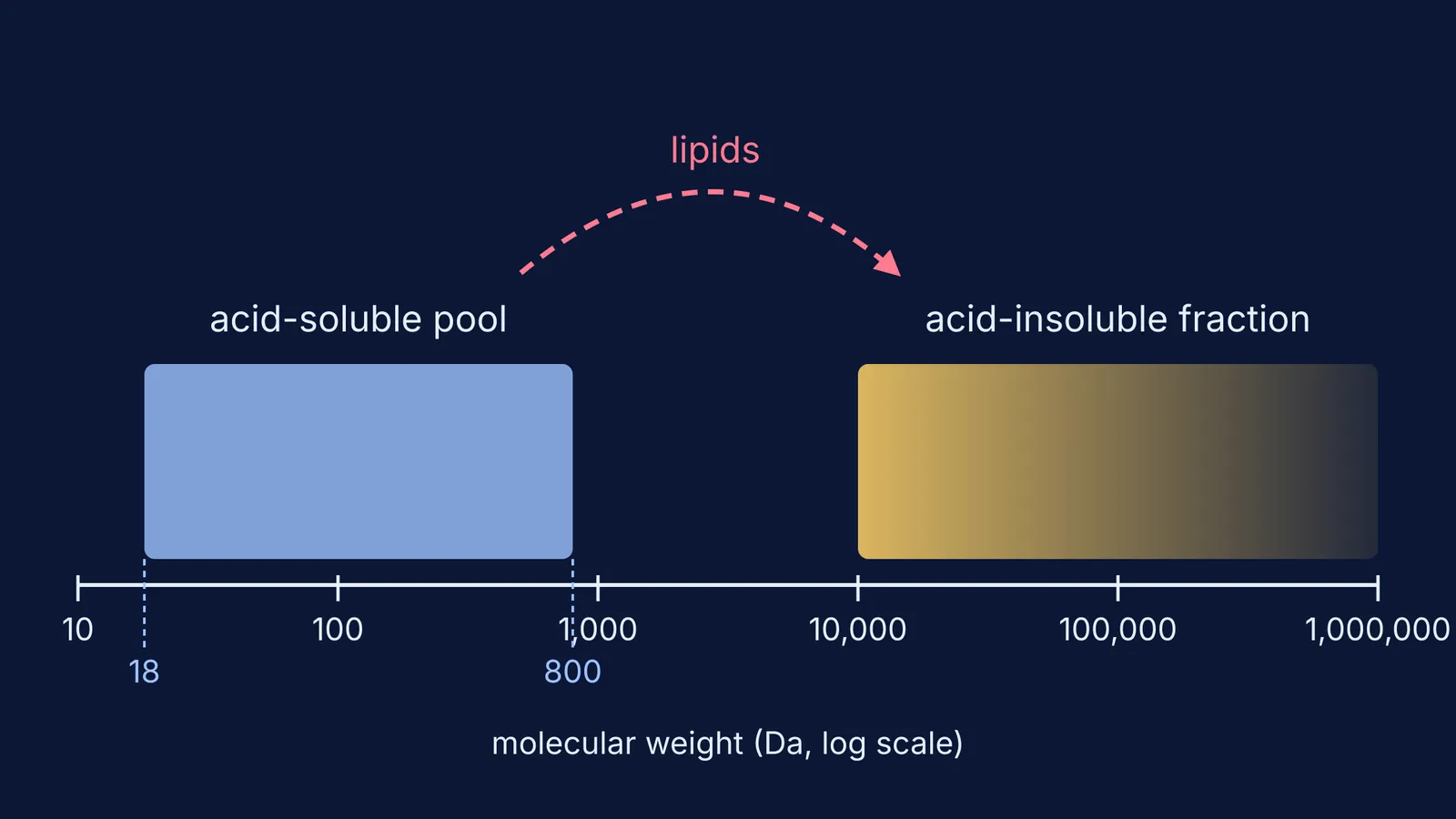
Robert Koch, whose work tied TB to a bacterium (see our post on Robert Koch and his postulates), introduced "old tuberculin", or OT. A 2012 review in FEMS Immunology and Medical Microbiology describes OT as "a heated broth composed of a crude, undefined mixture of proteins and other macromolecules derived from the tubercle bacillus". The same review lists its problems: lack of purity, variation in potency and specificity, and inadequate standardization.
For a test, that is a serious flaw: if two batches differ in strength, results from two clinics cannot be compared.
How did Florence Seibert purify tuberculin?
The steps are described in the FEMS review and a National Academies report on tuberculosis:
Grow the bacteria on a synthetic medium. Her 1934 product was first called SOTT, short for "synthetic medium old tuberculin trichloroacetic acid precipitate", and later PPD.
Pull the protein out of solution, as trichloroacetic acid and ammonium sulfate precipitates of OT.
Refine the method. In the procedure Seibert and Glenn published in 1941, PPD was "produced by steaming cultures of Mtb in an Arnold sterilizer and purifying the proteins by repeating precipitation with ammonium sulfate".
Make one large reference batch. In 1941, Seibert and Glenn prepared a large batch called PPD-S that "has served as the standard reference material in the United States", according to the National Academies.
She also spent 1937 to 1938 at the University of Uppsala in Sweden with Theodor Svedberg, developing methods for purifying a crystalline tuberculin derivative (APS).
The standard batch was lot 49608, provided as the US reference product in 1944, and it was roughly 92.9% protein, 5.9% polysaccharide and 1.2% nucleic acid (FEMS review). The World Health Organization adopted PPD-S as the international standard of tuberculin in 1952, the same review reports.
How does the TB skin test work today?
WHO estimates that about a quarter of the world's population has been infected with TB bacteria, and India accounted for 25% of new TB cases worldwide in 2024 (WHO fact sheet).
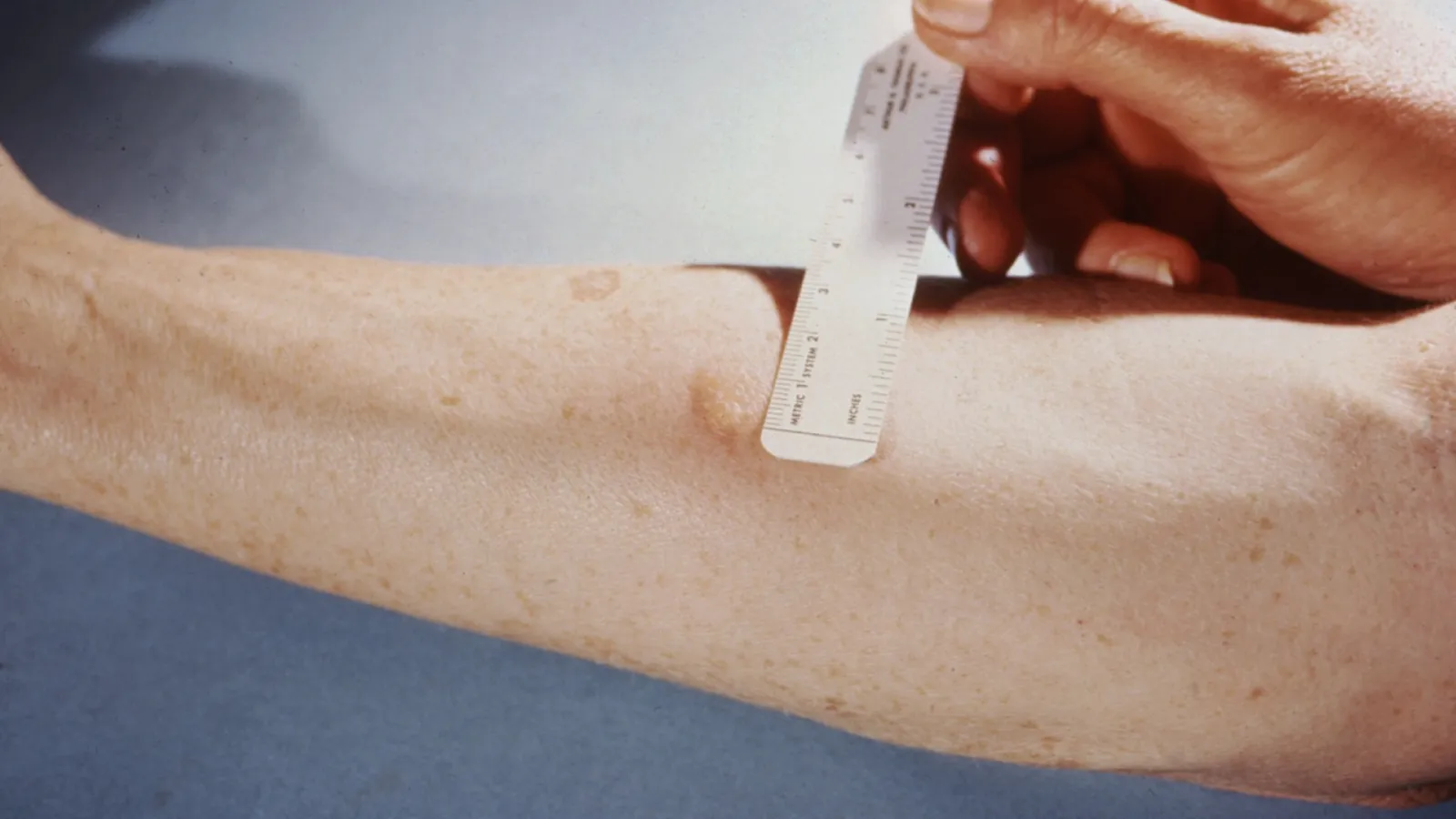
According to the CDC, a health worker injects 0.1 ml of tuberculin PPD into the inner surface of the forearm. A trained reader checks it 48 to 72 hours later and measures the induration, the firm swelling, in millimetres, not the redness. The FEMS review notes that 5 TU (tuberculin units) is the standard diagnostic dose in the US, while WHO and the International Union Against Tuberculosis and Lung Disease recommend 2 TU of a related product, PPD RT23.
The CDC also points to limits. A person with a positive result should be evaluated further, including a chest X-ray and sputum tests, before anyone knows whether they have TB disease. And there is no reliable way to tell a reaction caused by the BCG vaccine (our post on Calmette and Guerin's BCG vaccine explains it) from one caused by true infection.
Four questions Seibert's work teaches you to ask of any test
What exactly is measured? For the skin test, the immune reaction to TB proteins, read as millimetres of induration.
Is the reagent standardised? PPD-S gave tuberculin one fixed reference.
When and how is it read? Between 48 and 72 hours, by a trained person, with a ruler, as the CDC guidance sets out.
What can it not tell you? On its own it does not show whether someone has TB disease, and it cannot separate a BCG reaction from infection.
This is everyday understanding, not medical advice. If you or a family member has a result to interpret, or a cough that will not go away, talk to a doctor or your nearest government health centre.
If protein structure or immune responses feel shaky, the Fermi Concept Library gives each concept in biology and chemistry its own lesson and its place in the map, so you can see how proteins connect to immunity.
Next time you see a ruler held against a forearm, remember the chemist who worked to make every batch of tuberculin the same.