

On this page
Fe del Mundo was a paediatrician, a doctor for children. She was born in Manila on 27 November 1911 and died on 6 August 2011, aged 99, according to her Wikipedia biography and The Philippine Star's obituary. A 2024 review in Cureus describes seven decades of service and says she kept serving until her death. If you are thinking about medicine, her story shows what one doctor did once she decided the system around her patients had to change.
Who was Fe del Mundo?
She earned her medical degree from the University of the Philippines in 1933. She then did postgraduate work in paediatrics at Boston Children's Hospital and Harvard Medical School, returning in 1939 for a two-year research fellowship, and took a master's degree in bacteriology from Boston University in 1940, as her Wikipedia biography records. You will often read that she was the first woman to study at Harvard Medical School. The same article quotes a Harvard archivist who says the evidence for this is largely anecdotal, so treat that claim with care.
She came home as the Second World War reached the Philippines. The Cureus review describes how she volunteered with the Red Cross to care for sick children in the internment camps and set up a hospice at the University of Santo Tomas. People came to call her the "Angel of Santo Tomas".
How did she found the first children's hospital in the Philippines?
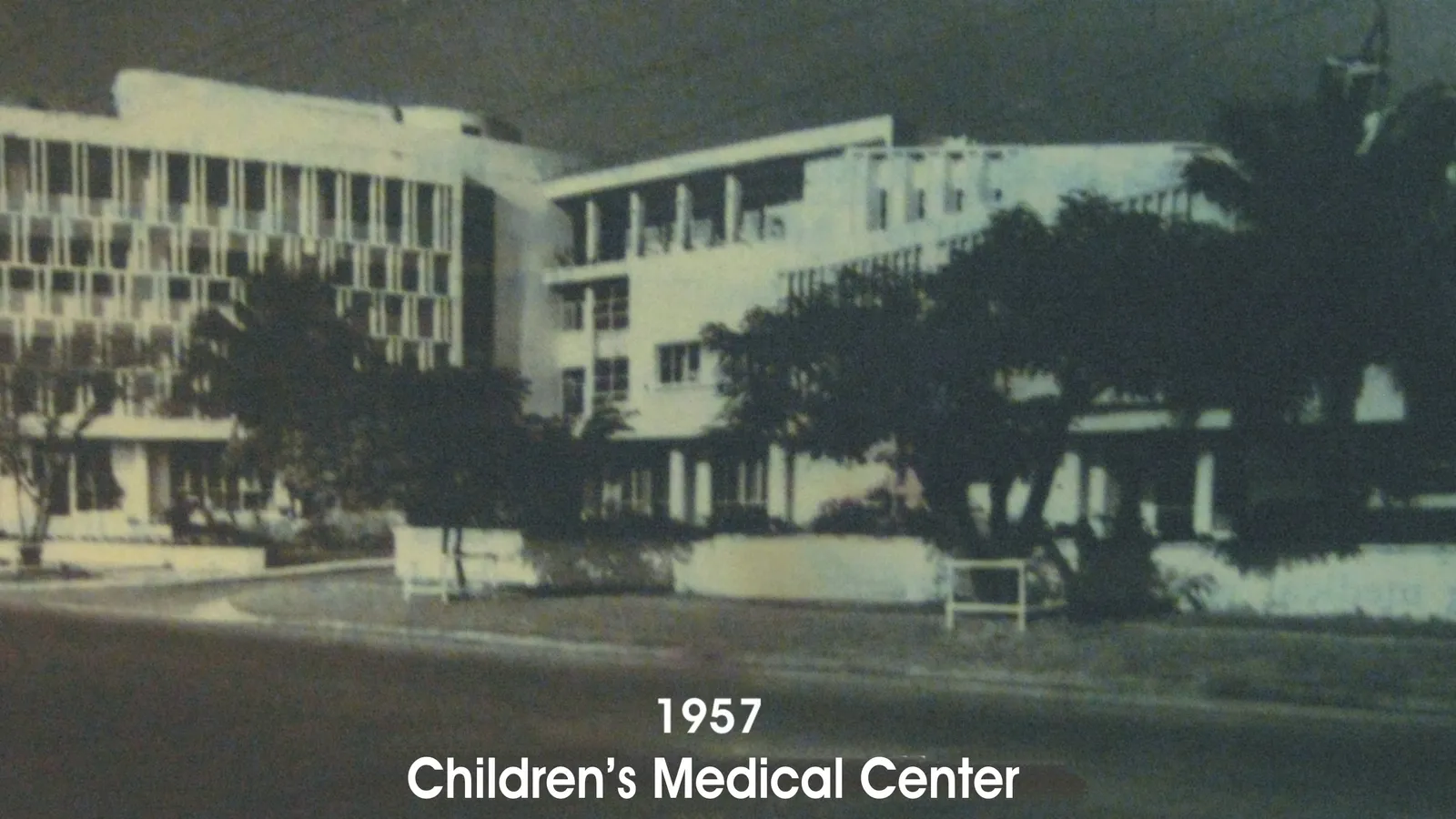
In 1957, after selling her home and properties, she opened the Children's Memorial Hospital in Quezon City, the Philippines' first paediatric hospital, according to the Cureus review. Google Arts & Culture describes it as a 107-bed hospital. It is now called the Fe del Mundo Medical Center.
In 1966 the Institute of Maternal and Child Health followed, which the Cureus review calls the first of its kind in Asia. The review also says she is said to have lived on the second floor of the hospital and kept working there into her last years.
What did Fe del Mundo do for childhood diseases and immunisation?
The Cureus review says she wrote over 100 scientific papers on communicable diseases in children, setting "the groundwork for the vaccination and tuberculosis programs in the country". Her Wikipedia biography lists dengue, polio and measles among her subjects and credits her with a fuller understanding of how dengue affects young children. The Philippine Star reported that her studies included measurements of 10,839 newborn babies.
She also designed for the places where her patients lived. The Cureus review describes a bamboo incubator made from two layers of bamboo baskets lined with heated water bottles, so babies in rural areas could be kept warm without electricity. She linked her hospital with community health workers, and the institute she led set up clinics and trained thousands of personnel to serve remote areas. She published the Philippines' first textbook of paediatrics in 1976.
She won the Ramon Magsaysay Award for Public Service in 1977 and in 1980 became the first woman named a National Scientist of the Philippines, as her Wikipedia biography records.
What can a student learn from Fe del Mundo?
You don't need to be heading for medicine to use her method. Here is a four-step pattern from her work, turned into a plan for a school project.
Find the gap. She saw sick children with no children's hospital to go to. Write down one problem near you in a single sentence: "Students in our building have no quiet place to revise after 6 pm."
Build with what is there. Her incubator used bamboo baskets and heated water bottles because rural homes had no power. List three materials or resources you can actually get this week.
Teach others to carry it. She trained health workers instead of trying to reach every village herself. Plan how two friends could run your idea without you.
Write it down. She published her findings so other doctors could use them. Keep a one-page log: what you tried, what happened, what you would change.
A worked example: a Class 11 student studying immunity might take step 1 as "younger students in my school don't know how a vaccine trains the immune system". Step 2 is a one-page diagram drawn from the biology textbook and checked by a teacher. Step 3 is two classmates who present it at the school science fair. Step 4 records which questions came up.
If the biology behind her work, such as how vaccines train the immune system, is still hazy, the Fermi Concept Library covers every concept in physics, chemistry, biology, mathematics and computing, so you can fill that gap before you build on it.
Who else changed medicine like this?
Fe del Mundo belongs with doctors who worked against the odds of their time. Read how Anandibai Joshi earned her 1886 medical degree, how Edward Jenner developed smallpox vaccination, and how M K Bhan led the work on Rotavac, India's own rotavirus vaccine.


