On this page
Before electronic computers, a "computer" was a person, at Langley usually a woman with a degree in maths or science, who turned raw test data into numbers engineers could use. Dorothy Vaughan was one of them, then led a whole unit of them, then saw machines coming and learned to program them. This post covers her career, what the work of a human computer actually involved, a worked example of that work using physics from your syllabus, and what her way of working teaches.
Who was Dorothy Vaughan?
NASA's biography by Margot Lee Shetterly gives the basics. She was born on 20 September 1910, earned a BA in mathematics from Wilberforce University in 1929, and was teaching maths at Robert Russa Moton High School in Farmville, Virginia, when she took what she thought would be a temporary war job. She joined the Langley Memorial Aeronautical Laboratory in December 1943.
Langley had started hiring Black women two years after Executive Order 8802 banned discrimination in the defence industry. Jim Crow laws still applied: Vaughan was assigned to the segregated "West Area Computing" unit, whose members at first had to use separate dining and bathroom facilities.
What did a human computer do?
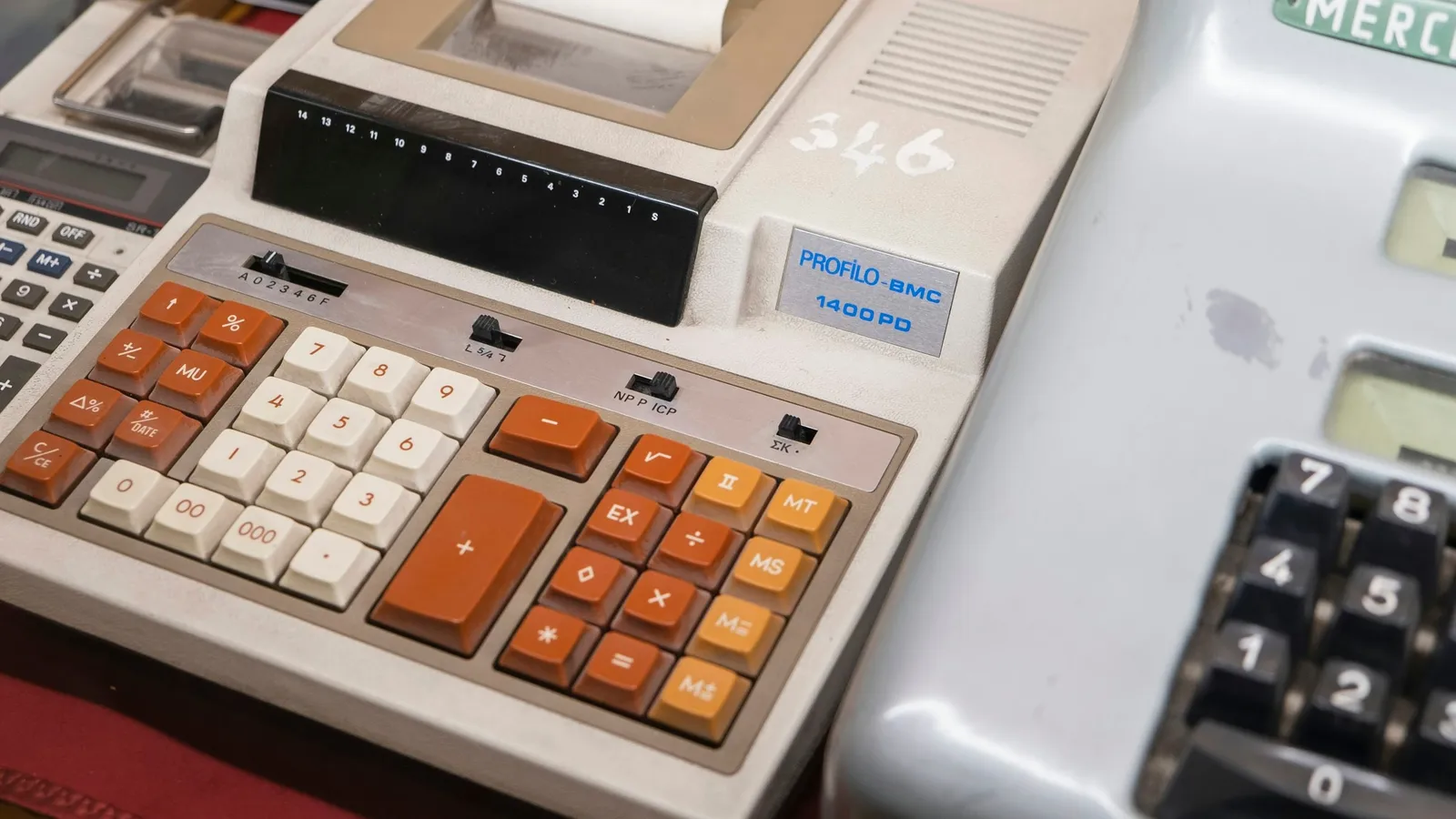
A NASA history article, When the Computer Wore a Skirt, describes the job. Langley's first "computer pool" of five women started in 1935; by 1946 about 400 women had been trained. The work had three parts: reading film, running calculations and plotting data. In wind tunnel tests, manometer boards measured pressure with liquid-filled tubes. Computers read photographs of those tubes, worked through the calculations with slide rules and calculating machines such as the Friden, and plotted the results on graph paper for engineers.
Worked example: from a manometer reading to an airspeed
This is an illustration of the kind of step involved, using Class 11 fluid mechanics, not a reconstruction of a specific Langley calculation.
A Pitot tube faces the oncoming air in a wind tunnel. It connects to a water manometer, which shows a height difference of h = 5.0 cm. Take water density 1000 kg/m^3, g = 9.81 m/s^2 and air density 1.225 kg/m^3.
Pressure difference from the manometer: Δp = ρ_water × g × h = 1000 × 9.81 × 0.050 = 490.5 Pa.
For a Pitot tube, Bernoulli's equation gives Δp = ½ ρ_air v^2.
Rearrange: v = √(2Δp / ρ_air) = √(981 / 1.225) = √800.8 ≈ 28.3 m/s.
Common mistakes:
Using 5.0 instead of 0.050. Convert centimetres to metres before multiplying.
Using the water density in step 3. The speed is of the air, so use the air's density.
Forgetting the ½, which makes the speed too small by a factor of √2.
Now imagine doing this for every reading on a film strip, by hand, then checking it. That was a normal day.
How did she lead West Area Computing?
In 1949 Vaughan was promoted to lead the group, becoming NACA's first Black supervisor and one of its few women supervisors. The NASA biography says the title gave her rare laboratory-wide visibility. She worked with computers Vera Huckel and Sara Bullock on a handbook of algebraic methods for calculating machines. She argued for promotions and pay rises for the women in her unit and for white computers in other groups who deserved them. Engineers asked for her personally on hard assignments. Katherine Johnson was one of the people she placed: two weeks after Johnson arrived in 1953, Vaughan assigned her to the Flight Research Division, as we describe in our post on Katherine Johnson and orbital calculations.
How did she move from hand calculation to programming?
When NACA became NASA in 1958, segregated facilities, including the West Computing office, were abolished. Vaughan and many former West Computers joined the new Analysis and Computation Division, a racially and gender-integrated group working on electronic computing. She became an expert FORTRAN programmer and contributed to the Scout launch vehicle programme. The Smithsonian's National Air and Space Museum notes that she taught herself the language.
She retired in 1971. The NASA biography adds that she sought, but never received, another management position. In 2019, the Hidden Figures Congressional Gold Medal Act awarded her a posthumous Congressional Gold Medal; its findings record that she headed West Area Computing for nine years and became an expert FORTRAN programmer.
What can a student take from her way of working?
Accuracy is a skill you practise. Human computers checked every result before it went back to engineers. Do the same with units and powers of ten.
Learn the next tool before you need it. Start with small programs that automate a calculation you already understand by hand. Our post on Alan Turing and the idea of a computer shows where those machines came from.
Speak up for others. Her advocacy for colleagues was part of her leadership, not separate from it.
If Bernoulli problems like the one above keep tripping you up, the Fermi Problem Library has worked problems with a step-by-step solver that explains the reasoning rather than printing an answer.
Next step: redo the worked example with a 2.0 cm manometer reading, then write a five-line program that does it for any height you type in.