On this page
Every ambulance that passes you, every weather radar and every measurement of a star's speed relies on an idea Christian Doppler presented in Prague in 1842. Yet the application he cared about most, explaining the colours of stars, did not work. This post covers who Doppler was, what he proposed, how it was tested, a worked example showing why sound proved him right and starlight did not, and what a student can take from his way of working.
Who was Christian Doppler?
The MacTutor biography from the University of St Andrews gives his dates: born 29 November 1803 in Salzburg, died 17 March 1853 in Venice. His family were stonemasons, but he was too frail for the trade. He studied at the Vienna Polytechnic Institute and the University of Vienna, then struggled for years to find a permanent post. He worked as a bookkeeper in a cotton mill and was close to emigrating to America when, in 1835, he was offered a teaching post in Prague.
His teaching load there was heavy. MacTutor records that in early 1843 he examined 256 students in 17 days, both in writing and orally, and that by 1844 his health had failed under the strain. He later moved to Banská Štiavnica and then Vienna, where on 17 January 1850 he became the first director of the new Institute of Physics at the University of Vienna.
What did Doppler propose in 1842?
On 25 May 1842 he presented the paper On the coloured light of the double stars and certain other stars of the heavens to the Royal Bohemian Society of Sciences in Prague. A 2004 review by Ioan Mircea Coman in the European Journal of Echocardiography gives the same date and title, and notes that the paper described the shift of frequency that now bears his name.
The idea is that if a source of waves moves towards you, each crest is emitted a little closer than the one before, so crests arrive more often and you receive a higher frequency. Moving away, you receive a lower one. Doppler derived this in a few lines for both sound and light.
MacTutor is clear about what he got wrong. He treated light as a longitudinal wave in the ether, though Fresnel had already shown it is transverse; this does not affect the principle. And his main application failed: the colour shifts of double stars are far too small to see. He also predicted that his principle might one day let astronomers measure the motions of distant stars, and that prediction came true.
How was the Doppler effect tested?
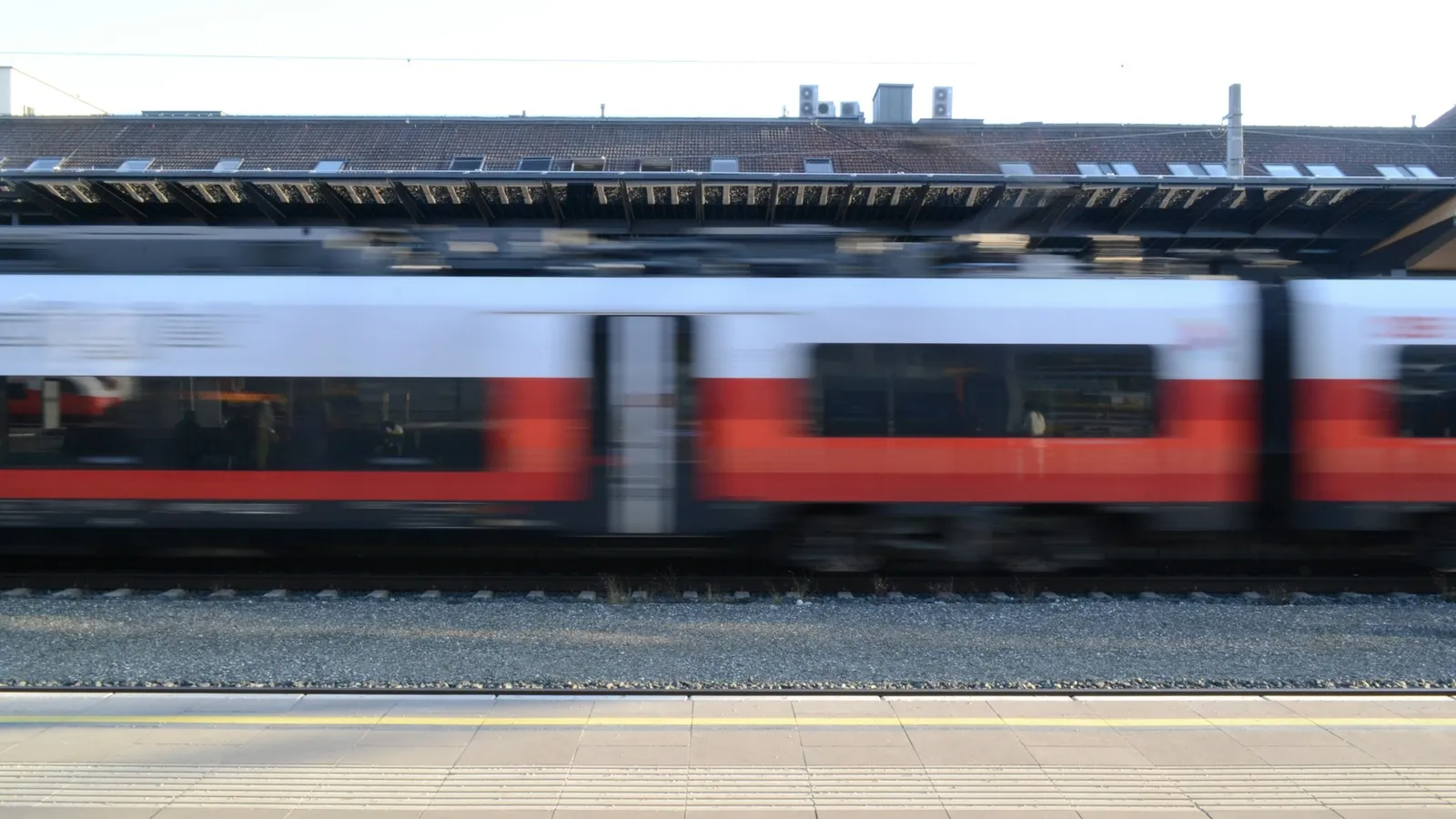
The Royal Netherlands Meteorological Institute, KNMI, was founded by C. H. D. Buys Ballot. It records that in 1845 he organised a train journey between Utrecht and Maarssen to demonstrate the effect, using a steam locomotive, a horn player and observers with a good ear on the train and on the platforms. MacTutor adds that in 1846 Doppler published an improved version covering motion of the observer as well as the source, and that his strongest critic was Petzval, professor of mathematics at the University of Vienna.
For light the confirmation came later. In 1868 William Huggins reported in the Philosophical Transactions of the Royal Society an attempt to determine whether stars are moving towards or away from the Earth by comparing their dark spectral lines with laboratory lines, exactly the use Doppler had foreseen.
Worked example: why sound worked and starlight did not
Sound. A horn on a train sounds 440 Hz. The train moves at 20 m/s and the speed of sound is 340 m/s. For a moving source and a listener at rest:
Approaching: f = 440 × 340/(340 − 20) = 440 × 340/320 = 467.5 Hz.
Receding: f = 440 × 340/(340 + 20) = 440 × 340/360 ≈ 415.6 Hz.
One semitone is a frequency ratio of about 1.059. Here 467.5/440 = 1.0625 and 440/415.6 ≈ 1.059, so the note jumps up about a semitone as the train approaches and drops about a semitone as it leaves. A trained musician can hear that easily.
Light. For speeds much smaller than light, the fractional shift is about v/c. A star moving at 30 km/s gives v/c = (3.0 × 10⁴)/(3.0 × 10⁸) = 1.0 × 10⁻⁴. Green light at 500 nm shifts by only 0.05 nm, far too little to change its colour. Instruments that compare spectral lines can detect it; the eye cannot.
Mistakes students make with Doppler problems:
Wrong sign in the denominator. Approaching source means a smaller denominator and a higher frequency.
Treating source and observer motion as the same. For sound they give different formulas, because the medium is at rest.
Using the sound formula for light. For light only the relative speed matters.
Our guide to Doppler effect sign conventions has more practice. To watch wavefronts bunch up in front of a moving source, the Fermi Simulation Lab has interactive simulations for ideas that are easier to see than to read.
What can a student take from how he worked?
Keep going through a hard start. Years of temporary posts and rejection came before his most important work.
Separate the principle from its first example. His double-star application failed, but the idea underneath it was right.
Estimate the size of an effect. A quick v/c calculation shows at once why starlight colours would not change visibly.
Expect criticism and let tests decide. Petzval objected; experiments with sound and, later, starlight settled the matter.
Doppler shifts of galaxies later showed that the universe is expanding; read about Edwin Hubble next.
Try it: redo the sound example with the train at 30 m/s and check how many semitones the note shifts.