On this page
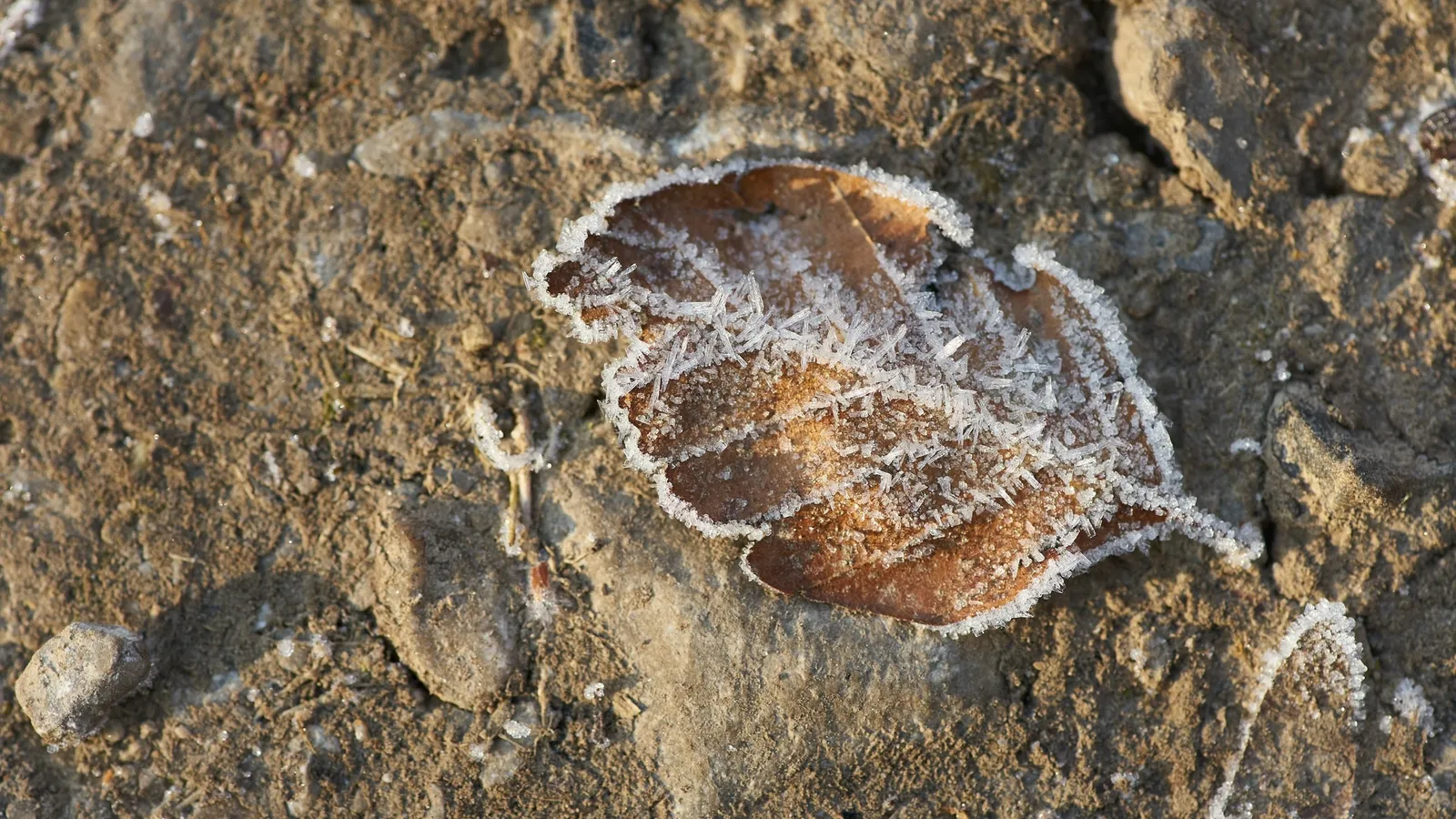
A fossil leaf in a rock looks like a curiosity. To a palaeobotanist it is evidence: of what grew there, of the climate, and of how old the rock is. Birbal Sahni spent his career reading that evidence for India, and he built an institute so the work would continue after him. Here is what he found, how he worked, and what you can take from it.
Who was Birbal Sahni?
The Birbal Sahni Institute of Palaeosciences (BSIP) records that he was born on 14 November 1891 at Bhera, in the Shahpur district of Punjab (now in Pakistan), the third child of Prof. Ruchi Ram Sahni. Bhera is close to the Salt Range, a region rich in exposed rock layers, and family trips there introduced him to geology early.
He graduated from Lahore in 1911 and went to Cambridge, where he studied at the Botany School under A.C. Seward, a leading palaeobotanist. The BSIP biography notes that his work on the conifer Acmopyle was submitted to London University for his D.Sc. in 1919 and published in the Philosophical Transactions of the Royal Society a year later. Back in India he became head of the botany department at Lucknow University, helped found the Indian Botanical Society, and was elected a Fellow of the Royal Society.
What did he discover in the Rajmahal Hills?
The Rajmahal Hills in Jharkhand hold silicified (petrified) plants from the age of the dinosaurs. Petrified fossils are valuable because the internal anatomy of stems and seeds can survive, not just the outline of a leaf.
In 1948 Sahni published The Pentoxyleae: a new group of Jurassic gymnosperms from the Rajmahal Hills of India in the Botanical Gazette. Gymnosperms are seed plants without flowers, such as conifers and cycads. Describing a whole new group meant showing that the fossils did not fit any existing one, which needs careful comparison of stems, leaves and reproductive parts under the microscope.
The BSIP biography adds that, from a critical study of the petrified plants, he concluded the Rajmahal flora was Jurassic in age. A few weeks before his death he led an excursion back to the Rajmahal Hills, where the party found beds bearing Williamsonia, another fossil plant.
How did fossil plants help date Indian rocks?
The biography describes a long argument about the Deccan Intertrappean beds, the sediment layers sandwiched between lava flows of the Deccan Traps. On geological grounds, earlier workers had placed them in the Cretaceous. From 1934, Sahni studied their silicified flora and argued that it was distinctly Eocene, which is younger.
The lasting point is the method. He insisted that plant fossils were real evidence about time, at a period when, the BSIP page notes, many geologists treated them with caution.
He was also curious beyond botany. In March 1936 he found ancient coin moulds at Rohtak and published a monograph on them in the journal of the Numismatic Society in 1945.
How did the Institute of Palaeobotany begin?
The BSIP history page sets out the steps:
In September 1939 a committee of palaeobotanists working in India was formed, with Sahni as convener.
On 19 May 1946 eight members signed a memorandum to form a Palaeobotanical Society, which received private funds, a library and fossil collections from Birbal and Savitri Sahni.
On 10 September 1946 the Society's governing body set up an Institute of Palaeobotany and appointed Sahni its first director, in an honorary role.
In September 1948 the institute moved to its present campus in Lucknow, a gift from the government of the United Provinces.
Prime Minister Jawaharlal Nehru laid the foundation stone of the new building on 3 April 1949. Sahni died a week later, on 10 April 1949.
His wife, Savitri Sahni, saw the building through to completion by the end of 1952, and Nehru dedicated it on 2 January 1953. The institute has been an autonomous body funded by the Department of Science and Technology since 1969.
What can a student take from how he worked?
Look inside, not just at the surface. Sahni's strongest evidence came from internal anatomy preserved in petrified plants. In your own study, the equivalent is asking how a structure works, not only what it is called.
Treat evidence across subjects. He used fossil plants to answer geology questions and turned his field skills to archaeology. Questions do not stay inside chapters.
Build for the people after you. He spent his last years building an institution, a library and collections, so others could keep working.
If you are studying plant structure for boards or NEET, our guide to the anatomy of flowering plants covers the tissues palaeobotanists look for in fossil stems, and our post on the plant kingdom explains where gymnosperms fit. When a classification term will not stick, the Fermi Concept Library has every concept in biology with its own lesson and its place in the map.
This week, find a cross-section diagram of a dicot stem in your textbook and label every tissue from memory before checking.