

On this page
The plant kingdom chapter asks you to compare four groups across many features: body, pigments, dominant phase, spores, need for water. It is easy to blur them. This post organises the chapter around one question, which phase of the life cycle is the main plant, and then works through a ploidy example of the kind NEET likes to set.
What does the syllabus include?
The NEET (UG) 2026 syllabus asks for "salient features and classification of plants into major groups-Algae, Bryophytes, Pteridophytes, Gymnosperms (three to five salient and distinguishing features and at least two examples of each category)". Angiosperms appear only briefly in NCERT's Class 11 chapter on the plant kingdom; their structure and reproduction are covered in other units. Check the syllabus for your exam year when it is notified.
How have plant classification systems changed?
NCERT describes three stages. Early artificial systems, such as Linnaeus', used a few superficial characters. Natural systems, such as that of Bentham and Hooker for flowering plants, used many features including anatomy and embryology. Today phylogenetic systems, based on evolutionary relationships, are accepted, helped by numerical taxonomy, cytotaxonomy (chromosomes) and chemotaxonomy (chemical constituents).
How are algae classified?
Algae are simple, thalloid, autotrophic and mostly aquatic. NCERT notes that at least half of the total carbon dioxide fixation on Earth is carried out by algae. They are split into three classes by pigment and stored food:
Chlorophyceae (green): chlorophyll a and b; store starch; cellulose wall; 2 to 8 equal apical flagella. Examples: Chlamydomonas, Volvox, Ulothrix, Spirogyra, Chara.
Phaeophyceae (brown): chlorophyll a, c and fucoxanthin; store mannitol and laminarin; cellulose and algin wall; 2 unequal lateral flagella. Examples: Ectocarpus, Dictyota, Laminaria, Sargassum, Fucus.
Rhodophyceae (red): chlorophyll a, d and phycoerythrin; store floridean starch; no flagella. Examples: Polysiphonia, Porphyra, Gracilaria, Gelidium.
Sexual reproduction can be isogamous (Ulothrix, Spirogyra), anisogamous (Eudorina) or oogamous (Volvox, Fucus).
Which phase dominates in bryophytes and pteridophytes?
Bryophytes (liverworts and mosses) are called the amphibians of the plant kingdom because they need water for sexual reproduction.
The main plant body is the haploid gametophyte. It has rhizoids but no true roots, stems or leaves.
The sporophyte is not free-living; it stays attached to the gametophyte and depends on it. Meiosis in the capsule produces spores.
Liverworts (Marchantia) reproduce asexually by gemmae. Mosses (Funaria, Polytrichum, Sphagnum) have a protonema stage and a leafy stage.
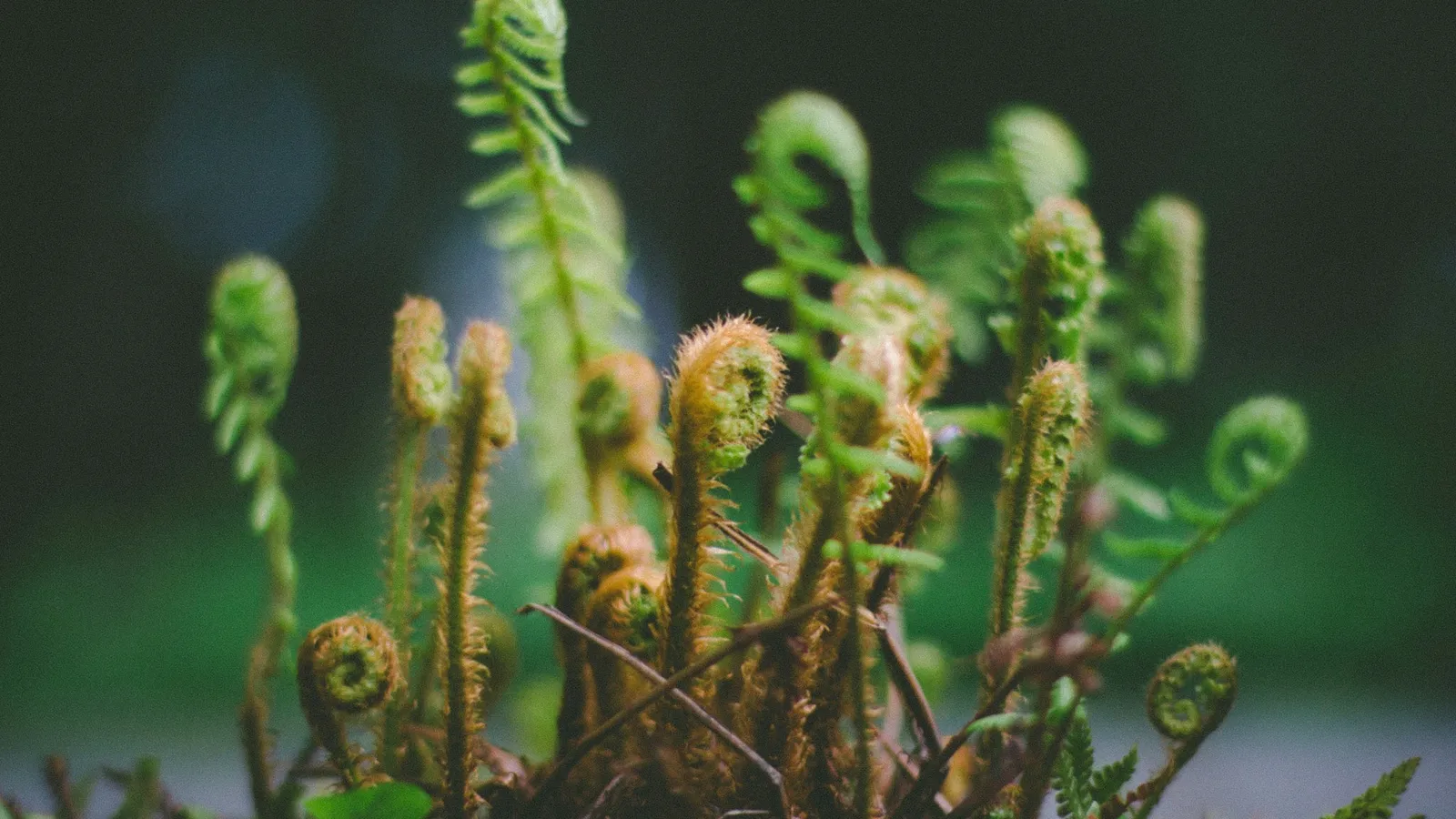
Pteridophytes (horsetails and ferns) are the first terrestrial plants with xylem and phloem.
The main plant body is the diploid sporophyte, with true roots, stems and leaves.
Spores grow into a small, free-living, mostly photosynthetic gametophyte, the prothallus. Fertilisation still needs water.
Most are homosporous; Selaginella and Salvinia are heterosporous, which NCERT calls a precursor to the seed habit.
Four classes: Psilopsida (Psilotum), Lycopsida (Selaginella, Lycopodium), Sphenopsida (Equisetum) and Pteropsida (Dryopteris, Pteris, Adiantum).
What makes gymnosperms different?
Ovules are not enclosed in an ovary, so the seeds are naked.
They are heterosporous. The male gametophyte is reduced to a pollen grain; the female gametophyte is multicellular, bears archegonia and stays inside the megasporangium. Neither gametophyte is free-living.
Pollen is carried by air to the ovules; the pollen tube carries the male gametes to the archegonia, so water is not needed for fertilisation.
Roots: mycorrhiza in Pinus; coralloid roots with nitrogen-fixing cyanobacteria in Cycas. In Pinus, male and female cones are on the same tree; in Cycas, male cones and megasporophylls are on different trees.
Worked example: ploidy across the groups
Give the ploidy of each cell. This is based on an NCERT exercise.
Protonemal cell of a moss: part of the gametophyte, n.
Leaf cell of a moss: gametophyte, n.
Gemma cell of Marchantia: gametophyte, n.
Ovum of a liverwort: n.
Prothallus cell of a fern: gametophyte, n.
Zygote of a fern: 2n.
Meristem cell of a monocot: part of the sporophyte, 2n.
Primary endosperm nucleus of a dicot: triple fusion, 3n.
Now put numbers on it. If a moss has 2n = 20, its spores, protonema and leafy shoot have 10 chromosomes, and its capsule wall has 20. If a gymnosperm has 2n = 24, its pollen and its female gametophyte have 12 each. If a flowering plant has 2n = 24, its endosperm has 36.
Where does meiosis happen? In a moss or liverwort, in the capsule of the sporophyte; in a fern, in the sporangia; in a gymnosperm, in the microsporangia and megasporangia; in a flowering plant, in the anther and ovule.
Which mistakes cost the most marks?
Calling the moss plant a sporophyte. The leafy moss is the gametophyte.
Calling cyanobacteria algae. NCERT places them outside Plantae.
Giving gymnosperm "endosperm" as 3n. It is the haploid female gametophyte; triple fusion happens only in flowering plants.
Saying all pteridophytes are heterosporous. Most are homosporous.
Mixing up brown and red algae pigments. Fucoxanthin is brown; phycoerythrin is red.
A practice routine
A review by Dunlosky and colleagues (2013) rated practice testing and distributed practice as high-utility techniques, ahead of rereading and highlighting. Roediger and Karpicke (2006) found that recall practice beat restudying on tests two days and a week later.
Blank comparison (twice a week): for the four groups, write dominant phase, vascular tissue, water for fertilisation, seeds and two examples, then check against NCERT.
Ploidy drill: choose a new 2n and give chromosome numbers for ten structures across groups.
Mix chapters: sort examples from this chapter together with those in biological classification, and follow on to sexual reproduction in flowering plants.
If alternation of generations still feels abstract, the Fermi Concept Library covers every concept in physics, chemistry, biology, mathematics and computing, each with its own lesson, so you can work through the idea before the examples.
Today, draw a moss and a fern side by side and label which parts are n and which are 2n.


