On this page
Benzene, C₆H₆, puzzled chemists for decades. It has as few hydrogens as a molecule with several double bonds, yet it resists the addition reactions that double bonds normally undergo. In January 1865 August Kekulé proposed the answer that every Class 11 student now draws: a ring of six carbons. This post covers how he got there, what his famous daydream story does and does not tell us, and a worked example that tests his structure the way chemists of the time did.
Who was August Kekulé?
NCERT's Class 11 Hydrocarbons unit gives his dates as 7 September 1829 to 13 July 1896 and his birthplace as Darmstadt in Germany. The Science History Institute biography adds that his family meant him to be an architect, but at the University of Giessen the lectures of Justus von Liebig drew him to chemistry. After his doctorate he worked in France, Switzerland and England, then taught at Heidelberg, at Ghent in Belgium and finally at Bonn.
What did he show about carbon in 1858?
The Science History Institute explains that Kekulé had proposed in 1857 that carbon is tetravalent, meaning it forms four bonds. In 1858 he and the Scottish chemist Archibald Scott Couper independently recognised that carbon atoms can link directly to one another to form chains, which explained why there are so many carbon compounds. Kekulé's paper appeared first, in Liebig's Annalen in 1858. Couper's reached the French Academy a few weeks later, delayed because Charles-Adolphe Wurtz was slow to present it. Couper drew bonds as straight lines between symbols, the style you still use.
How did he arrive at the benzene ring?
Chains explained a great deal but not benzene. A 2015 anniversary article by the historian Alan J. Rocke, It began with a daydream, notes that Kekulé published his benzene theory in January 1865 and that, although others had suggested structures before, he was the first to identify the correct one. A fuller German version followed in the Annalen in 1866.
NCERT describes the structure: a cyclic arrangement of six carbon atoms with alternating single and double bonds and one hydrogen on each carbon. A key piece of evidence was that benzene gives one and only one monosubstituted product, so all six carbons and all six hydrogens must be equivalent.
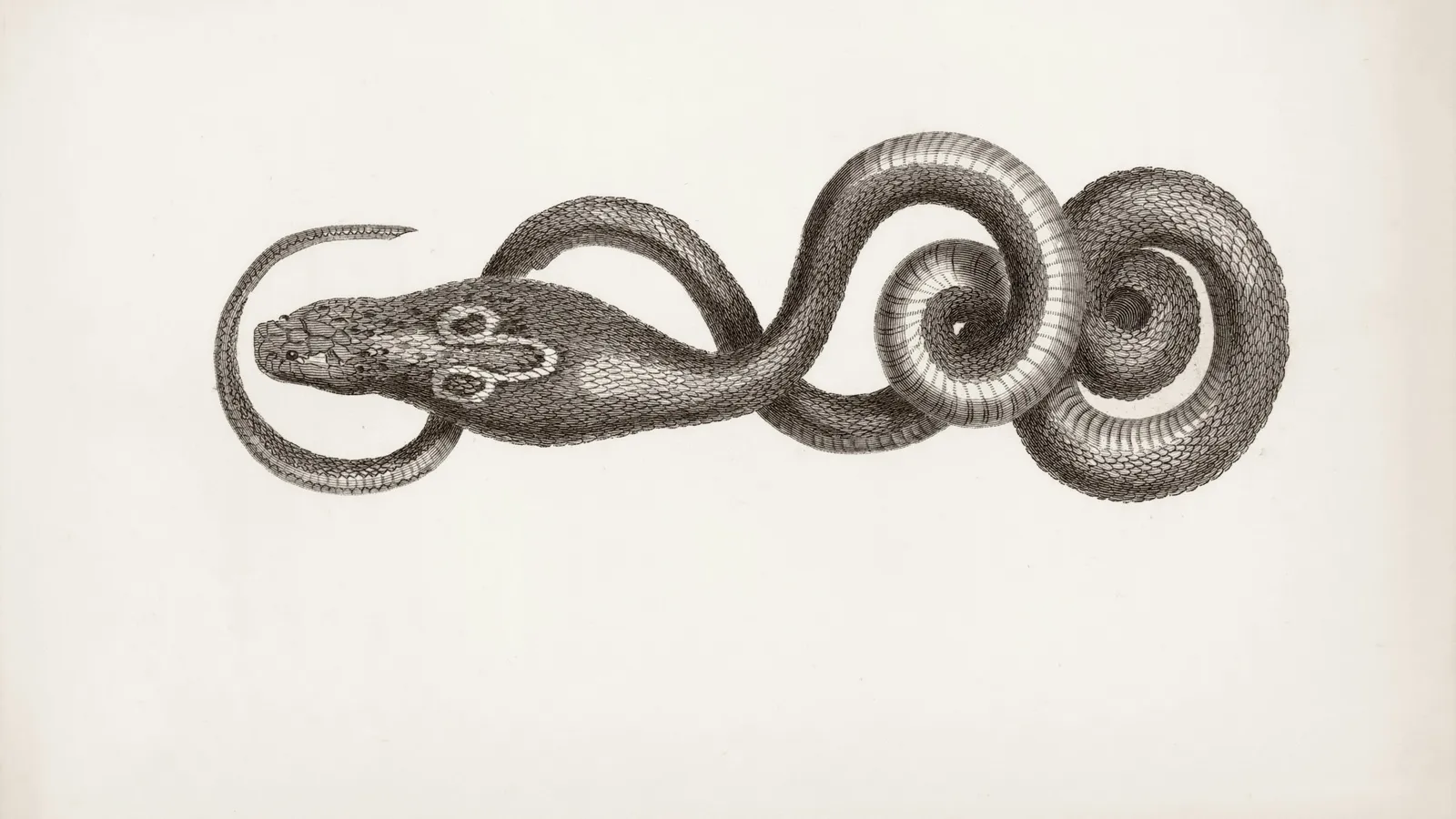
That speech is translated in the Journal of Chemical Education, and NCERT quotes part of it. It is worth noticing when the vision came: after years of work on carbon structure, while he was writing a textbook. A dream helps only a mind that is already full of the problem.
Worked example: testing the ring by counting isomers
Step 1. Degree of unsaturation. For CₓHᵧ it is (2x + 2 − y) / 2. For C₆H₆: (12 + 2 − 6) / 2 = 4. A ring counts as one, so a ring plus three double bonds fits.
Step 2. Count the dibromobenzenes Kekulé's fixed structure predicts. Number the ring carbons 1 to 6, with double bonds between 1–2, 3–4 and 5–6.
Bromines on carbons 1 and 2: these are joined by a double bond.
Bromines on carbons 2 and 3: these are joined by a single bond. That is a second, different 1,2-isomer.
Bromines on 1 and 3: one isomer, since the path between them always has one single and one double bond.
Bromines on 1 and 4: one isomer.
A fixed Kekulé structure predicts four dibromobenzenes, two of them ortho.
Step 3. Compare with experiment. As NCERT notes, benzene forms only one ortho-disubstituted product. Kekulé's answer was that the double bonds oscillate between the two arrangements, so the two ortho forms are never separate. Even so, NCERT points out, his structure cannot explain benzene's unusual stability or its preference for substitution over addition; that came later with resonance, in which all six C–C bonds are the same.
Common mistakes:
Treating a Kekulé structure as the real molecule. It is one of two resonance contributors.
Counting resonance forms as isomers. They are two drawings of one substance.
Forgetting halogens in the unsaturation formula. Count each halogen as a hydrogen.
What can a student take from how Kekulé worked?
Use a model to make predictions. The ring was useful because it could be tested by counting isomers.
Patch a model honestly, then look for better. The oscillation idea fixed one problem; resonance later fixed the rest.
Prepare the ground for insight. His flash of imagination came after years of systematic work.
For the reactions that follow from benzene's structure, read our guides to electrophilic substitution in benzene and hydrocarbon reactions. If isomer counting or resonance still feels slippery, the Fermi Concept Library covers every concept in chemistry, one idea at a time.
Try this now: using a fixed Kekulé structure, count the trimethylbenzenes it would predict, then count how many actually exist.