

On this page
Millions of people take a statin every day to lower the cholesterol in their blood. The first one did not come from a chemistry set. It came from a blue-green mould growing on rice in a Kyoto grain shop, found by a scientist who had read about Alexander Fleming as a student. Here is how Akira Endo found it, the setback that nearly killed the project, the biology you need to follow the story, and what you can learn from how he worked.
Who was Akira Endo?
Endo was born in 1933 into a farming family in Akita, northern Japan. In his own account of the discovery, published in 2010, he writes that his grandfather got him interested in mushrooms and moulds, and that at Tohoku University he was inspired by the biography of Alexander Fleming, who found penicillin in a Penicillium mould in 1928. You can read that story in our post on Alexander Fleming and penicillin.
He graduated in 1957 and joined the drug company Sankyo in Tokyo, where his first job was finding a fungal enzyme to clear cloudy wine and cider. After two years at the Albert Einstein College of Medicine in New York (1966 to 1968), Sankyo let him choose his own project. He chose cholesterol.
What problem was he trying to solve?
Your liver makes most of your cholesterol through a long chain of reactions. One step, run by the enzyme HMG-CoA reductase, turns HMG-CoA into mevalonate. The 2008 Lasker Award description explains that this enzyme plays a central role, so blocking it looked like a way to cut the body's own production.
Endo's idea was biological. Fungi make chemicals that fight off competing microbes. He guessed that some might make a molecule that blocks HMG-CoA reductase, because blocking that enzyme would be lethal to the microbes around them.
How did he find compactin?
In his words: "Inspired by Fleming's success with molds, we began our project using culture broths of thousands of fungi in April 1971." After 3,800 strains, the first hit was citrinin, which lowered cholesterol in rats but damaged kidneys, so it was dropped.
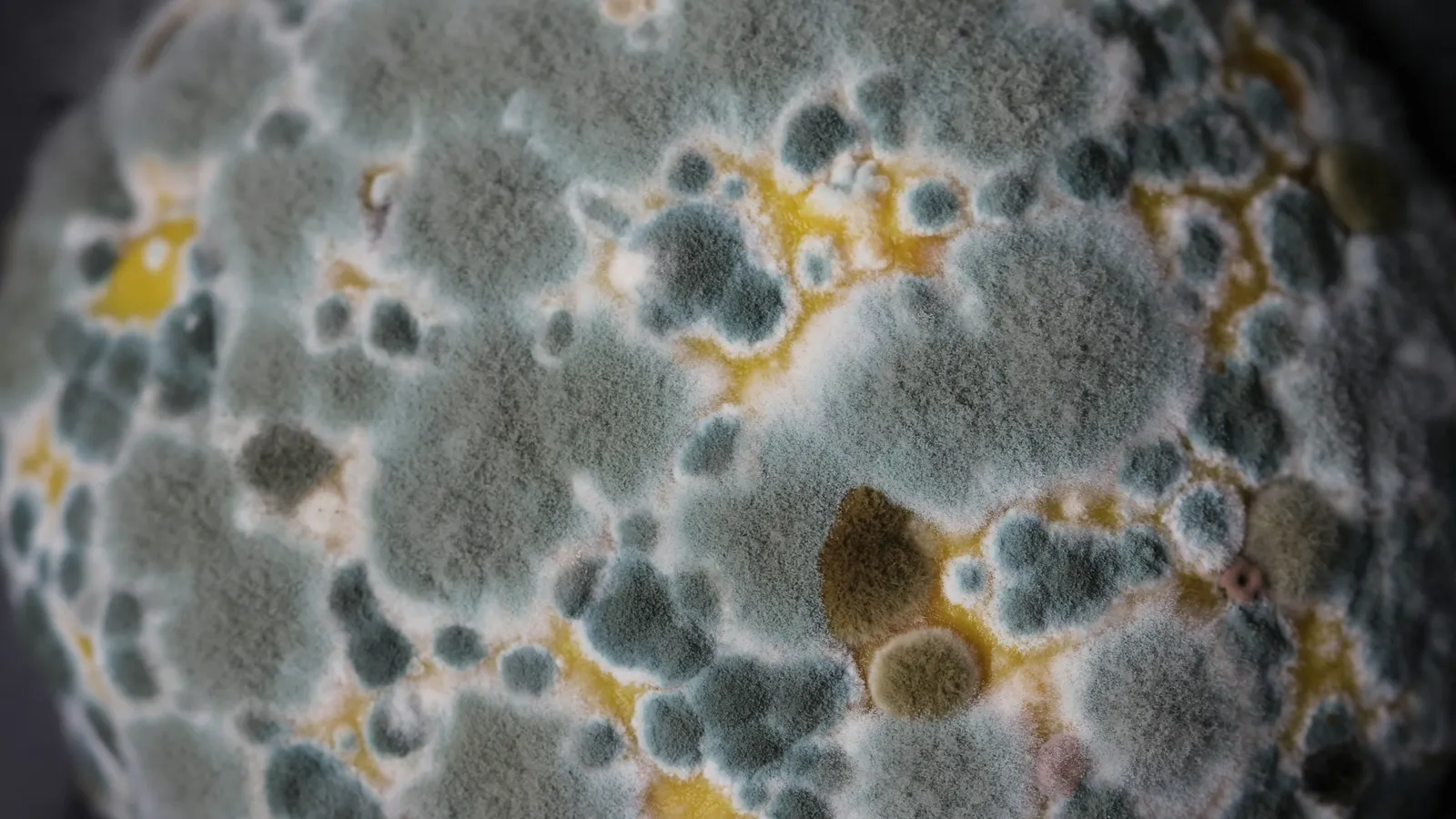
In mid-summer 1972 the team found a second active broth from Penicillium citrinum Pen-51, isolated from rice at a grain shop in Kyoto. Yields were so low that it took a year to purify. In July 1973 they isolated three active compounds; the strongest, ML-236B, became known as compactin. They published it in 1976 in the Journal of Antibiotics.
Why did the rats nearly end the project?
In 1974 Sankyo fed rats compactin for 7 days, and their cholesterol did not fall. Endo writes that "2 years of work and over 6,000 tests had led nowhere".
Rather than give up, his team asked why. A single dose did lower cholesterol for 3 to 8 hours. After that, rat livers responded by making 8 to 10 times more HMG-CoA reductase, which cancelled the drug. So the rat was a misleading test animal. In early 1976 laying hens given compactin had 50% lower plasma cholesterol after a month, and the drug also worked in dogs and monkeys.
Worked example: reading the first patient's numbers
In February 1978 Akira Yamamoto, a physician at Osaka University Hospital, treated an 18-year-old woman with severe familial hypercholesterolaemia. Endo reports that her serum cholesterol fell from 1,000 to about 700 mg per decilitre.
Fall: 1,000 − 700 = 300 mg/dL.
Percentage fall: 300 / 1,000 × 100 = 30%.
Still high: even 700 mg/dL was far above normal, and she developed side effects at 500 mg a day, which went away when treatment stopped.
Later patients on lower doses saw cholesterol fall by roughly 30% on average with no severe side effects.
A second calculation shows why dose matters. Sankyo stopped compactin in 1980 after reports of lymphoma in dogs given 100 or 200 mg per kg per day for 2 years. Yamamoto had found the drug worked at under 1 mg per kg per day, so the dogs got about 200 times the human dose.
How did compactin lead to today's statins?
Merck obtained compactin samples and data from Sankyo in 1976, and in February 1979 isolated a similar compound, mevinolin, from Aspergillus terreus. That same month Endo, now at Tokyo University of Agriculture and Technology, found monacolin K in Monascus ruber. They turned out to be the same molecule, now called lovastatin. The US FDA approved it in September 1987, the first statin on the market.
In their 2024 tribute in PNAS, Joseph Goldstein and Michael Brown, who won the 1985 Nobel Prize for work on cholesterol, record that Endo died on 5 June 2024 at 90.
Where does this sit in your syllabus?
Enzymes, active sites and competitive inhibition are part of NCERT Class 11 Biology, covered in our post on enzymes for NEET biology. Statins are a clean example of a competitive inhibitor. If terms like substrate, product and active site still blur together, the Fermi Concept Library covers every concept in physics, chemistry, biology, mathematics and computing.
What can a student learn from how Endo worked?
Start from a reason. His screen was not random; it came from a guess about why fungi would make such a molecule.
Treat failure as data. The rat result was real, but asking why it happened turned it into a finding.
Count the cost of persistence. Thousands of tests over two years produced two hits. Most searches look like that.
Check the dose. A side effect at 200 times the useful dose says something different from one at the useful dose.
Next step: draw the enzyme step HMG-CoA to mevalonate, mark where compactin binds, and explain in two lines why extra mevalonate cancels its effect.


