
On this page
Ayyalasomayajula Lalitha, usually written A. Lalitha, was born in Madras on 27 August 1919 and is widely recognised as India's first woman engineer. The South First's profile of Lalitha gives the outline: married at 15 in 1934, a widow at 18 with a four-month-old daughter, Syamala, born in 1937, and an electrical engineering graduate by September 1943.
Who was A. Lalitha?
After her husband's death, The South First reports, she returned to her parents' home. Her father, Pappu Subba Rao, taught at the College of Engineering, Guindy (CEG), and backed her wish to study, according to her Wikipedia biography.
She was not the only woman there for long. The Better India reports that she joined Guindy in 1940, that two more women, Leelamma George and P. K. Thressia, joined a year behind her, and that the college had to change "He" to "She" on their certificates. That article dates the graduation of all three to 1944, saying wartime shortened the course. Most other accounts, including The South First, date Lalitha's degree to 1943.
The South First quotes her opening line at a conference in New York: "If I had been born 150 years ago in my country, I would have been burned at the funeral pyre with my husband's body."
What did she work on at Bhakra Nangal?
After graduating, she did a one-year apprenticeship at the Jamalpur Railway Workshop and, from 1944, worked as a research assistant at the Central Standards Organisation in Simla, The South First reports. A 2020 Electrifying Women article by historians Graeme Gooday and Emily Rees Koerner, drawing on the journal The Woman Engineer, says she trained in the East Indian Railways' electrical department and was a technical assistant in the Office of the Electrical Commissioner before becoming a Junior Engineer with Associated Electrical Industries (India) Ltd. in Calcutta.
She joined AEI in 1948 and stayed until she retired in 1977. Her best-known work there was on the Bhakra Nangal project, where, her Wikipedia biography says, she designed transmission lines and substation layouts.
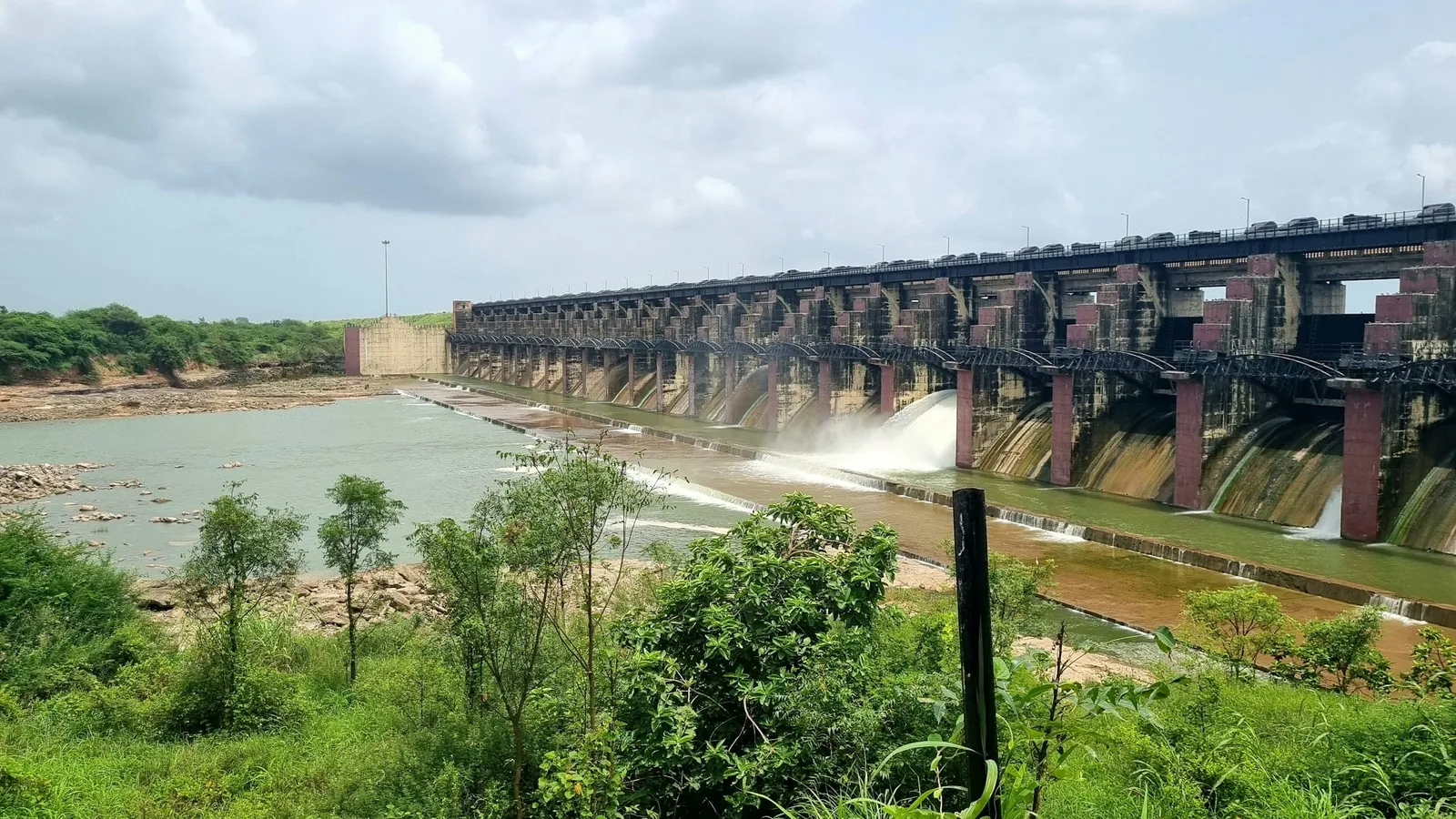
The Bhakra Beas Management Board's project presentation describes Bhakra Dam as a 225.55 m (740 ft) high straight gravity concrete dam on the Sutlej. The same document says the project was built from 1948 to 1963 and dedicated to the nation on 22 October 1963.
Wikipedia records that the Institution of Electrical Engineers in London elected her an associate member in 1953 and a full member in 1966. In 1964 she was the only woman engineer from India at the First International Conference of Women Engineers and Scientists in New York, and as India's representative on the organising committee for the 1967 conference in Cambridge, she ensured that five women from India could attend.
Why do transmission lines use high voltage?
Lalitha's job rested on an idea from Class 12 physics. The NCERT Class 12 Physics chapter on alternating current explains that the generator's voltage is stepped up "so that current is reduced and consequently, the I²R loss is cut down" before electricity travels long distances.
A worked example with round numbers, not Bhakra's real figures: send 50 MW down a line with 5 Ω of total resistance, and take the power factor as 1.
At 33 kV, the current is I = P/V = 50,000,000 ÷ 33,000 ≈ 1,515 A. The heat lost in the line is I²R ≈ 1,515² × 5 ≈ 11.5 MW, about 23% of what you send.
At 220 kV, the current is about 227 A. The loss is about 227² × 5 ≈ 0.26 MW, roughly 0.5%.
The voltage rose about 6.7 times, so the current fell 6.7 times and the loss fell about 44 times (6.7²).
That square is the whole point. A common exam slip is to put the transmission voltage into P = V²/R for the line; the right V there is the drop across the line itself. Our explainer on why power is transmitted at high voltage goes through more cases.
If you keep reaching for the wrong formula, the Fermi Problem Library has worked problems with a step-by-step solver that explains the reasoning rather than printing an answer.
What can students learn from her today?
Ask for support. Lalitha studied at Guindy with her father backing her plan. Tell the people around you what you need.
Know the physics under the job. Much of transmission-line design starts from I = P/V and I²R, the example above.
Open the door for the next person. She made sure five women from India could attend the 1967 conference. If you are a senior, share your notes and your route with juniors.
Check today's options. If you are a girl thinking about a technical degree, read our guide to the AICTE Pragati scholarship for girls. To see what power-sector jobs involve, read electrical engineering careers in the power sector.
If you are not sure where to start with AC circuits, Fermi's AI tutor can work out what you already know and build a plan for the session.