

On this page
Almost everyone gets a breakout during their teenage years, often right before a big event or exam. Rather than a sign of poor hygiene, it is a direct biological reaction to the massive changes happening inside the body during this stage of life.
Why do teenagers get pimples?
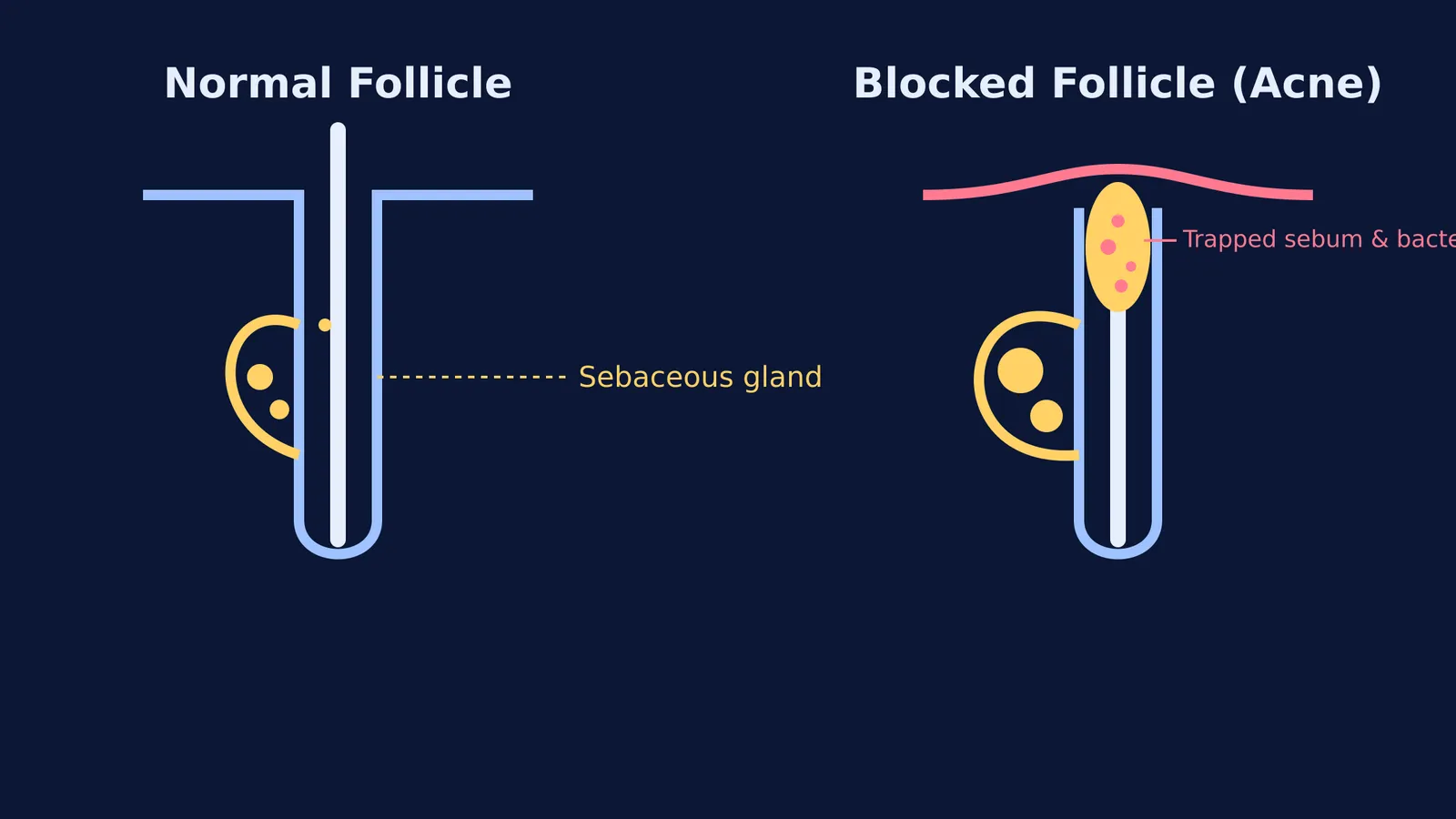
During puberty, the body increases its production of androgens, which are sex hormones present in both boys and girls. These hormones stimulate the skin's sebaceous glands. These tiny glands act as factories that make sebum, a natural oil. The body needs sebum to keep the skin and hair lubricated, but during adolescence, the rising hormone levels cause the glands to go into overdrive and produce much more oil than necessary.
These hormonal shifts are a core part of the biology syllabus; if you are reviewing how the endocrine system functions, read our guide to chemical coordination for NEET: glands, hormones and their actions.
How do pores become clogged?
The excess oil produced by the sebaceous glands naturally travels up the hair follicle to reach the surface of the skin. Its purpose is to form a protective barrier. However, if this oil mixes with the thousands of dead skin cells that the body naturally sheds every day, the sticky mixture creates a plug that clogs the pore.
If the plug stays closed under the surface, it creates a white bump known as a whitehead. If the pore stays open, the surface of the plug darkens when it is exposed to the air, creating a blackhead.
Visualising these microscopic processes can sometimes be difficult from a textbook alone. For a clearer picture of how cells, glands and fluids interact, the Fermi Simulation Lab provides interactive models for the biological ideas that are easier to see than to read.
What causes the redness and swelling?
A specific bacterium called *Cutibacterium acnes* (formerly known as *Propionibacterium acnes*) lives naturally on everyone's skin. Usually, it causes no problems. However, when a pore becomes blocked, the trapped oil provides a perfect environment for these bacteria to multiply rapidly, as they use the sebum as a nutrient source.
The body responds to this bacterial overgrowth by sending white blood cells to the area to fight the infection. This inflammatory response releases various chemical signals and reactive oxygen species that can sometimes cause the follicle wall to rupture. When the follicle ruptures, its contents spill into the surrounding dermis, triggering even more severe inflammation. This cascading biological reaction causes the redness, swelling, and deep bumps that we recognise as a pimple.
You can read more about how the immune system handles such microscopic invaders in our overview of human health and disease for NEET: pathogens, immunity, vaccines.
What biological factors drive acne?
The pathogenesis of acne is driven by four main interlinked factors:
Excess sebum production: Triggered by androgen hormones, the sebaceous glands produce an unusually large amount of oil.
Follicular blockage: Dead skin cells fail to shed properly and instead stick together, forming a plug in the pore.
Bacterial growth: *Cutibacterium acnes* thrives in the anaerobic, lipid-rich environment of the blocked follicle.
Inflammation: The immune system detects the bacterial proliferation and launches a defensive response, causing redness and swelling.
Who is most likely to get acne?
According to the American Academy of Dermatology, roughly 85% of people between the ages of 12 and 24 experience at least a minor form of acne. The condition is more common in girls 12 years and younger, but it presents more in boys aged 15 or older.
Genetics also play a significant role in determining how a person's sebaceous glands and immune system react. If a teenager's parents had severe acne, they are statistically more likely to experience it themselves. While stress does not directly cause acne, it activates pathways in the nervous system that trigger the body to produce even more hormones (a connection covered in Control and coordination in Class 10: reflexes, brain and hormones), which can make an existing breakout significantly worse.


