On this page
Control and coordination asks you to explain how a body responds to the world: pulling your hand off a hot pan, keeping your balance on a cycle, or a plant bending toward a window. The chapter has many named parts, and marks are lost when students attach the wrong job to the wrong part. This post gives you a worked reflex arc, a clean map of brain parts and hormones, how plants respond without nerves, the common slips and a practice routine.
What does the syllabus include?
The CBSE Class X Science syllabus for 2026-27 lists: tropic movements in plants, an introduction to plant hormones, the nervous system, voluntary, involuntary and reflex action, and chemical coordination through animal hormones. It sits in Unit II, World of Living, worth 25 of the 80 theory marks. The content below is from Chapter 6 of the NCERT Class 10 Science textbook. Check the current syllabus for your year.
How does a nerve signal travel?
NCERT describes the neuron this way: the signal is picked up at the dendrite, travels to the cell body and then along the axon as an electrical impulse. At the axon's end, chemicals are released that cross a small gap, the synapse, and start a new impulse in the next neuron's dendrite. Similar synapses carry signals from neurons to muscles.
A worked reflex arc
Question. You touch a hot vessel and pull your hand away before you feel the pain. Trace the pathway.
Receptor: heat-sensing nerve endings in the skin of your fingers detect the stimulus.
Sensory neuron: carries the impulse to the spinal cord.
Spinal cord: a relay connection passes the signal straight to a motor neuron. NCERT notes the information also goes on to the brain, which is why you feel the pain a moment later.
Motor neuron: carries the impulse out to the arm.
Effector: muscles in the arm contract and pull the hand back.
NCERT's explanation of why reflexes exist: thinking involves complex networks of neurons and takes time, enough to get burnt. Connecting the input nerve to the output nerve where they meet, in the spinal cord, gives a faster response.
Which part of the brain does what?
NCERT divides the brain into fore-brain, mid-brain and hind-brain.
Fore-brain: the main thinking part, with regions for hearing, smell, sight and voluntary actions. A separate centre here tells you when you are full.
Medulla (hind-brain): involuntary actions such as blood pressure, salivation and vomiting.
Cerebellum (hind-brain): precision of voluntary actions, posture and balance: walking in a straight line, riding a bicycle, picking up a pencil.
Spinal cord: reflex arcs and the pathway between body and brain. The brain is protected by the skull and the spinal cord by the backbone.
How do plants respond without nerves?
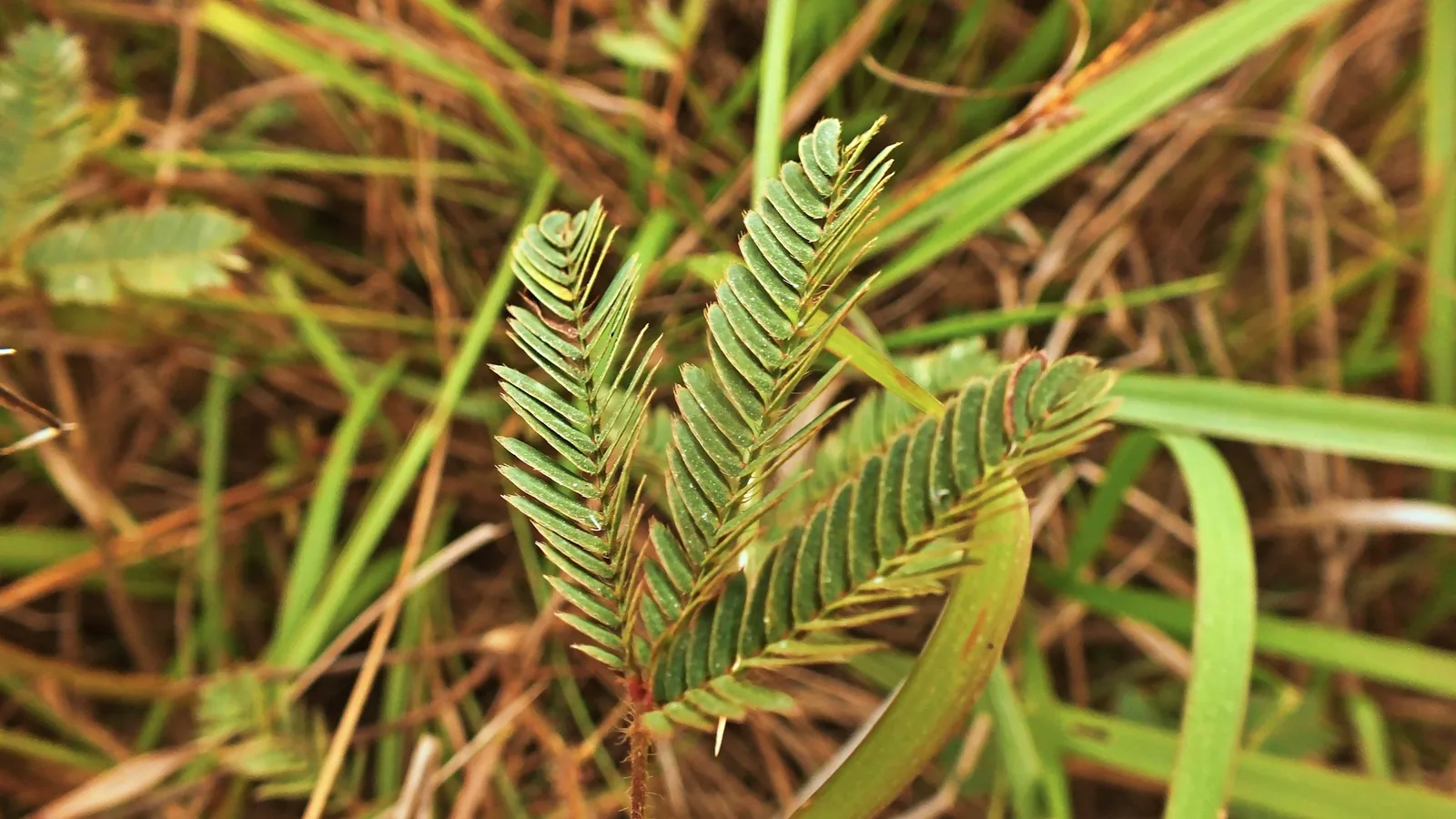
Plants have two kinds of movement. The touch-me-not (Mimosa) folds its leaves quickly, with no growth involved: cells change shape by changing how much water they hold. Other movements come from growth. In phototropism, NCERT explains, auxin made at the shoot tip diffuses to the shady side; cells there grow longer, so the shoot bends toward light. Roots grow downward with gravity (geotropism), and pollen tubes grow toward ovules (chemotropism). A tendril curls round a support because the side touching it grows more slowly than the side away from it.
The plant hormones to know:
Auxin: cell lengthening, bending toward light.
Gibberellins: stem growth.
Cytokinins: cell division, high in fruits and seeds.
Abscisic acid: inhibits growth; causes wilting of leaves.
Which animal hormones should you know?
Thyroxin (thyroid): regulates metabolism. It needs iodine, which is why iodised salt prevents goitre.
Growth hormone (pituitary): too little in childhood causes dwarfism.
Insulin (pancreas): lowers blood sugar. Too little causes diabetes.
Adrenaline (adrenal glands): prepares the body for emergencies by speeding up the heartbeat and breathing.
Testosterone and oestrogen (testes and ovaries): changes at puberty.
NCERT's example of a feedback mechanism: when blood sugar rises, cells of the pancreas detect it and release more insulin; as sugar falls, insulin secretion is reduced.
Which mistakes come up most often?
Saying the brain controls a reflex. The reflex connection is in the spinal cord; the brain is informed afterwards.
Calling the Mimosa's movement growth. It is a change in cell water, not growth.
Mixing up the cerebellum and the medulla. Cerebellum: balance and precise movement. Medulla: involuntary actions.
Saying auxin moves toward the light. It moves to the shady side.
A practice routine for this chapter
Writing answers from memory is better for long-term recall than rereading. In Roediger and Karpicke (2006), students who practised recalling a passage remembered more of it a week later than those who restudied it.
Draw the reflex arc (NCERT Figure 6.2) from memory and label all five parts.
Make two lists from memory: brain parts with one job each, and hormones with gland and job. Check them against the book.
Explain phototropism in four sentences, including where auxin goes.
Answer one long question aloud: "How does chemical coordination take place in animals?"
When one link in a pathway will not stick, look up that idea alone. The Fermi Concept Library covers every concept in biology, each with its own lesson. Our post on the self-explanation technique shows how to talk yourself through a diagram.
Today, draw the reflex arc without looking and label every part.