

On this page
If you are in Class 8, "Understanding Marginalisation" is the chapter that turns the Fundamental Rights you met earlier into real lives. In the NCERT Social and Political Life III textbook (2024-25 reprint) it is Chapter 5, and it follows two communities, Adivasis and Muslims, to show how exclusion works.
What does marginalisation mean in Class 8?
The textbook defines it plainly: to be marginalised is to be forced to occupy the sides or fringes, and so not be at the centre of things (NCERT, Chapter 5). It starts in the classroom, with students who feel they are not "in".
For whole communities, the book lists several causes: a different language, different customs, a minority religion, poverty, or being treated as of "low" social status. The key exam line: marginalisation is seldom experienced in one sphere; economic, social, cultural and political factors work together.
Who are Adivasis, and why are they marginalised?
"Adivasi" literally means "original inhabitants": communities who lived, and often still live, in close association with forests (NCERT, Chapter 5). The same chapter gives these figures:
Around 8 per cent of India's population is Adivasi.
There are over 500 different Adivasi groups in India, and Odisha alone is home to more than 60.
According to official figures, more than 50 per cent of persons displaced by mines and mining projects are tribals.
45 per cent of tribal groups in rural areas and 35 per cent in urban areas live below the poverty line.
Forest land is taken for timber, mines, dams and wildlife parks; Adivasis lose their main sources of livelihood and food; many migrate to cities for low-paid work; poverty, malnutrition and low literacy follow. The chapter also names a quieter harm, stereotyping: Adivasis are usually shown only in colourful costumes and dancing, which leads people to think of them as "exotic" and "backward".
Why do minorities need safeguards?
The book says the word minority usually means a community that is numerically small, but the idea goes beyond numbers to power, access to resources, and culture. Safeguards protect smaller communities from being culturally dominated by the majority and from discrimination.
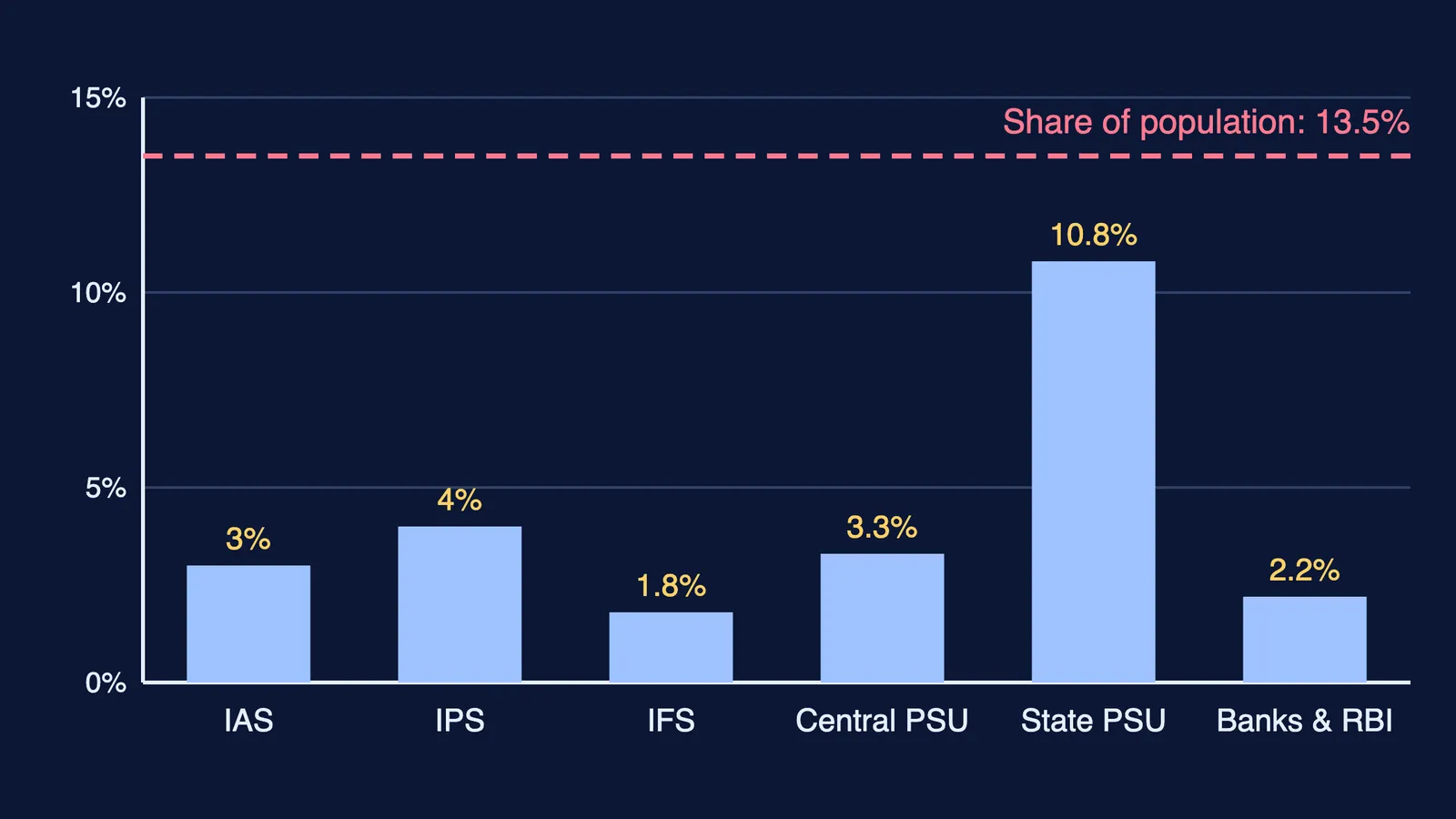
Muslims are 14.2 per cent of India's population according to the 2011 Census, as the NCERT chapter reports. In 2005 the government set up a high-level committee chaired by Justice Rajindar Sachar to study their social, economic and educational status. The chapter quotes its 2006 report: 25 per cent of Muslim children aged 6 to 14 have either never been enrolled in school or have dropped out, a higher share than in any other socio-religious community. The chapter's employment table, from the same report, puts Muslims at 3 per cent of IAS officers against 13.5 per cent of the population.
What safeguards does the Constitution give?
These are the Articles to know, from the official text of the Constitution of India:
Article 29(1): any section of citizens with a distinct language, script or culture of its own has the right to conserve it.
Article 29(2): no citizen can be denied admission to a state-run or state-aided educational institution on grounds only of religion, race, caste or language.
Article 30(1): all minorities, whether based on religion or language, have the right to establish and administer educational institutions of their choice.
Article 19(5): the State may limit the freedom to move and settle "for the protection of the interests of any Scheduled Tribe".
The textbook adds that every citizen can approach the courts if their Fundamental Rights are violated.
How do you write a strong answer on this chapter?
Use a four-part check built on the book's own point that the factors work together. For any group, ask:
Economic: what land, work or resources have they lost or been denied?
Social: how are they seen or treated, including stereotypes?
Cultural: is their language, religion or way of life under pressure?
Political: can they assert their rights, and which safeguard helps?
Worked example for "Why are Adivasis considered marginalised?" (3 marks), using the NCERT chapter's facts. Point 1, economic: they have lost forest land to mines, dams and parks, and officially more than half of those displaced by mining projects are tribals. Point 2, social: they are stereotyped as exotic and backward. Point 3, cultural and political: losing land means losing customs and sacred places, and in Dadu's story the villagers could not fight their cases in court without lawyers. One fact per point, one sentence each.
For the rights side of this chapter, revisit the six Fundamental Rights with examples and how India's Constitution was designed. In Class 10, gender, religion and caste in politics picks up the same ideas. If you are unsure where to begin revising, Fermi's AI tutor can work out what you already know and build a plan for the session, so you sit down to a clear next step.


