

On this page
What happens in The Last Lesson?
NCERT's Flamingo textbook introduces Alphonse Daudet (1840-1897) as a French novelist and short-story writer. The story is set in the days of the Franco-Prussian War (1870-1871), when the French districts of Alsace and Lorraine have passed into Prussian hands.
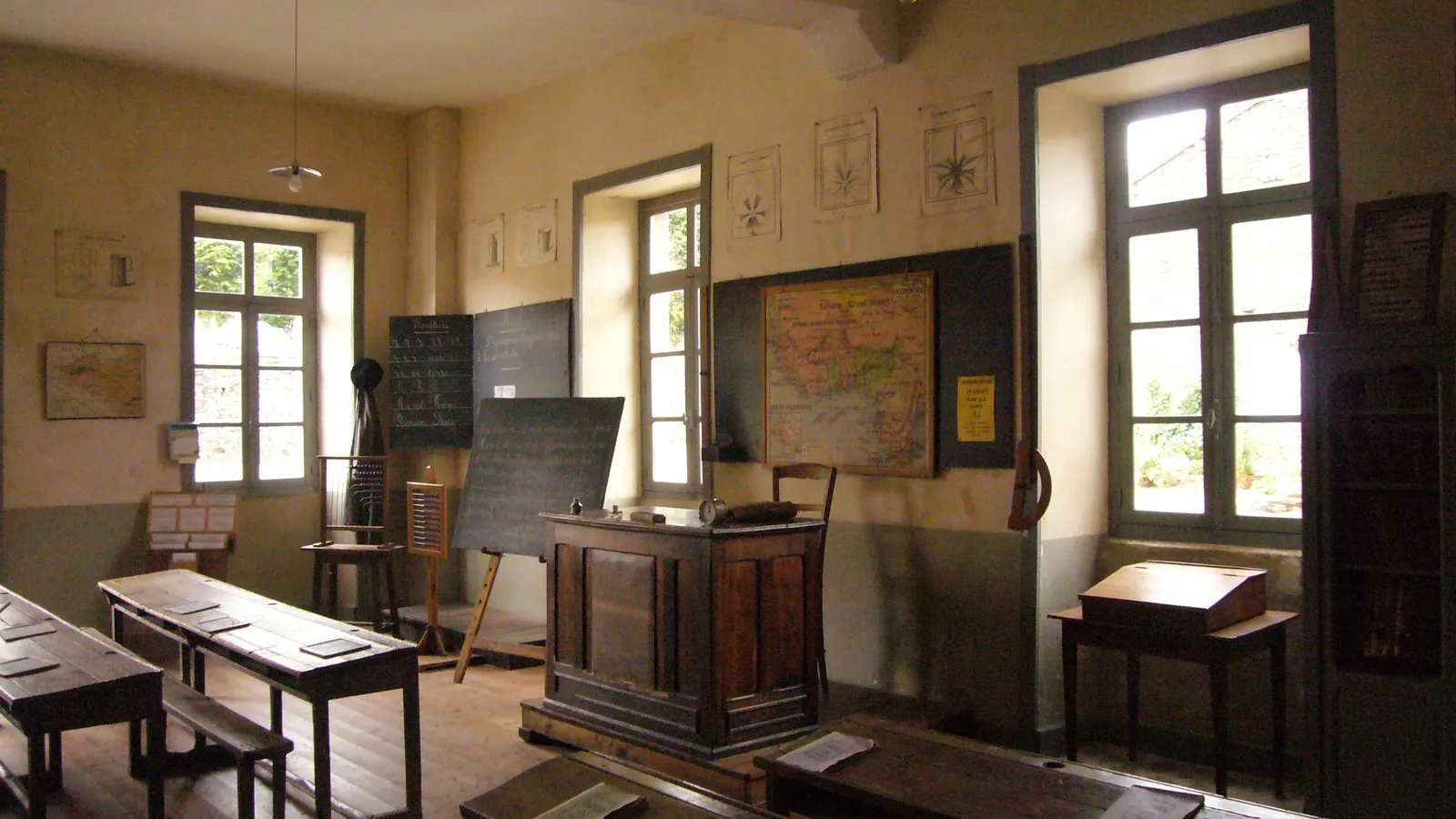
Franz, a boy in an Alsace village, is late for school and dreads a scolding, because M. Hamel will test participles and Franz has not learnt them. He passes a crowd at the town-hall bulletin board, where all the bad news of the last two years has been posted. At school there is none of the usual noise. M. Hamel is wearing his green coat, frilled shirt and embroidered silk cap, and the usually empty back benches hold villagers, including old Hauser with a worn primer.
M. Hamel announces that an order has come from Berlin: only German will be taught in the schools of Alsace and Lorraine, and this is their last French lesson. Franz is stunned. When he stumbles over the participle rule, M. Hamel does not scold him. Instead he says that everyone in Alsace, parents and teacher included, kept putting learning off till tomorrow.
The class works in silence. When the church clock strikes twelve and the Prussian trumpets sound, M. Hamel tries to speak and cannot. He writes "Vive La France!" on the blackboard and dismisses the class with a gesture of his hand.
What are the main themes of The Last Lesson?
Every quotation below is from the NCERT chapter text.
Language as identity and freedom. M. Hamel says that "when a people are enslaved, as long as they hold fast to their language it is as if they had the key to their prison."
Putting things off. "Ah, that's the great trouble with Alsace; she puts off learning till tomorrow." The blame falls on the whole community, not on Franz alone.
Imposed language. Franz wonders, "Will they make them sing in German, even the pigeons?"
Valuing something only when it is lost. Franz and the villagers treasure French once it is taken away.
What is linguistic chauvinism, and how does it link to the story?
The chapter's own exercise asks: "Is it possible to carry pride in one's language too far? Do you know what 'linguistic chauvinism' means?" (NCERT).
Chauvinism means "unwarranted bias, favoritism, or devotion to one's own particular group, cause, or idea" (Wiktionary). Linguistic chauvinism is that bias applied to language: treating your own language as superior and others as lesser.
A strong answer sees it on both sides. The order from Berlin is linguistic chauvinism enforced by a state. Yet M. Hamel calls French "the most beautiful language in the world", which is a gentler form of the same pride. NCERT asks how a linguistic minority can keep its language alive and gives Indian examples: Punjabis in Bangalore, Tamilians in Mumbai, Kannadigas in Delhi and Gujaratis in Kolkata. A good answer shows a minority can keep its language alive without looking down on the local one.
Character sketches: what are M. Hamel and Franz like?
M. Hamel is strict (Franz remembers his "terrible iron ruler") but devoted: he has taught in the same room for forty years, according to the NCERT text. He is honest enough to blame himself for sending pupils to water his flowers. He is patriotic, and on the last day teaches with unusual patience.
Franz begins carefree and tempted to spend the day outdoors. He is an honest narrator who admits his fear and laziness. By the end he feels regret, listens closely, and finds the grammar "so easy".
Which board questions are likely, and how do you answer them?
In CBSE's English Core syllabus for 2026-27, Flamingo short answers are 40-50 words each (five out of six, 2 marks each) and one Flamingo long answer of 120-150 words (one out of two) carries 5 marks.
Practise these, based on the NCERT exercises:
What changes did the order from Berlin cause in school that day?
Why were the village elders sitting on the back benches?
What could Franz mean by "Will they make them sing in German, even the pigeons?"
How did Franz's feelings about M. Hamel and school change?
Is it possible to carry pride in one's language too far? (long answer)
Worked example, question 2 (about 45 words): The elders came to thank M. Hamel for forty years of faithful service and to show respect for a country that was theirs no more. They also regretted not going to school more when they could. Their presence made the lesson feel like a farewell.
For the long answer, use four moves: state your view in one line; give one quotation from the story; give the other side (M. Hamel's own pride); close with an Indian example from the NCERT list.
To fit this into the paper, try our minute-per-mark plan for board exams and the 20-minute board answer-writing drill. If physics or chemistry revision is competing for the same evening, Fermi's AI tutor can work out what you already know and build a plan for the session.


