

On this page
Structural organisation in animals is one of the shorter chapters in Class 11 biology, and that is exactly why students lose marks in it. The facts are small and specific: the number of heart chambers, cranial nerves, vasa efferentia and eggs a frog lays. This post sets out what the syllabus asks, walks through the frog system by system, works one question and ends with a routine for revising the chapter.
What does the NEET syllabus ask for?
Unit 2 of the NEET (UG) 2026 syllabus lists "Animal tissues; Morphology, anatomy and functions of different systems (digestive, circulatory, respiratory, nervous and reproductive)" of the frog, with "(Brief account only)" at the end. So two things are tested: tissue types and the frog.
There is a catch. The current NCERT Class 11 Chapter 7, Structural Organisation in Animals (2026-27 reprint) says that all complex animals consist of "only four basic types of tissues" and refers back to what you learnt in earlier classes, then spends the rest of the chapter on the frog. Because the syllabus still names animal tissues, revise the four types from your earlier notes or school textbook as well.
What are the four basic animal tissues?
NCERT's example is the heart, which contains all four:
Epithelial tissue lines body surfaces, cavities, ducts and tubes, and has one free surface. Learn the simple forms (squamous, cuboidal, columnar, ciliated) and where each is found.
Connective tissue links and supports other tissues. It includes loose connective tissue, dense tissue such as tendons and ligaments, and specialised forms: cartilage, bone and blood.
Muscular tissue comes as skeletal (striated), smooth and cardiac.
Neural tissue is made of neurons, which carry impulses, and supporting cells.
Tissues form organs, and organs that work together form organ systems. NCERT calls this division of labour.
How is the frog's body organised?
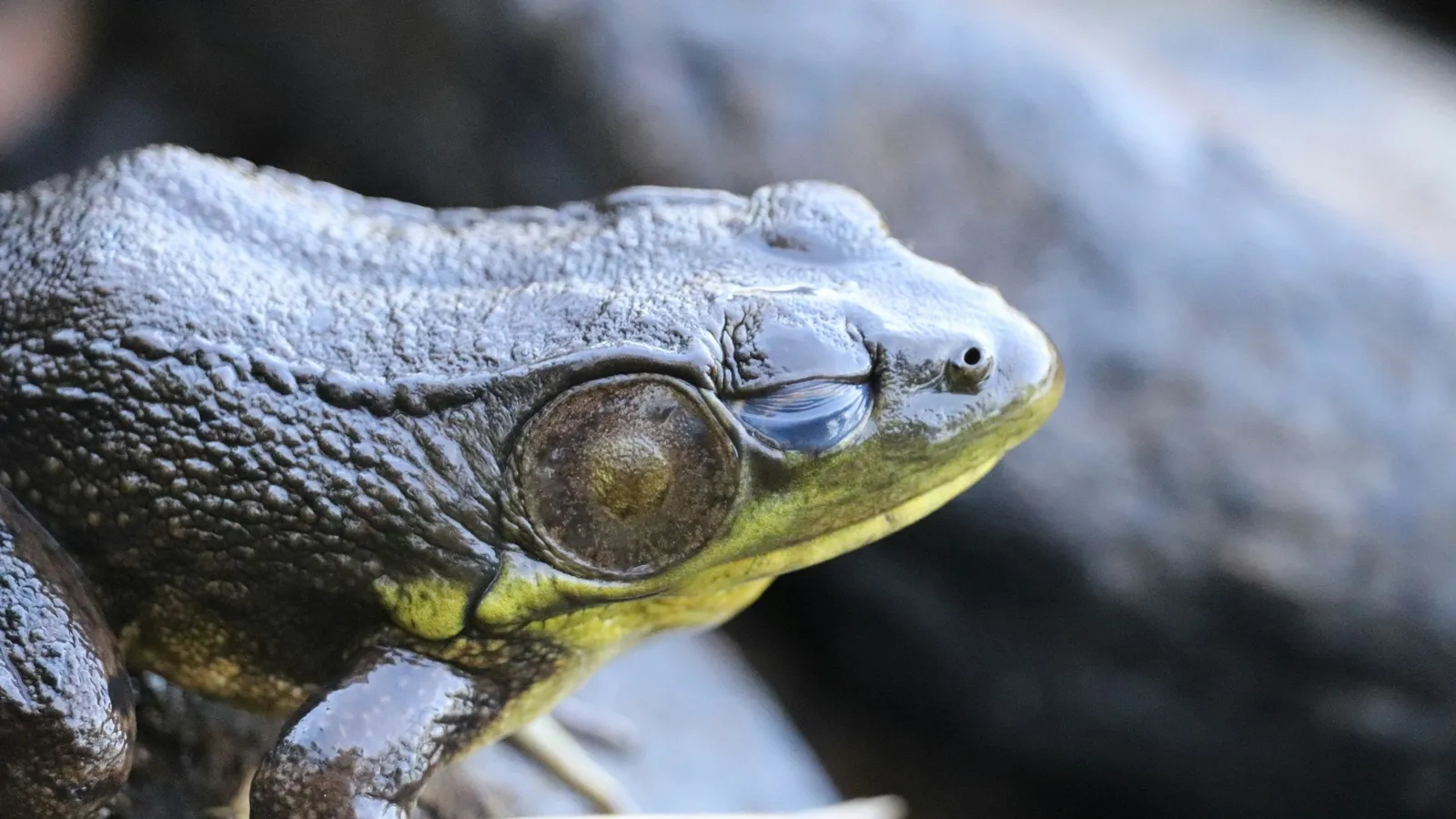
NCERT uses *Rana tigrina*, the Indian bullfrog, as its vertebrate example. Frogs belong to class Amphibia of phylum Chordata. They are poikilotherms (cold-blooded), never drink water but absorb it through the skin, and shelter in burrows in peak summer (aestivation) and winter (hibernation). The body has a head and trunk, with no neck or tail. Forelimbs end in four digits and hindlimbs in five, webbed for swimming. Males have vocal sacs and a copulatory pad on the first digit of the forelimb.
What should you know about each organ system?
Digestive: a short alimentary canal, because frogs are carnivores. A bilobed tongue captures food. The duodenum receives bile and pancreatic juice through a common bile duct. Waste leaves through the cloaca.
Respiratory: in water, the skin (cutaneous respiration). On land, the buccal cavity, skin and lungs (pulmonary respiration). During aestivation and hibernation, gas exchange is through the skin.
Circulatory: a closed system plus a lymphatic system. The heart has three chambers (two atria, one ventricle), with a sinus venosus joining the right atrium and a conus arteriosus leaving the ventricle. There is a hepatic portal system and a renal portal system. Red blood cells are nucleated.
Excretory: a pair of kidneys made of nephrons (uriniferous tubules). Frogs excrete urea, so they are ureotelic. In males the ureter is a urinogenital duct; in females the ureters and oviducts open separately into the cloaca.
Nervous and endocrine: central, peripheral and autonomic nervous systems, with ten pairs of cranial nerves. The brain has fore-, mid- and hind-brain; the midbrain has a pair of optic lobes. Endocrine glands include the pituitary, thyroid, parathyroid, thymus, pineal body, pancreatic islets, adrenals and gonads.
Sense organs: eyes and internal ears are well organised; there is no external ear, only a tympanum.
Reproductive: testes are attached to the kidneys by the mesorchium, with 10 to 12 vasa efferentia that open into Bidder's canal. Ovaries have no functional connection with the kidneys. A female lays 2500 to 3000 ova at a time. Fertilisation is external, and development goes through a tadpole stage.
Worked example: an assertion-reason question
Assertion: The frog's alimentary canal is short. Reason: Frogs are carnivores.
Is the assertion true? NCERT says the alimentary canal is short. Yes.
Is the reason true? NCERT says frogs are carnivores. Yes.
Does the reason explain the assertion? NCERT states the canal is short "because frogs are carnivores and hence the length of intestine is reduced". Yes.
Answer: both true, and the reason correctly explains the assertion. Now try the reverse trap: "Assertion: frogs respire only through lungs on land." This is false, because on land the buccal cavity and skin also act as respiratory organs.
Common mistakes and how to avoid them
Writing a four-chambered heart. The frog has three chambers; the sinus venosus and conus arteriosus are not counted as chambers.
Calling frogs uricotelic or ammonotelic. Adult frogs excrete urea.
Mixing male and female ducts. Only in males do the ureters carry sperm as urinogenital ducts.
Forgetting the skin. It works in respiration in water, on land and during aestivation and hibernation.
A revision routine for this chapter
Draw the frog's digestive system, then the male and female reproductive systems, from memory. NCERT's own exercises ask for these diagrams. Drawing also helps memory: in seven experiments, Wammes and colleagues (2016) found that drawing items led to better recall than writing them out.
Close the book and write one line per organ system with its key fact and number. Check, and mark gaps.
Two days later, repeat step 2 without looking. Practising recall beat rereading for retention after two days and a week in Roediger and Karpicke's 2006 study.
Link the frog to the wider classification in our animal kingdom guide for NEET, and compare its three-chambered heart with the human heart in body fluids and circulation.
If a tissue type or a system will not stick from the text, the Fermi Concept Library has every concept in biology with its own lesson, so you can work through that one idea and come back to the chapter.
Tonight, draw the frog's digestive system from memory and label every part, then check it against NCERT's Figure 7.2.


