On this page
The animal kingdom chapter looks like a list of eleven phyla and seven vertebrate classes, each with its own examples. Students who learn it as a list forget it within weeks and then lose easy marks on statements such as "all sponges are hermaphrodite and have external fertilisation". This post gives you one method that places any animal, a worked example, the traps that NEET-style questions like to set, and a short practice routine.
What does the NEET syllabus ask about animals?
The NEET (UG)-2026 syllabus asks for the "salient features and classification of animals-nonchordate up to phyla level and chordate up to classes level (three to five salient features and at least two examples)". The matching chapter is Animal Kingdom, Chapter 4 of NCERT Class 11 biology. So you need three to five features and two examples per group, not every detail. Check the syllabus for your own exam year when NMC notifies it.
Which six features does NCERT use to classify animals?
NCERT builds the whole classification on six questions. Ask them in this order.
Level of organisation. Cellular in sponges, tissue in coelenterates, organ in flatworms, and organ system in annelids, arthropods, molluscs, echinoderms and chordates.
Symmetry. Sponges are mostly asymmetrical. Coelenterates, ctenophores and adult echinoderms are radial. Most others are bilateral.
Germ layers. Coelenterates are diploblastic, with mesoglea between ectoderm and endoderm. Flatworms to chordates are triploblastic.
Coelom. A body cavity lined by mesoderm is a true coelom (annelids to chordates). Aschelminthes have a pseudocoelom, where mesoderm sits as scattered pouches. Platyhelminthes have no body cavity at all.
Segmentation. Earthworms show metameric segmentation, a serial repetition of organs.
Notochord. A mesoderm-derived rod on the dorsal side during development. Animals with it are chordates.
The six questions usually narrow an animal to one or two phyla. One distinctive feature then settles it: jointed appendages for arthropods, a water vascular system for echinoderms, comb plates for ctenophores.
Worked example: placing an unknown animal
Description: a worm-like animal, circular in cross-section, bilaterally symmetrical and triploblastic. It has a body cavity, but the mesoderm lies in scattered pouches. The gut is complete with a muscular pharynx. Males and females are separate, and females are longer.
Organ-system level and bilateral, so it is not a sponge, cnidarian, ctenophore or adult echinoderm.
Triploblastic, so it is somewhere from flatworms to chordates.
The body cavity is not lined by mesoderm. That is a pseudocoelom, and NCERT gives one phylum with it: Aschelminthes.
Check against the distinctive features: round in section, dioecious, complete gut. It fits. Examples: *Ascaris* (roundworm), *Wuchereria* (filaria worm), *Ancylostoma* (hookworm).
Two quick ones to try the same way:
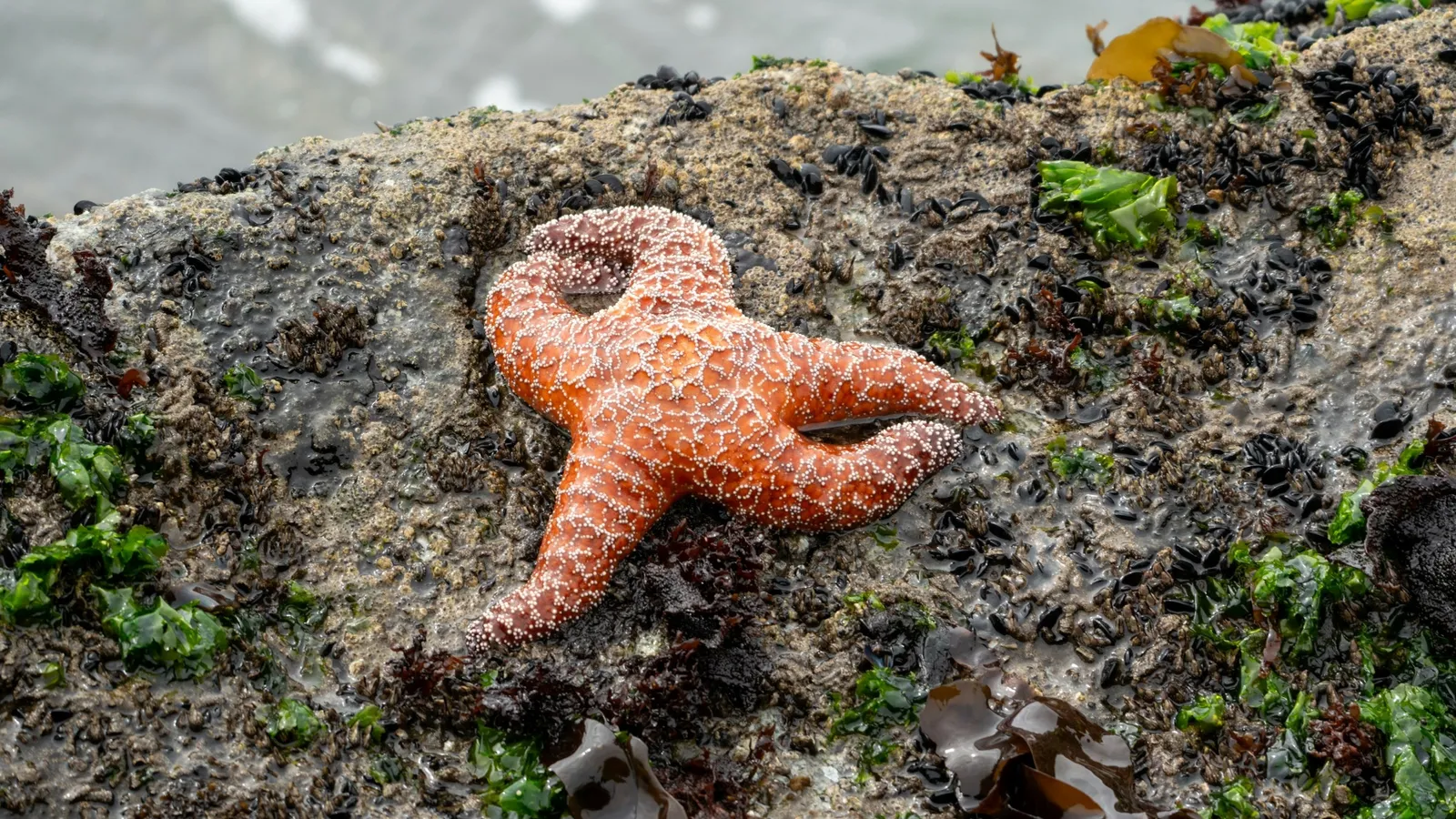
Radially symmetrical adult, bilateral larva, calcareous ossicles, water vascular system: Echinodermata (*Asterias*, *Echinus*).
Notochord present only in the larval tail, marine: subphylum Urochordata (*Ascidia*, *Salpa*).
Which facts do students mix up most?
These are the statements NCERT makes that run against intuition.
Sponges are hermaphrodite, yet fertilisation is internal and development is indirect.
Ctenophores have eight rows of ciliated comb plates, show bioluminescence and reproduce only sexually. Do not confuse them with cnidarians, which carry cnidoblasts and show polyp and medusa forms (alternation in *Obelia*).
Hemichordata is now a separate non-chordate phylum. Its stomochord is only similar to a notochord.
Heart chambers: fishes have two; amphibians and most reptiles have three; crocodiles, birds and mammals have four.
Cartilaginous fishes lack an air bladder, so they must swim constantly to avoid sinking. Bony fishes have one, plus an operculum over four pairs of gills.
Mammals are viviparous with few exceptions; *Ornithorhynchus* (platypus) lays eggs.
Size of phyla: arthropods are the largest phylum, with over two-thirds of all named species. Molluscs are second.
Earthworms and leeches are monoecious, but *Nereis* is dioecious.
Why does making a chart not stick?
Many students copy NCERT's comparison table into a neat chart and reread it. Research suggests that recalling is the stronger move. In Karpicke and Blunt (2011), students who practised retrieving the content of science texts learned more than students who built concept maps while studying. The advantage held for inference questions, and even when the final test asked students to draw a concept map.
So build the chart once, then put it away and refill it blank. If a term such as coelom or metamerism is still fuzzy when you do, the Fermi Concept Library covers every concept in biology, so you can read a short explanation and go back to your grid.
A one-week practice routine
Day 1: Read NCERT 4.1 and draw the six-question flow on one page.
Day 2: Non-chordates. Make a blank grid with phyla as rows and the six features plus "distinctive feature" and "two examples" as columns. Fill it from memory, then check.
Day 3: Chordates. Same grid for the seven vertebrate classes, adding heart chambers, body temperature and fertilisation.
Day 4: Write five "unknown animal" descriptions like the worked example and swap them with a friend.
Day 5: Refill both grids blank. Mark every cell you got wrong.
Day 7: Twenty mixed MCQs, then refill only the wrong cells.
The same method works for the earlier chapters on biological classification and the five kingdoms and the plant kingdom from algae to angiosperms.
Tonight, draw the empty non-chordate grid and fill as much as you can without opening the book.