On this page
A snakebite is a delivery system: a gland makes a protein-rich liquid and a reshaped tooth puts it into another animal. Learn those two parts and antivenom makes sense too.
Is snake venom just modified saliva?
In an evolutionary sense, largely yes. A 2021 study in PNAS by Barua and Mikheyev found that overall venom gland gene expression in snakes was "surprisingly well conserved when compared to salivary glands of other amniotes" (Barua and Mikheyev, PNAS 2021). Amniotes include reptiles, birds and mammals, you among them.
The same study described a "metavenom network" of about 3,000 housekeeping genes that switch on with the toxin genes and mainly help fold and modify proteins (Barua and Mikheyev). The protein factory already existed in ancestral mouths; snakes added new toxin genes to it.
How does venom get from the gland into the fang?
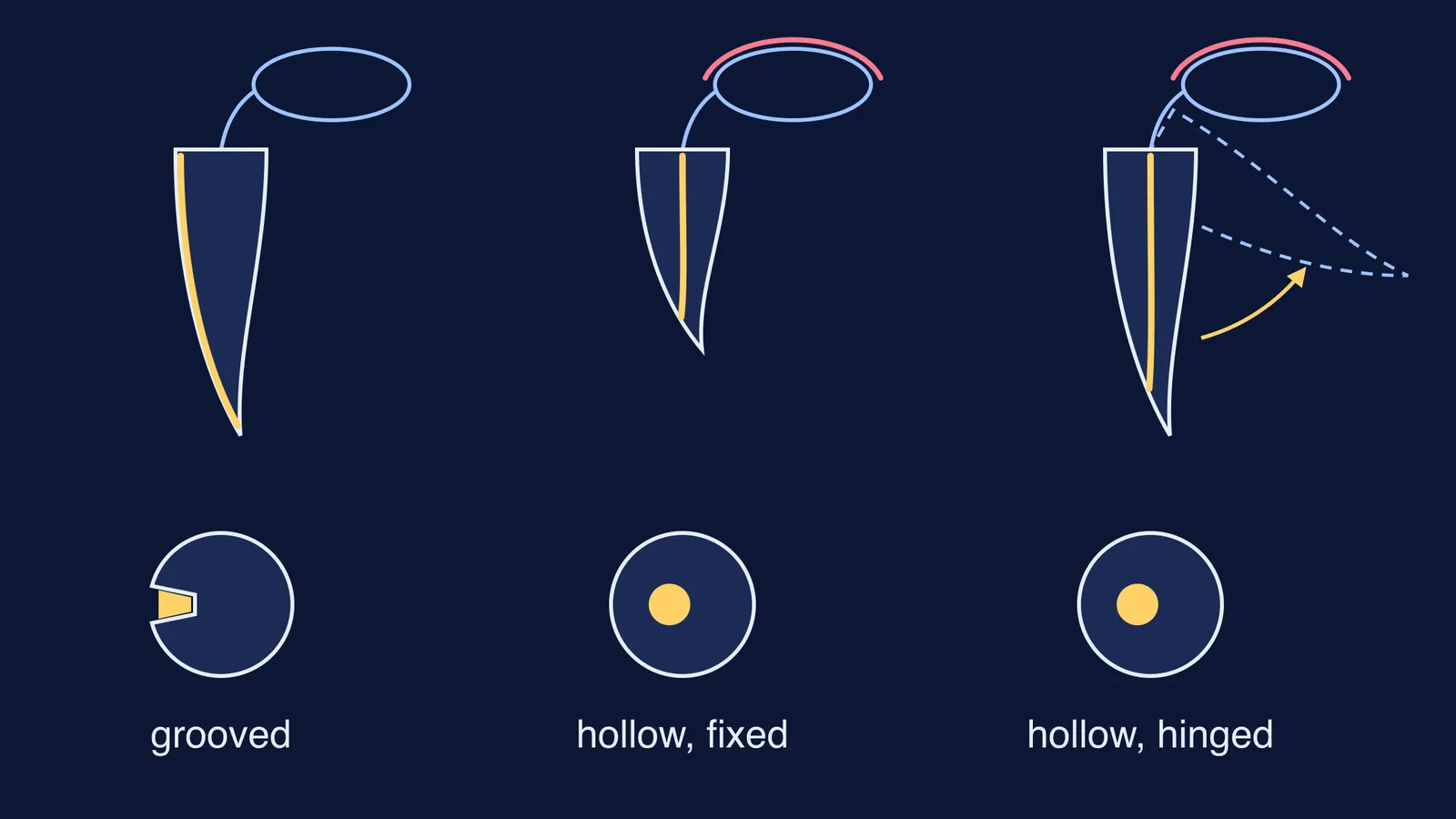
Through a duct, and the big difference between snakes is pressure. A 2021 paper in the journal Toxins describes front-fanged snakes as having "moveable or fixed hollow front fangs that deliver venom from a pressurized venom gland" (Hofmann et al., Toxins 2021). In rear-fanged snakes, the same paper says, a duct carries "low-pressure venoms to solid, grooved rear fangs", and their gland (often called Duvernoy's gland) typically has no muscle attached to squeeze it. Think syringe versus gutter.
What are the main types of snake fangs?
Fangs are grouped by where they sit and how the venom travels:
Rear fangs, grooved: enlarged teeth at the back of the upper jaw with an open groove on the surface; venom flows along it at low pressure (Hofmann et al.).
Front fangs, hollow and fixed: short fangs at the front of the mouth, "fixed in the downward facing position, just like the rest of the snake's teeth", as in cobras and other elapids (NC Cooperative Extension).
Front fangs, hollow and hinged: vipers have fangs that are "hinged and lay against the roof of the snake's mouth" when not in use (NC Cooperative Extension). Folding lets a long fang fit in a closed mouth.
The surprise: a 2008 study in Nature examined 96 snake embryos from eight species and found that front fangs grow from the back of the upper jaw, then shift forward as the head grows (Vonk et al., Nature 2008). The authors concluded that front and rear fangs are consistent with being homologous: the same structure, moved to different places.
Why is antivenom made using antibodies?
Because an immune system can learn to recognise venom toxins as foreign antigens and make antibodies that lock onto them. WHO explains that antivenoms "are manufactured by fractionating plasma collected from animals (typically horses or sheep) that have been immunized against relevant venoms and that as a result develop neutralizing antibodies" (WHO antivenom guidelines). The same page calls antivenoms "the only specific treatment for snakebite envenoming".
Think of it as borrowed immunity. The animal does the slow work of making antibodies; the patient receives ready-made ones that bind the toxins. That is passive immunity: fast, but not lasting. The antibodies only bind the venoms they were raised against. In India, polyvalent antivenom covers Russell's viper, saw-scaled viper, common krait and Indian cobra, the so-called big four (Kumar and Gopalakrishnan, PLoS NTDs 2025).
Why does this matter so much in India?
India had an estimated 1.2 million snakebite deaths from 2000 to 2019, an average of about 58,000 a year, according to the Million Death Study (Suraweera et al., eLife 2020). Worldwide, WHO estimates that around 81,410 to 137,880 people die from snakebites each year (WHO fact sheet). India launched a National Action Plan in March 2024 aiming to halve snakebite deaths by 2030 (Kumar and Gopalakrishnan).
This post covers the biology, not first aid. For what to do after a bite, follow official guidance such as the US CDC page on venomous snakes and snakebite first aid.
A revision card you can use tonight
Cover the answers and say each one aloud:
Where is venom made? A gland sharing its gene machinery with salivary glands.
Grooved fang? Back of jaw, solid tooth, low-pressure gland, no squeezing muscle.
Hollow fixed fang? Front of jaw, short, pressurised gland (cobras).
Hollow hinged fang? Front of jaw, long, folds back (vipers).
Why antibodies? Immunised animals make antibodies that neutralise venom toxins.
Active or passive immunity? Passive: ready-made antibodies, fast but short-lived.
If antigens or passive immunity feel shaky, each has its own lesson in the Fermi Concept Library. For practice, the Fermi Problem Library has worked problems with a step-by-step solver that explains the reasoning rather than printing an answer.