On this page
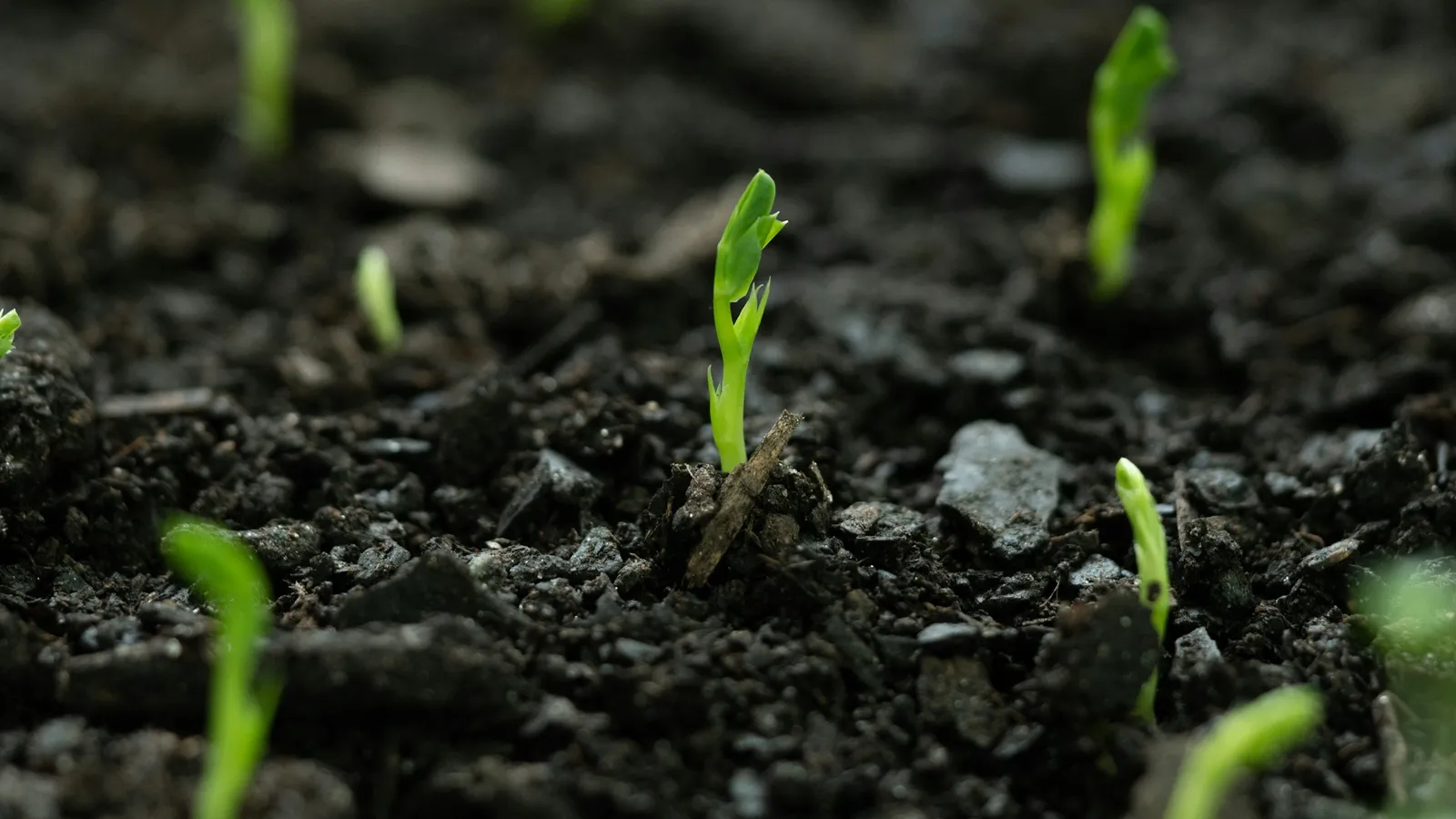
Seeds sit in two NCERT chapters at once: their formation is in sexual reproduction in flowering plants, and their germination opens the chapter on plant growth. Questions draw on both. This post brings the two together, explains how hormones control dormancy, works through a germination test with numbers, and tells the story of a record seed that turned out not to be one.
Where are seeds in the syllabus?
The NEET (UG) 2026 syllabus lists "Development of seed and formation of fruit" and "Significance of seed and fruit formation" under sexual reproduction in flowering plants, and "Seed germination" under plant growth. Dormancy itself is not a separate line, but it appears in the NCERT text on seeds and on ABA. The HBCSE syllabus for NSEB and INBO lists "seed dormancy" directly. Check the current syllabus for your exam.
What happens as a seed matures?
The NCERT chapter on sexual reproduction in flowering plants describes the changes:
The integuments harden into the seed coat. The micropyle stays as a small pore that lets in oxygen and water during germination.
The seed loses water until it is relatively dry, at 10 to 15 per cent moisture by mass.
The embryo's metabolism slows. It may enter dormancy, or germinate if moisture, oxygen and a suitable temperature are available.
NCERT stresses why this matters: dehydration and dormancy let seeds be stored as food through the year and kept to sow next season.
How do hormones control dormancy?
The NCERT chapter on plant growth says that ABA inhibits seed germination, plays a role in seed development, maturation and dormancy, and helps seeds withstand desiccation. It "acts as an antagonist to GAs" in most situations. The same chapter notes that ethylene breaks seed and bud dormancy and starts germination in peanut seeds.
Research agrees. In a review in New Phytologist, Finch-Savage and Leubner-Metzger (2006) describe dormancy as an innate seed property that defines the conditions in which a seed can germinate, determined by genetics with a strong environmental influence, mediated at least in part by abscisic acid and gibberellins. A 2025 study in Plants puts the balance simply: ABA induces seed dormancy, whereas GA releases it.
How old can a viable seed be?
NCERT gives two records. The oldest is an Arctic lupine, Lupinus arcticus, from Arctic tundra, said to have germinated after about 10,000 years of dormancy. The second is a roughly 2,000-year-old date palm seed, Phoenix dactylifera, from King Herod's palace near the Dead Sea.
The lupine claim comes from Porsild, Harington and Mulligan (Science, 1967), who found the seeds in lemming burrows in frozen silt in the Yukon. The seeds themselves had not been dated directly. In 2009, Zazula and colleagues radiocarbon-dated two of the remaining seeds and reported that the plants had been grown from modern seeds that had apparently contaminated the ancient sample.
The date palm stands. Sallon and colleagues (Science, 2008) germinated a seed excavated at Masada and radiocarbon-dated to the first century CE, calling it the oldest directly dated viable seed. For an exam that follows NCERT, give NCERT's answer; just know that science checks its records.
Worked example: germination percentage and mean germination time
The numbers are invented for practice. You soak 50 seeds and count new germinations each day:
Day 1: 0
Day 2: 5
Day 3: 12
Day 4: 15
Day 5: 8
Day 6: 3
Day 7: 0
Total germinated: 5 + 12 + 15 + 8 + 3 = 43.
Germination percentage: 43 / 50 = 0.86, or 86 per cent.
Mean germination time is the weighted average of the day each seed germinated, a measure reviewed by Ranal and Santana (2006): sum of (seeds x day) divided by seeds.
Sum of seeds x day: (5 x 2) + (12 x 3) + (15 x 4) + (8 x 5) + (3 x 6) = 10 + 36 + 60 + 40 + 18 = 164.
Mean germination time: 164 / 43 = 3.8 days.
Use the number of seeds that germinated each day, not the running total, or the mean comes out too high.
Common mistakes
Saying dormant seeds are dead. They are alive with very low metabolism; that is what viability means.
Swapping ABA and GA. ABA induces dormancy and inhibits germination; GA releases dormancy.
Forgetting oxygen. Germination needs moisture, oxygen and a suitable temperature, not just water.
Confusing perisperm with endosperm. Perisperm is persistent nucellus, as in black pepper and beet.
A practice routine
List the seed changes during maturation and the three conditions for germination from memory.
Make a table of the five plant growth regulators and their effect on dormancy and germination, using our post on plant growth regulators.
Redo the germination calculation with your own daily counts.
Revise seed and fruit development in our guide to reproduction in flowering plants.
If you can follow the hormones but lose track of how they connect, Fermi's AI tutor decides whether to explain, ask or show, and checks your understanding as it goes.
Soak ten seeds tonight and count them each morning for a week; then calculate your own germination percentage.