

On this page
How does Lactobacillus turn milk into curd?
The conversion of milk into curd is one of the most common examples of how microbes are used in household products. This process is driven by *Lactobacillus*, a genus of bacteria commonly known as Lactic Acid Bacteria (LAB). When you add a small spoonful of starter curd—also known as the inoculum—to warm milk, you are introducing millions of these bacteria into a nutrient-rich environment (NCERT).
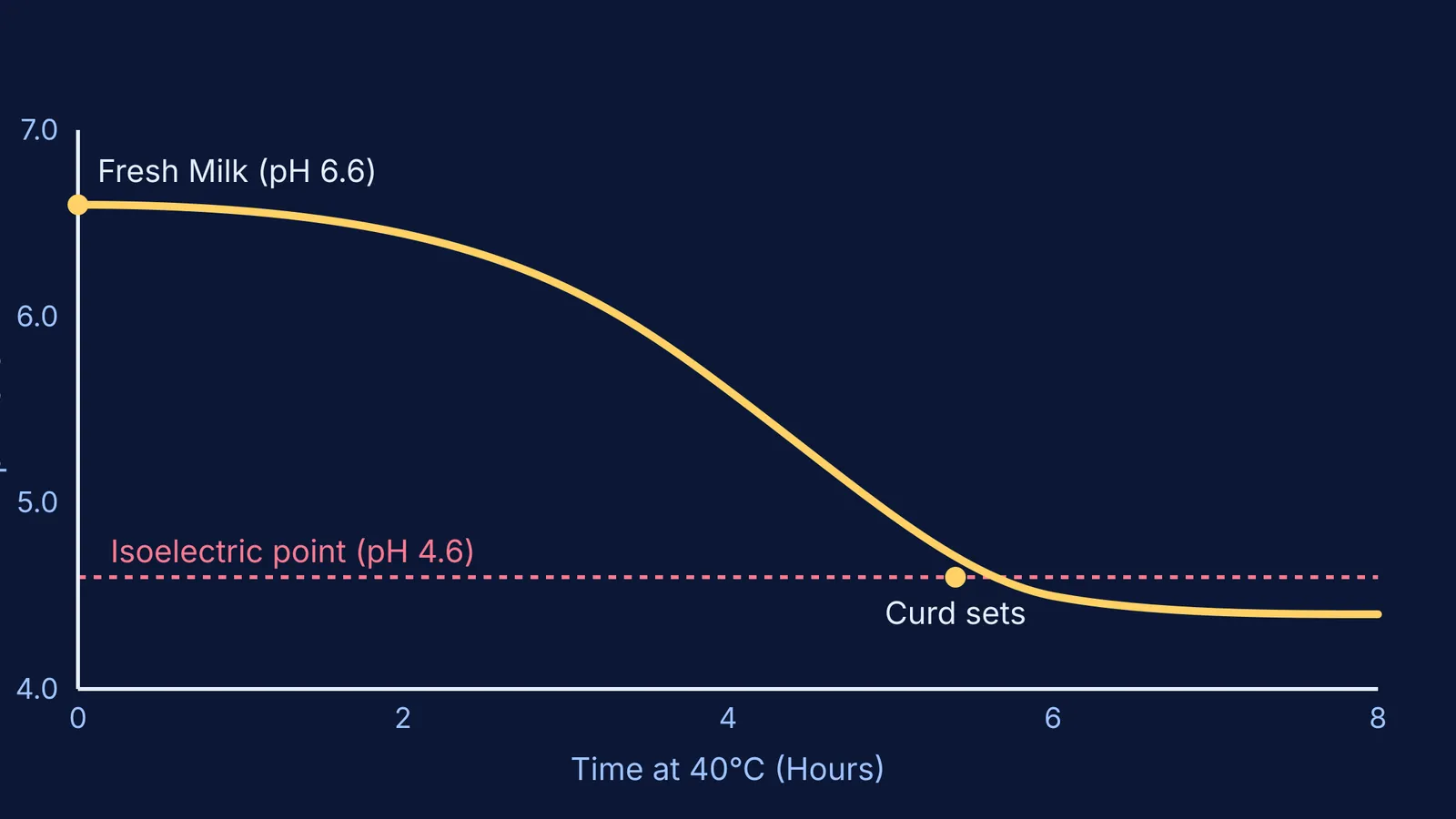
*Lactobacillus* feeds on lactose, the primary sugar found in milk. Through fermentation, the bacteria convert this sugar into lactic acid. As the acid accumulates, it steadily drops the pH of the milk. When the pH drops to 4.6, it reaches the isoelectric point of casein, the main protein in milk (NCBI).
At this precise pH, the net charge on the casein molecules becomes zero, causing them to lose their electrostatic repulsion. They unravel and clump together, partially digesting the milk proteins while trapping water and fat inside a solid mesh. This coagulation is what gives curd its thick, set structure.
What is the ideal temperature and time for setting curd?
Temperature controls how quickly *Lactobacillus* multiplies and produces lactic acid. The ideal temperature for these bacteria to thrive and ferment milk is around 40°C. If the milk is maintained at this temperature, the bacteria are highly active, and the milk will typically set into a firm curd in about 8 hours (NCBI).
Heating the milk too much is a common mistake that can kill the beneficial bacteria, preventing the milk from setting at all. Conversely, milk that is too cold will leave the bacteria largely inactive and drastically slow down the fermentation process.
To apply the science of *Lactobacillus* in your own kitchen and achieve the perfect set time, follow these rules:
Boil and cool: Boil the milk first to denature whey proteins, which helps the curd hold together. Then, let it cool until it is lukewarm (around 40°C).
Use a live starter: Add a small amount of fresh, active curd. Old or heavily processed curd may not have enough living bacteria.
Maintain the heat: Keep the container in a warm place. In winter, wrapping the bowl in a towel helps hold the temperature near the optimal mark.
Watch the clock: Check the curd after 8 hours. Leaving it to ferment too long will cause the pH to drop further, making it overly sour and causing whey to separate.
Why are Lactic Acid Bacteria good for health?
Beyond transforming the texture of milk, fermentation fundamentally changes its nutritional profile. As noted in the NCERT syllabus for Class 12, the curdling process improves the nutritional quality of the milk by increasing the content of Vitamin B12. This makes curd easier to digest and more nutritious than the original liquid milk (NCERT).
Furthermore, *Lactobacillus* serves as a valuable probiotic. Once consumed, these bacteria survive the journey into the human stomach, where they play a beneficial role in checking the growth of disease-causing microbes. The acidic environment they create helps defend the digestive tract against harmful pathogens.
If you are studying microbial processes or biochemical reactions for an upcoming exam, bridging the gap between textbook facts and real-world examples is key. Understanding bacterial activity helps with everything from kitchen fermentation to sewage treatment and BOD. You can explore these topics, alongside lessons on viruses, viroids and lichens or the six enzyme classes, in the Fermi Concept Library, where every concept in physics, chemistry, biology, mathematics and computing has its own lesson and its place in the map.


