On this page
Linkage questions give you a table of offspring counts and ask for a distance, an order or a gamete ratio. Students who can do Punnett squares often still get these wrong, because the method is different. This post explains what linkage is, how to calculate recombination frequency from a test cross, and how to order three genes, with numbers you can check.
What does the syllabus include?
The NEET (UG) 2026 syllabus lists "Chromosome theory of inheritance; Chromosomes and genes; Sex determination... Linkage and crossing over; Sex linked inheritance" under Heredity and variation. The CBSE Class 12 curriculum for 2026-27 has the same line. Check the current year's syllabus before your exam.
What did Morgan find?
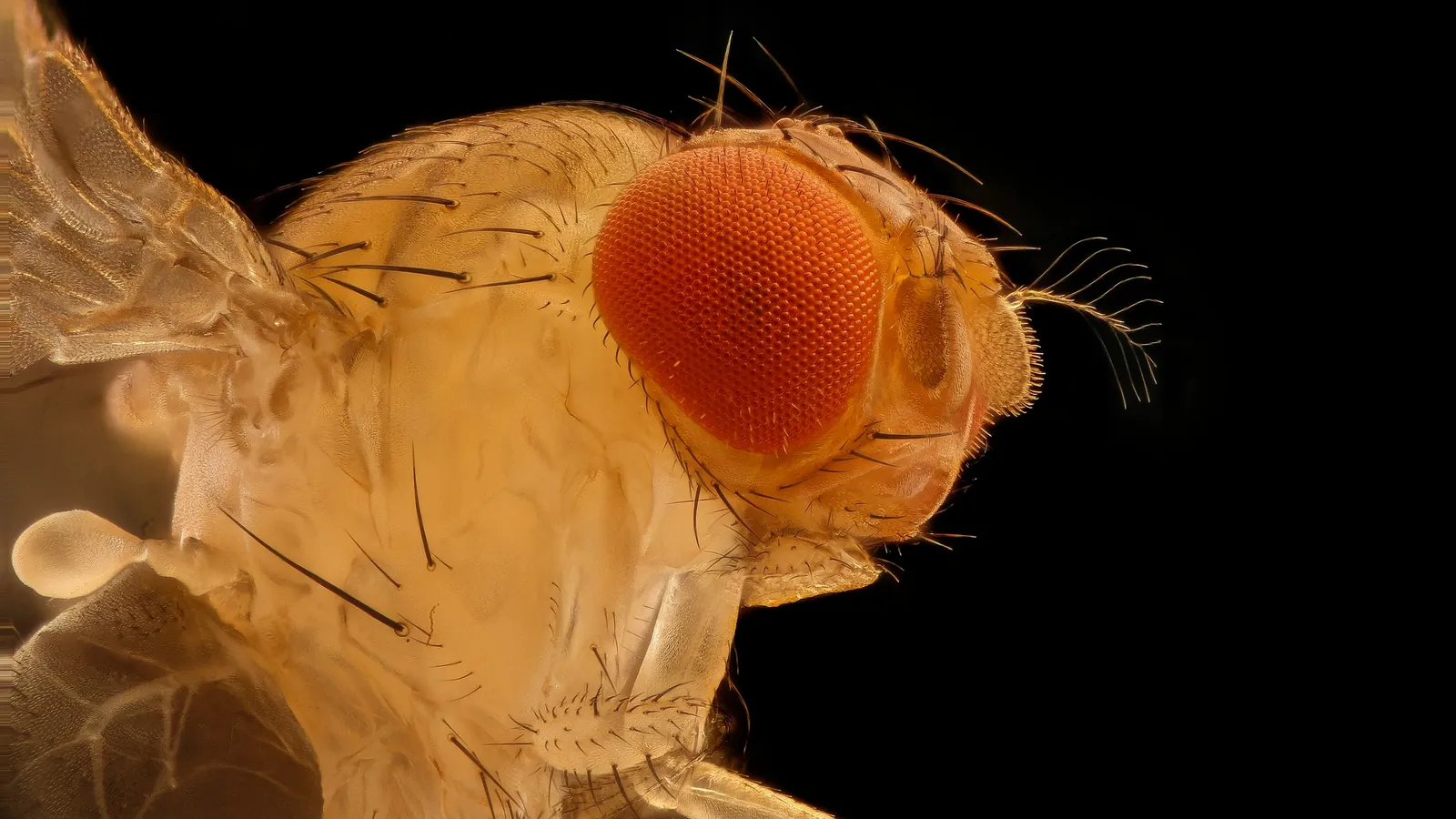
The NCERT chapter on inheritance describes how Thomas Hunt Morgan crossed Drosophila differing in two X-linked genes and found that the F2 "deviated very significantly from the 9:3:3:1 ratio". Parental combinations were far more common than new ones. Morgan called the physical association of genes on a chromosome linkage and the appearance of non-parental combinations recombination. Some pairs were tightly linked: white and yellow showed only 1.3 per cent recombination, while white and miniature wing showed 37.2 per cent.
Morgan first set out the idea in a short 1911 note in Science, Random segregation versus coupling in Mendelian inheritance. He received the 1933 Nobel Prize in Physiology or Medicine "for his discoveries concerning the role played by the chromosome in heredity".
How did recombination become a map?
Morgan's student Alfred Sturtevant reasoned that genes further apart on a chromosome are more likely to be separated by a crossover. He used recombination frequencies as distances and placed six X-linked genes in a line, in The linear arrangement of six sex-linked factors in Drosophila (1913). One per cent recombination is now called one map unit, or one centimorgan.
The physical proof that crossing over swaps chromosome pieces came later. In maize, Harriet Creighton and Barbara McClintock (1931) followed two genetic markers and two visible chromosome markers, and showed that when the genes recombined, the chromosome pieces were exchanged too. Our profile of Barbara McClintock covers her later work.
Worked example: from counts to map distance
A plant heterozygous for two linked genes, with A and B on one chromosome and a and b on the other (AB/ab), is test-crossed with ab/ab. The 1000 offspring are:
AB: 430
ab: 420
Ab: 80
aB: 70
Find the parental classes. They are the two largest: AB and ab. They match the parent's chromosomes.
Find the recombinants. Ab and aB: 80 + 70 = 150.
Calculate recombination frequency. 150 / 1000 = 0.15, or 15 per cent.
Convert to distance. 15 per cent is 15 map units.
Now order three genes. Suppose A-B is 15 units, B-C is 7 units and A-C is 22 units. The two shorter distances add to the longest (15 + 7 = 22), so B is in the middle: A, B, C. If instead A-C had been 8 units, then 8 + 7 = 15 would put C in the middle: A, C, B.
Why can recombination frequency never exceed 50 per cent?
If two genes assort independently, a test cross gives four classes in a 1:1:1:1 ratio, so half the offspring are recombinant. Genes that are far apart on the same chromosome behave almost like this, because crossovers between them are frequent. So recombination frequency tops out near 50 per cent, and two crossovers between distant genes restore the parental arrangement and go uncounted. Long distances measured in one step are underestimates, which is why maps are built from short intervals.
What mistakes cost marks here?
Using the F2 instead of a test cross. Recombination frequency is easiest to read from a test cross, where each offspring shows the gametes of the heterozygous parent directly.
Forgetting the phase. Check whether the parent was in coupling (AB/ab) or repulsion (Ab/aB) before you label classes.
Adding instead of dividing. The answer is a fraction of the total, not a count.
Confusing linkage with sex linkage. Linkage is about two genes on the same chromosome. Sex-linked genes are on the X chromosome; they can also be linked to each other, as in Morgan's flies.
Writing 37.2 per cent as "unlinked". It is still below 50 per cent, so white and miniature are linked, just loosely.
A practice routine
Make up three test-cross tables, one in coupling and one in repulsion, and calculate recombination frequency for each.
Turn three pairwise distances into a gene order, then check it by adding the two shorter ones.
Explain in two sentences why 50 per cent is the ceiling.
Redo the Mendelian crosses in our genetics problems guide and note how a linked pair would change each ratio.
If you can do the arithmetic but cannot see why distance and crossover chance go together, the Fermi Simulation Lab has interactive simulations for ideas that are easier to see than read.
Next step: write one test-cross table tonight, swap the phase, and check that your parental classes change with it.