On this page
Huygens principle is often taught as a derivation to memorise for the board exam. It is more useful than that: it is the simplest way to see why light bends at a boundary, why its wavelength changes and its frequency does not, and why the wave picture beat the particle picture on one key prediction. This post explains each step with numbers.
What is a wavefront?
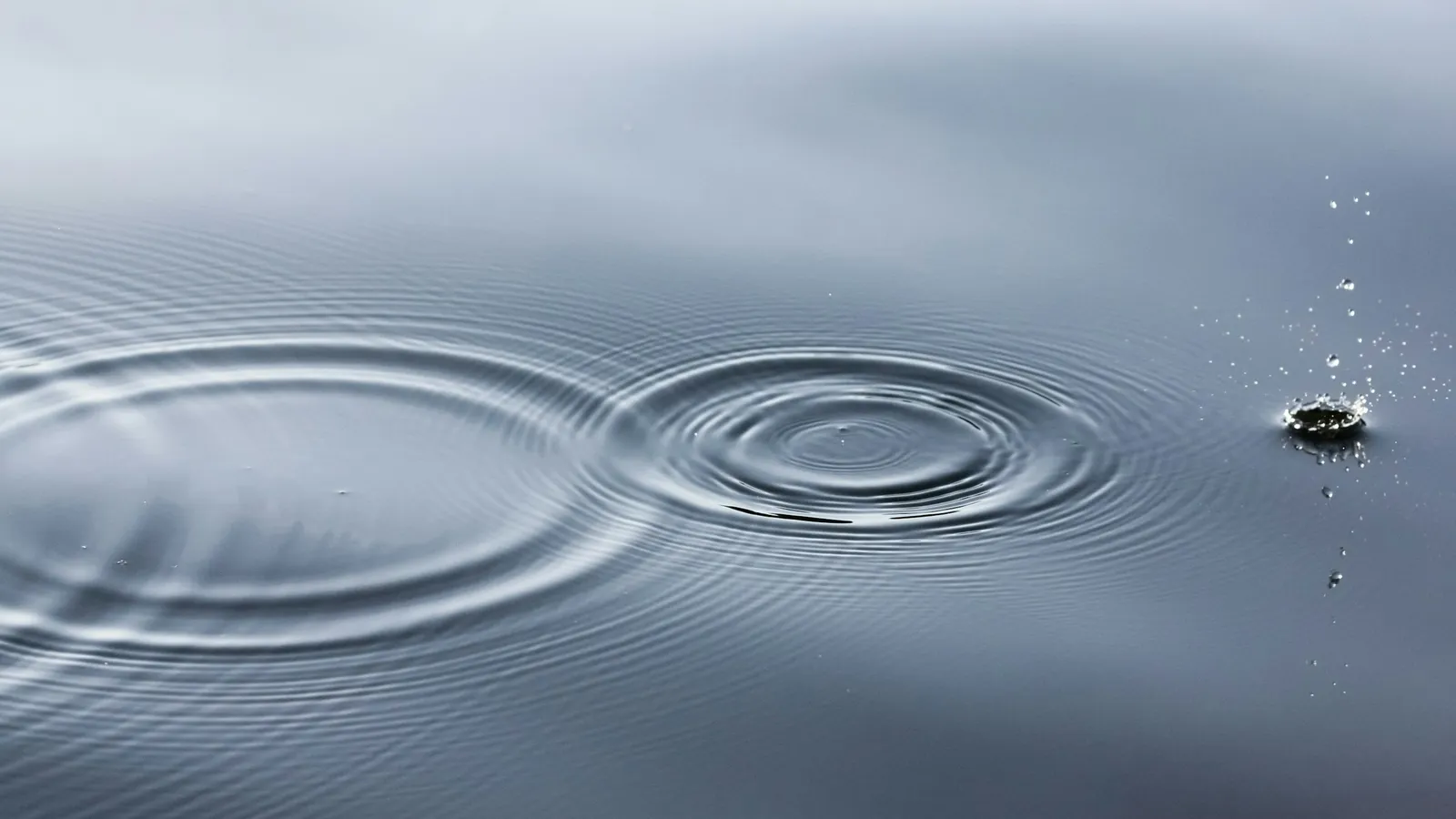
The NCERT Class 12 chapter Wave Optics defines a wavefront as a surface of constant phase. Drop a stone into still water and the circular ripple is a wavefront. A point source in three dimensions gives spherical wavefronts; far from the source, a small piece of a sphere looks flat, so we treat light from the Sun or a distant lamp as a plane wavefront. The direction of travel, the ray, is always perpendicular to the wavefront.
Both the JEE (Main) 2026 syllabus ("wavefront and Huygens' Principle, laws of reflection and refraction using Huygens principle") and the JEE (Advanced) 2026 syllabus include this topic.
What does Huygens principle say?
Christiaan Huygens presented his wave theory to the Royal Academy of Sciences in Paris in 1678. In the English translation of his Treatise on Light, he writes that "around each particle there is made a wave of which that particle is the centre". In modern words:
Every point on a wavefront acts as a source of secondary wavelets that spread out at the speed of the wave.
After a time t, the new wavefront is the surface that touches all these wavelets, their forward envelope.
NCERT notes one weakness: the construction also produces a backward wave, which is not observed. Huygens simply assumed the backward wavelets have no effect. A full justification came later from a more complete wave theory. Our profile of Christiaan Huygens covers his life and his other work.
How does Huygens principle give Snell's law?
A plane wavefront AB meets a flat boundary at an angle. Point A touches the surface first. In the time τ that point B takes to reach the surface at C, travelling BC = v₁τ in medium 1, the wavelet from A spreads into medium 2 to a radius AE = v₂τ. The refracted wavefront is the tangent from C to that wavelet.
From the two right-angled triangles, sin i = BC/AC = v₁τ/AC and sin r = AE/AC = v₂τ/AC. Dividing, sin i / sin r = v₁/v₂. With n = c/v, this becomes n₁ sin i = n₂ sin r, which is Snell's law. For reflection, the wavelet stays in the same medium with the same speed, and the same construction gives i = r.
Why did this matter historically?
NCERT points out that the corpuscular (particle) model predicted that light bending towards the normal should travel faster in the denser medium. Huygens' construction predicts the opposite: v₂ < v₁ when r < i. Foucault settled it in 1850 by showing that light travels more slowly in water than in air, as the wave model predicted.
Worked example 1: light entering glass
Light of wavelength 600 nm in air enters glass of refractive index 1.5 at an angle of incidence of 30°.
Speed in glass: v = c/n = 3.0 × 10⁸ / 1.5 = 2.0 × 10⁸ m/s.
Wavelength in glass: λ = 600/1.5 = 400 nm.
Frequency: f = c/λ = 3.0 × 10⁸ / (600 × 10⁻⁹) = 5.0 × 10¹⁴ Hz, in air and in glass.
Angle of refraction: sin r = sin 30° / 1.5 = 0.333, so r = 19.5°.
Worked example 2: from water into glass
Light in water (n = 1.33) hits a glass surface (n = 1.5) at 45°. Then sin r = 1.33 × sin 45° / 1.5 = 1.33 × 0.707 / 1.5 = 0.627, so r = 38.8°. The bending is small because the two speeds are close. The water value of 1.33 is from the NCERT Class 10 table in Light: Reflection and Refraction.
Common mistakes and how to avoid them
Saying the colour changes in glass. Colour depends on frequency, which does not change.
Mixing up wavefront and ray. The ray is perpendicular to the wavefront, not along it.
Getting the speed comparison backwards. If the ray bends towards the normal, the second medium is slower.
Measuring the angle from the surface. Angles i and r are measured from the normal, which is also the angle between the wavefront and the surface.
The same wavelet idea explains interference and diffraction. Our post on Young's double slit problems is the next step.
A practice routine
Draw the refraction construction from memory, labelling v₁τ and v₂τ, and derive Snell's law.
Repeat it for reflection and for refraction into a faster medium.
Solve three problems that ask for speed, wavelength and frequency in a second medium.
Explain in two sentences why Foucault's result supported the wave model.
When the construction is hard to picture, the Fermi Simulation Lab has interactive simulations for ideas that are easier to see than read, which helps when you want to watch wavefronts rather than draw them.
Tonight, redo worked example 1 with light going from glass back into air at 19.5° and check that you get 30°.