

On this page
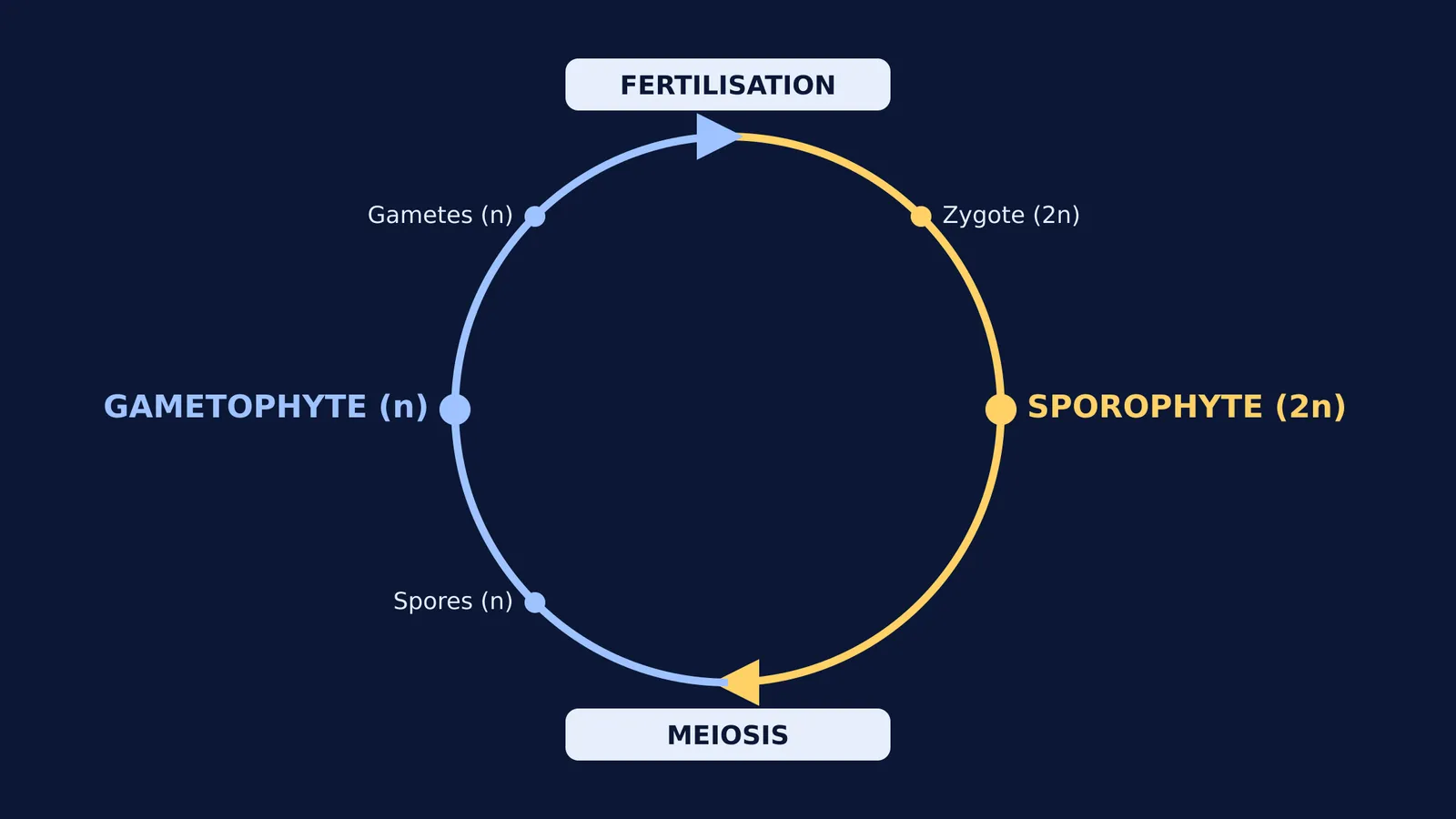
Plants and algae cycle between two different stages in their lives: a haploid gametophyte (n) and a diploid sporophyte (2n) (Wikipedia). The gametophyte produces gametes (sperm and eggs) by mitosis. These fuse to form a diploid zygote, which then grows into the sporophyte. In turn, the sporophyte produces haploid spores by meiosis, which grow back into the gametophyte, completing the cycle.
This process was first understood in the 19th century by Wilhelm Hofmeister and alternation of generations in plants. The dominant phase — the one that is larger, photosynthetic, and lives independently — determines whether the life cycle is haplontic, diplontic, or haplodiplontic.
What is a haplontic life cycle?
In a haplontic life cycle, the free-living haploid gametophyte is the dominant, photosynthetic phase. The diploid stage is represented only by a single-celled zygote. There is no multicellular sporophyte; instead, the zygote undergoes meiosis immediately to form haploid spores.
Most green, brown and red algae follow this pattern. *Volvox*, *Spirogyra*, and some species of *Chlamydomonas* are classic examples of haplontic organisms found in standard biology curricula (Wikipedia). When you see a *Volvox* colony, you are looking at a haploid organism.
What is a diplontic life cycle?
In a diplontic life cycle, the diploid sporophyte is the independent, dominant organism. The haploid phase is highly reduced, consisting only of gametes or a microscopic gametophyte of just a few cells that depends completely on the sporophyte.
Seed plants — including gymnosperms (such as *Pinus*) and angiosperms (flowering plants) — are typically taught as diplontic. The tree or shrub you see is the diploid sporophyte. The haploid generation is hidden inside cones or flowers. For example, microsporogenesis and the structure of a pollen grain reveals that pollen is actually a highly reduced, few-celled male gametophyte. Among algae, *Fucus* is a rare exception that is also diplontic.
If you want to see how these cycles fit into the larger map of biology, the Fermi Concept Library covers every concept in physics, chemistry, biology, mathematics and computing, each with its own lesson and its place in the map.
What is a haplodiplontic life cycle?
A haplodiplontic life cycle is an intermediate pattern where both the gametophyte and the sporophyte are multicellular. However, one phase is still dominant over the other:
Bryophytes (mosses and liverworts): The haploid gametophyte is the dominant, green plant. The diploid sporophyte is physically attached to it and depends on it for nourishment.
Pteridophytes (ferns): The diploid sporophyte is the dominant, independent plant. The haploid gametophyte (called a prothallus) is small but also independent and photosynthetic.
A few algae, such as *Ectocarpus*, *Polysiphonia*, and kelps, are also haplodiplontic.
How can you remember the examples?
Use this framework to keep the life cycles straight for your exams:
Find the dominant plant body. Is the plant you see haploid or diploid? If it is a towering pine tree (gymnosperm), it is diploid (diplontic). If it is a green mat of moss (bryophyte), it is haploid (haplodiplontic, gametophyte dominant).
Check for multicellularity in the other phase. Does the minor phase grow into a structure? In a pine tree, pollen is just a few cells, so it is strictly diplontic. In a fern, the spores grow into a distinct, multicellular prothallus, making it haplodiplontic.
If you are confused by tricky plant reproduction questions, you can upload a problem to the Fermi Problem Library. It offers worked problems with a step-by-step solver that explains the reasoning rather than printing an answer, helping you trace exactly where the cycle changes from haploid to diploid.


