

On this page
Mosses, ferns and pine trees look like three different worlds. In your Plant Kingdom chapter, though, each one has a gametophyte and a sporophyte (NCERT Class 11 Biology, Chapter 3). The person who first showed that this single pattern runs through all of them was Wilhelm Hofmeister. This post covers who he was, what he actually wrote, a chromosome-counting example, and the mistakes students make with these life cycles.
Who was Wilhelm Hofmeister?
The plant biologists Donald Kaplan and Todd Cooke reviewed his career in The genius of Wilhelm Hofmeister (American Journal of Botany, 1996). They give his dates as 1824 to 1877 and say his scientific work was "based largely on self-education in all areas of biology, physics, and chemistry". If he is known at all, they write, it is for his early work on flowering plant embryology and "his ground-breaking discovery of the alternation of generations in plants, which he published at age 27 in 1851".
They argue he belongs alongside Darwin and Mendel, and note that his early embryological studies influenced Mendel's genetic work. His later books on the plant cell (1867) and plant form (1868) went on to study cytoplasmic streaming and how gravity and light shape plant growth.
What did he actually write?
His 1851 treatise appeared in Leipzig. In 1862 the Ray Society in London published an English translation by Frederick Currey, On the germination, development, and fructification of the higher Cryptogamia, which Hofmeister revised and expanded for the purpose. Its review chapter gives the key sentence:
"Mosses and ferns therefore exhibit remarkable instances of a regular alternation of two generations very different in their organization."
He then defines them by what they do. The first generation, the one that grows from the spore, "is destined to produce the different sexual organs". The second generation's object "is to form numerous free reproductive cells — the spores — by the germination of which the first generation is reproduced."
Why was matching mosses to ferns so important?
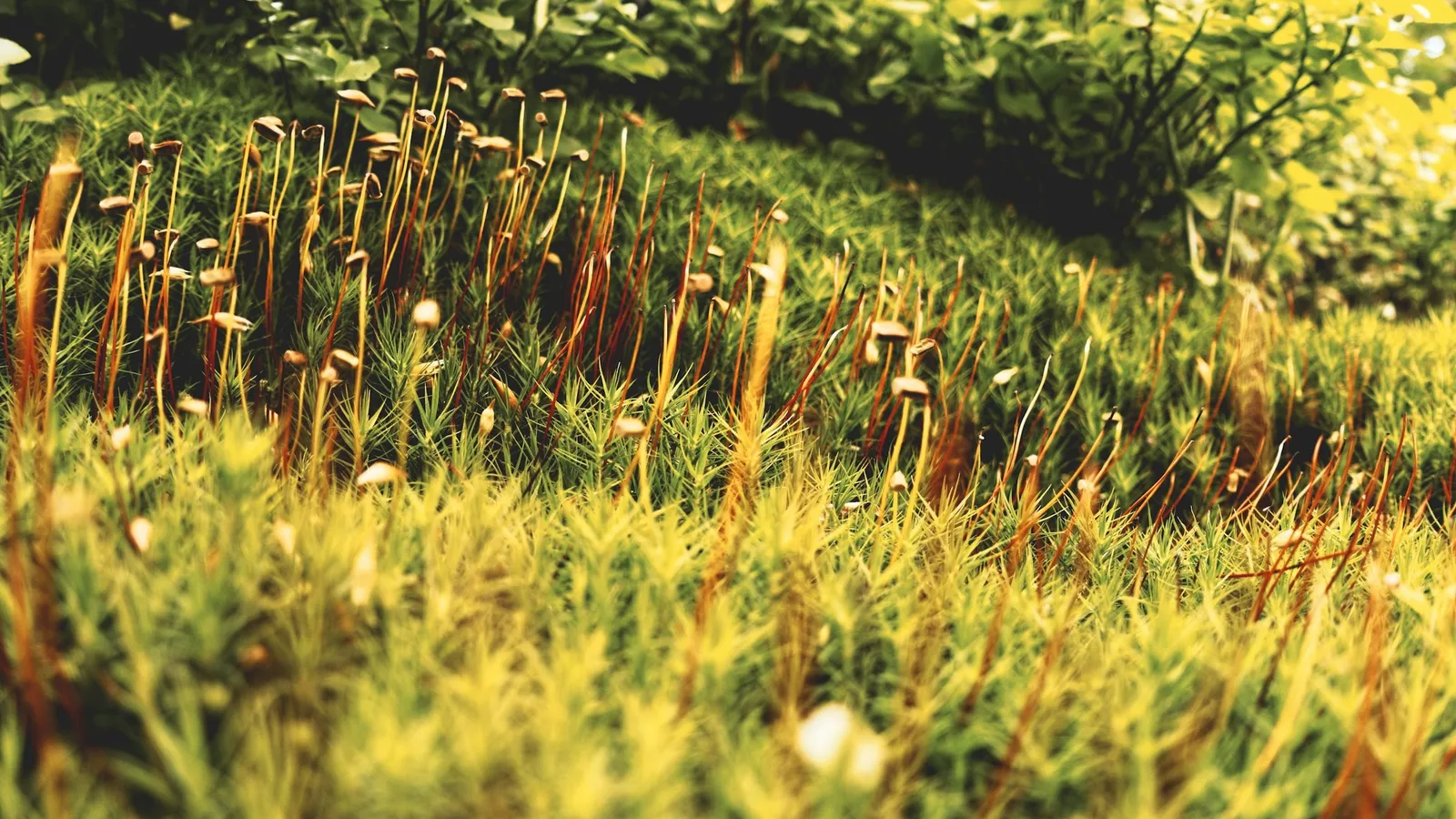
The two groups look upside down compared with each other. In a moss the green leafy plant is what you notice, and the capsule on a stalk is small. In a fern the big leafy plant is what you notice, and the small prothallus on the soil is easy to miss.
Hofmeister matched them part for part: "The leafy plant in the mosses answers therefore to the prothallium of the vascular cryptogams; the fruit in the mosses answers to the fern in the common sense of the word, with its fronds and sporangia." He also noted that in mosses the spore-forming generation "draws its nourishment from the first generation", while in ferns the prothallus is short-lived and the leafy plant lasts for years.
NCERT says the same in modern words. In bryophytes the main plant body is the gametophyte and the sporophyte "is not free-living but attached to the photosynthetic gametophyte and derives nourishment from it". In pteridophytes "the main plant body is a sporophyte".
How did conifers fit in?
Hofmeister went further. He wrote that in "more than one respect the formation of the embryo of the Coniferae is intermediate between the higher cryptogams and the phaenogams" (flowering plants). He compared the structures inside the conifer ovule to the archegonia of ferns and their relatives, and wrote that the embryo sac of conifers "may be looked upon as a spore remaining enclosed in its sporangium". NCERT puts the same idea in today's terms: in gymnosperms the female gametophyte, which bears archegonia, "is also retained within megasporangium".
Worked example: following the chromosome number
Hofmeister described the generations by what they make, not by chromosome number. NCERT adds the numbers: sporophyte cells undergo "reduction division (meiosis) to produce haploid spores". Suppose a moss has n = 10. This is a sample number for practice.
Spore: made by meiosis, so n = 10.
Leafy gametophyte: grows from the spore by mitosis, so n = 10.
Egg and antherozoid: made by the gametophyte by mitosis, so n = 10 each.
Zygote: egg + antherozoid, so 10 + 10 = 20, which is 2n.
Sporophyte (foot, seta, capsule): grows from the zygote by mitosis, so 2n = 20.
Meiosis in the capsule halves the number back to n = 10 in the spores.
For a fern with n = 10, the steps are the same, but the big leafy plant is the 2n = 20 stage, and the prothallus is n = 10.
Common mistakes:
Calling the leafy moss plant the sporophyte. It is the gametophyte.
Saying gametes are made by meiosis in plants. In this cycle, meiosis makes spores; gametes come from mitosis in the gametophyte.
Calling the fern prothallus diploid. It grows from a spore, so it is haploid.
Is alternation of generations still in the syllabus?
The current NCERT Plant Kingdom chapter (2026-27 reprint) does not use the phrase "alternation of generations" as a section heading, but it describes gametophyte and sporophyte for algae, bryophytes, pteridophytes and gymnosperms, so the idea is fully there. Check your own exam's current syllabus for exact wording. Our guide to the Plant Kingdom chapter for NEET covers the rest.
What can a student take from his way of working?
Compare across groups. Matching moss parts to fern parts revealed a pattern neither group shows alone.
Define by function. He named each generation by what it produces, which made the match possible.
Teach yourself widely. Kaplan and Cooke stress that he learned biology, physics and chemistry largely on his own.
If life cycles blur together, the Fermi Concept Library has every concept in biology with its own lesson and its place in the map, so you can sort out gametophyte and sporophyte group by group.
Try it now: draw the life cycle of a fern with n = 16, and write the chromosome number next to every stage.


