

On this page
Algae take up only a few pages of the NCERT Plant Kingdom chapter, but the questions on them are nearly always comparisons: which class stores mannitol, which has no flagella, which gives us agar. This post compares the three classes feature by feature, shows you how to name a class from a set of clues, and ends with a short routine that fixes the details.
Where do algae sit in the syllabus?
Algae open Chapter 3, Plant Kingdom, of the NCERT Class 11 Biology textbook (2026-27 reprint), which divides them into three main classes: Chlorophyceae, Phaeophyceae and Rhodophyceae. The NEET (UG) 2026 syllabus asks for the "salient features and classification of plants into major groups-Algae, Bryophytes, Pteridophytes, Gymnosperms (three to five salient and distinguishing features and at least two examples of each category)". The CBSE Biology curriculum for 2026-27 keeps the same chapter in Class 11. The topic has not been dropped from any of the three; check the documents for your own exam year. For bryophytes, pteridophytes and gymnosperms, see our plant kingdom overview.
How do the three classes compare, feature by feature?
NCERT's Table 3.1 compares them on six features. Read each one as a question you could be asked.
Pigments. Green: chlorophyll a and b. Brown: chlorophyll a, c and fucoxanthin. Red: chlorophyll a, d and r-phycoerythrin. Chlorophyll a is common to all three; the second chlorophyll and the extra pigment tell them apart.
Stored food. Green: starch, often in pyrenoids, which also contain protein. Brown: mannitol and laminarin. Red: floridean starch, which NCERT says is very similar to amylopectin and glycogen in structure.
Cell wall. Green: an inner layer of cellulose and an outer layer of pectose. Brown: cellulose, usually covered by a gelatinous coat of algin. Red: cellulose, pectin and polysulphate esters.
Flagella. Green: 2 to 8, equal, apical. Brown: 2, unequal, attached at the side, on pear-shaped zoospores and gametes. Red: none. Red algae reproduce by non-motile spores and non-motile gametes.
Habitat. Green: fresh, brackish and salt water. Brown: mainly marine, rarely fresh water. Red: mostly marine, more common in warmer seas, from well-lit water near the surface down to great depths.
Sexual reproduction. Green and brown: isogamous, anisogamous or oogamous. Red: oogamous, with complex development after fertilisation.
Which examples belong to which class?
NCERT's examples are the ones exams use, so learn them as three short lists:
Green: Chlamydomonas, Volvox, Ulothrix, Spirogyra, Chara.
Brown: Ectocarpus, Dictyota, Laminaria, Sargassum, Fucus.
Red: Polysiphonia, Porphyra, Gracilaria, Gelidium.
Products come with a class attached. Algin comes from brown algae and carrageen from red algae. Agar comes from Gelidium and Gracilaria, both red, and is used to grow microbes and in ice creams and jellies. Chlorella, a unicellular green alga rich in protein, is used as a food supplement. NCERT also notes that species of Porphyra, Laminaria and Sargassum are among the 70 species of marine algae used as food. That list mixes one red alga with two brown ones, which makes it a favourite trap.
Worked example: name the class from the clues
Try each one before reading the answer.
A marine alga is fixed to a rock by a holdfast and has a stalk and a leaf-like frond. Its zoospores are pear-shaped with two unequal flagella attached at the side. Brown. Holdfast, stipe and frond, plus pear-shaped biflagellate zoospores, are both in NCERT's account of Phaeophyceae.
A freshwater alga has a cup-shaped chloroplast with a pyrenoid and swims with two equal flagella at its front end. Green. Chlorophyll b would confirm it; Chlamydomonas fits this description.
A multicellular marine alga has no motile cells at any stage and stores a polysaccharide close to glycogen. Red. Absent flagella and floridean starch are two independent clues that agree.
An alga looks olive green. Is it a green alga? Not necessarily. NCERT says brown algae range from olive green to shades of brown, depending on how much fucoxanthin they contain. Colour alone misleads; use pigments and stored food.
If you got the fourth one wrong, you were reading the colour rather than the chemistry. That is the habit to break.
Are green, brown and red algae close relatives?
Not as close as the shared label suggests. NCERT groups them as algae because they share a way of life: simple, thalloid, mostly aquatic and photosynthetic. The paper describing the Ectocarpus genome (Cock and colleagues, 2010) says brown algae "have a very different evolutionary history to green plants, to which they are only distantly related", and that they are one of only a small number of eukaryotic groups to have evolved complex multicellularity. You will not be examined on this, but it helps explain why the classes differ in so many basic features at once.
Which mistakes cost marks?
Giving red algae flagella. They have none.
Writing starch for brown algae. Their reserves are mannitol and laminarin.
Linking agar to brown algae because algin is brown. Agar is from the red algae Gelidium and Gracilaria.
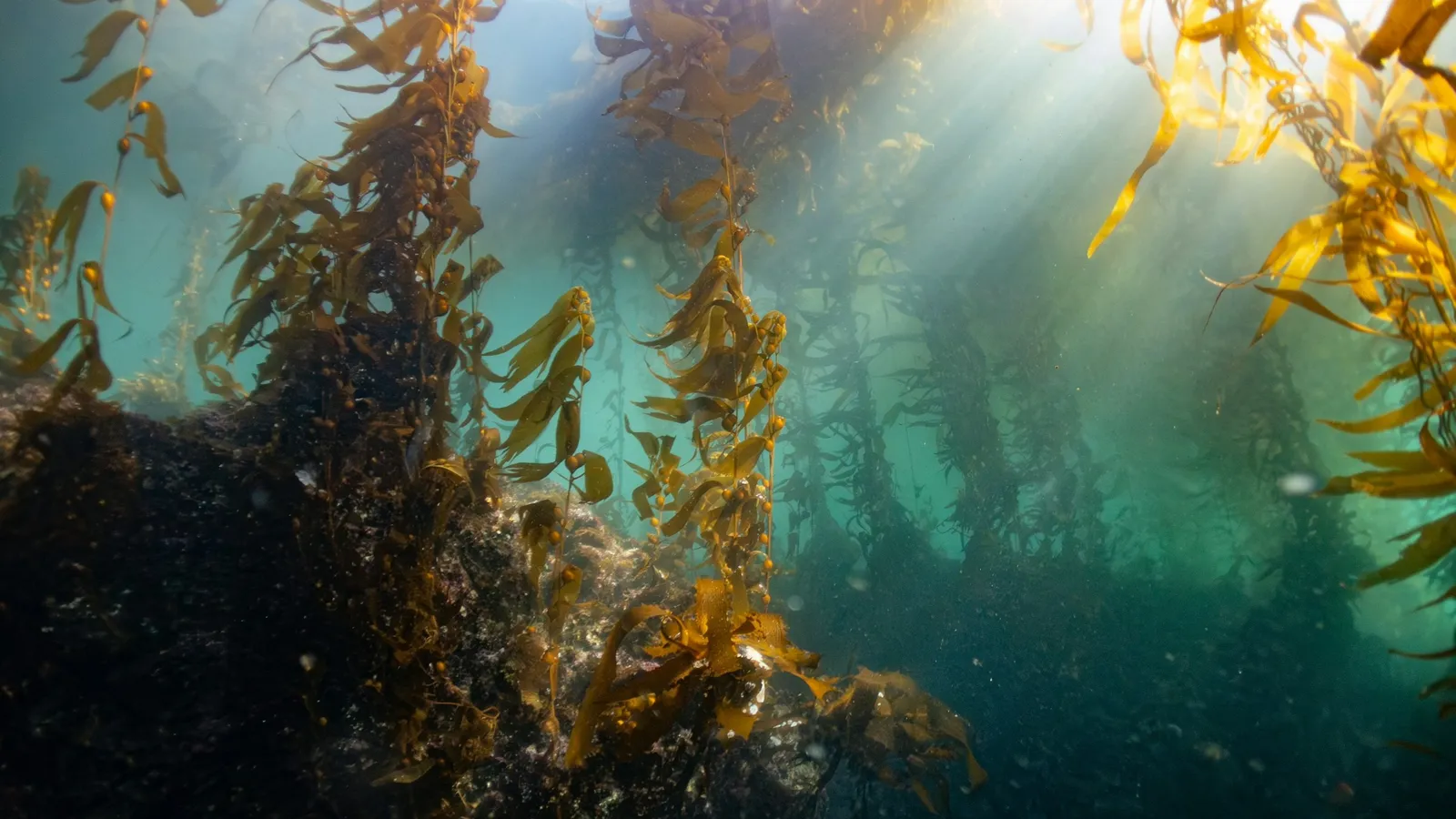
Thinking all brown algae are small. NCERT says kelps may reach a height of 100 metres.
Treating colour as decisive. Brown algae can look olive green.
A practice routine for algae
Draw a blank grid with six rows (pigments, stored food, cell wall, flagella, habitat, examples) and three columns. Fill it from memory, then check it against NCERT Table 3.1 and mark errors in a different colour.
Write four clue riddles like the ones above, swap with a friend and solve each other's.
Two days later, fill the grid again without looking. Redo only the cells you got wrong.
Once the grid is solid, mix in questions on fungi using our guide to the classes of kingdom Fungi, since exams often set the two side by side.
If a term such as pyrenoid or fucoxanthin still feels like a word without a picture behind it, the Fermi Concept Library has every concept in biology with its own lesson, so you can fix one idea and go back to your grid.
Tonight, fill the six-row grid from memory and count how many of its 18 cells you got right.


