

On this page
Ear wax is not dirt. Known scientifically as cerumen, it is a naturally occurring substance produced in the outer part of your ear canal. Far from being a hygiene problem, it serves as your body's built-in defense and self-cleaning system.
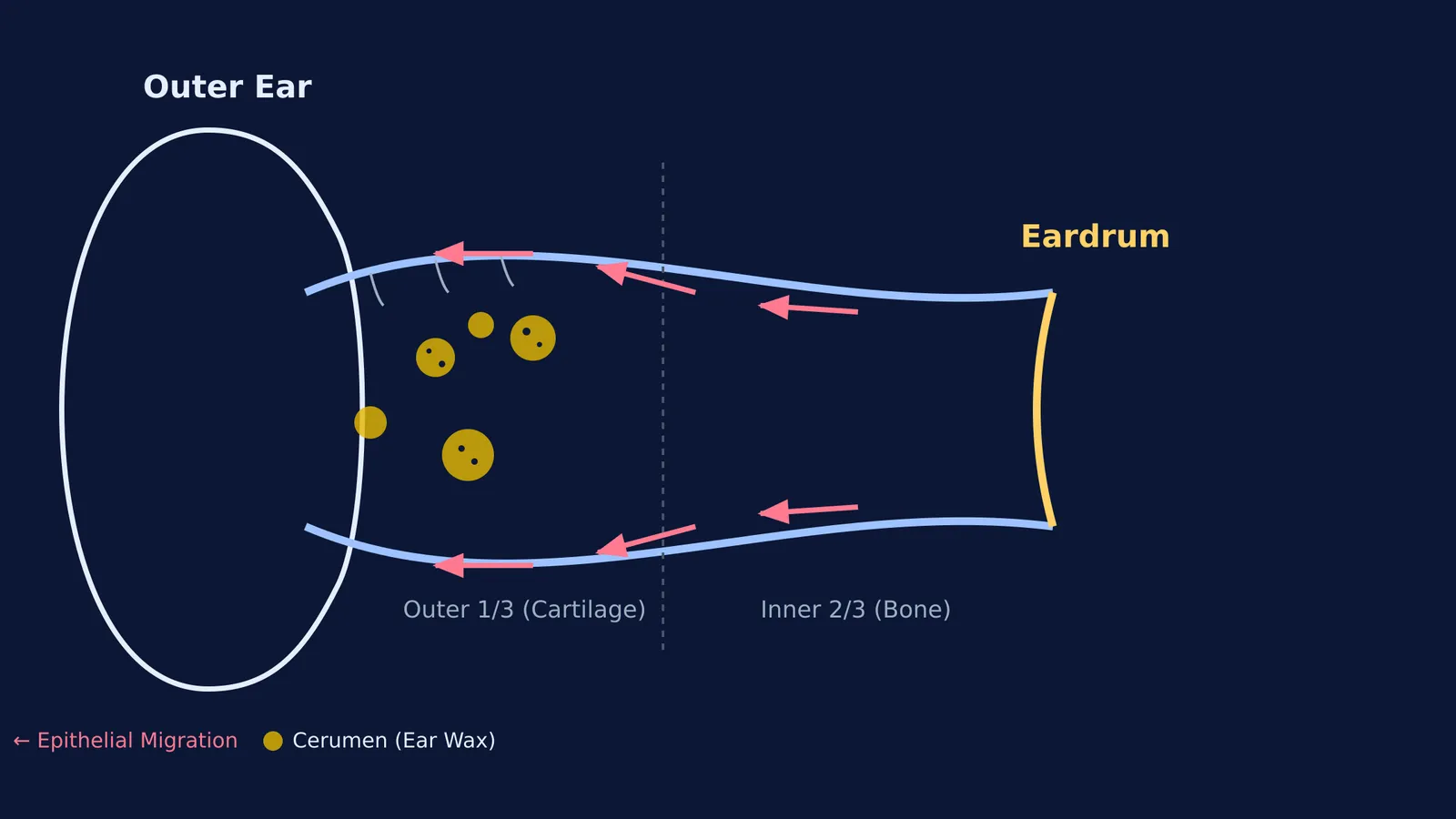
The external auditory canal connects your outer ear to your eardrum. It is a 2.5-cm S-shaped tube, divided into an outer cartilaginous third and an inner bony two-thirds. This outer third contains hair follicles, sebaceous glands and specialised ceruminous glands (StatPearls). When dead skin cells shed, they combine with the secretions from these glands to form cerumen.
If you are a student preparing for biology exams or just curious about human anatomy, understanding cerumen is a great practical example of how the body protects itself.
Why do we have ear wax?
Cerumen has three main functions to keep your ears healthy:
Traps dust and particles: Cerumen acts as a physical, hydrophobic barrier. Its sticky texture traps foreign particles, dust and even insects, preventing them from reaching the delicate eardrum.
Kills germs: The modified sweat from the ceruminous glands has an acidic pH and contains lipids that exhibit bactericidal and fungicidal properties (StatPearls). This acidic environment helps to prevent infections like swimmer's ear (otitis externa).
Lubricates the skin: Cerumen moisturises the skin of the ear canal. Without it, the skin would become dry, itchy and irritated.
How does the ear canal clean itself?
Your ear canal is essentially a self-cleaning conveyor belt. The skin of the external auditory canal constantly undergoes a process called lateral epithelial migration. This means that skin cells grow and slowly move outwards from the eardrum toward the ear opening.
As these dead skin cells (keratinocytes) shed, they carry the cerumen and all the trapped dust and debris with them. Jaw movements, such as chewing, talking or yawning, physically shift the wax outward. Once the cerumen reaches the outside of the ear canal, it naturally dries up and flakes off.
This continuous migration is vital because it is the only way the ear can remove waste without our intervention. If you ever need to visualise how complex bodily processes like this work for an exam, the Fermi Concept Library has every concept in biology, each with its own lesson and its place in the map.
When does ear wax become a problem?
Although the ear is designed to clean itself, this mechanism can sometimes fail. A build-up, or cerumen impaction, occurs when normal extrusion is impeded. This affects about 10% of children and 5% of healthy adults, but it is even more common in older adults, affecting up to 57% of them (StatPearls).
Because the glands are only located in the outer cartilaginous part of the canal, wax should naturally never reach the deep bony segment near the eardrum. However, when we use cotton swabs or wear in-ear headphones for hours, we act against the natural epithelial migration.
The transition point between the outer and inner canal, called the isthmus, is the narrowest portion of the canal. Pushing wax past this point into the bony segment can cause problems. The skin there is thin, tightly adherent to the bone, and highly sensitive. Impaction in this narrow junction can rapidly obstruct the canal, leading to ear fullness, ear pain, itching, dizziness, cough, and decreased hearing.
Interestingly, the ear canal is innervated by the auricular branch of the vagus nerve, also known as Arnold's nerve. Mechanical stimulation deep in the canal during an impaction or while trying to remove wax can trigger a reflex that makes you cough or gag (StatPearls).
How can you keep your ears healthy?
If you want to keep your ears functioning properly without disrupting their natural self-cleaning process:
Leave them alone: Let your jaw movements and skin migration do the work.
Wipe only the outside: Use a soft cloth to gently clean the outer ear (the pinna) after a shower.
Avoid deep insertion: Never put cotton swabs, hairpins, earbuds, or fingernails deep into the ear canal.
See a doctor if blocked: If you experience ear fullness, dizziness, or decreased hearing, consult a doctor. They will ensure your tympanic membrane is intact before safely removing the impaction using ear irrigation with water or a cerumenolytic agent like hydrogen peroxide.
Understanding your body's natural defense systems is just like learning why we have other reflex actions. It is part of the same protective logic that explains why we sneeze when dust enters the nose or why we sweat when we exercise. Just let your body do its job!


