

On this page
A shiny copper vessel looks beautiful when you first buy it, but over time, it loses its lustre and develops a dull, powdery green coating. This happens because of a slow chemical reaction between the metal and the air around it.
If you have ever been told to rub a tarnished copper pot with half a lemon or a piece of tamarind, you were actually being given a lesson in acid-base chemistry.
Here is exactly what happens on the surface of the copper, and why that simple kitchen trick works so well.
Why do copper vessels turn green?
Copper is a relatively unreactive metal, but it is not completely inert. When a copper object is left exposed to moist air for weeks or months, it undergoes a slow process of corrosion.
The air around us contains oxygen, water vapour, and carbon dioxide. The copper reacts with all three of these components simultaneously to form a green substance on its surface.
This green coating is a mixture called basic copper carbonate (formula: CuCO₃ · Cu(OH)₂). As detailed in its chemical profile, the reaction looks like this:
2Cu + H₂O + CO₂ + O₂ → CuCO₃ · Cu(OH)₂
Unlike rust on iron, which flakes off and destroys the metal underneath, this green layer (often called a patina) sticks tightly to the copper. It actually acts as a protective shield, preventing the copper deeper inside the vessel from corroding. You can read more about how this compares to other metals in our guide to Corrosion and rancidity: everyday oxidation in Class 10 science.
How does lemon clean copper?
The secret to removing the green tarnish lies in its chemical nature: basic copper carbonate is, as the name suggests, a *base*.
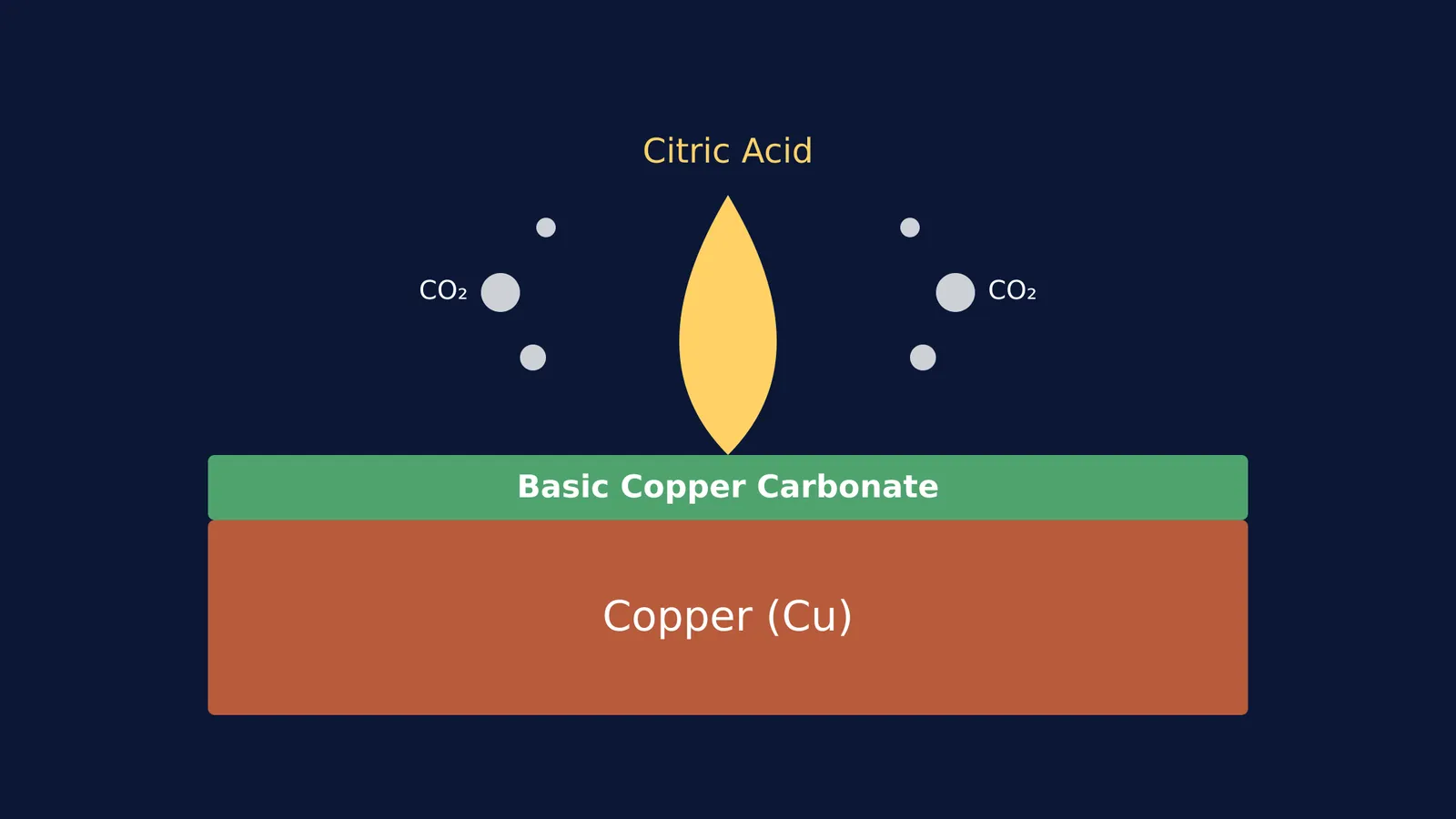
Lemon juice contains citric acid, while tamarind contains tartaric acid. When you rub a lemon over the tarnished vessel, you are setting off a classic neutralisation reaction.
The citric acid attacks the basic copper carbonate. It neutralises the base and breaks it down, forming a new compound called copper citrate. Crucially, while basic copper carbonate is a solid crust that clings to the metal, copper citrate is a soluble salt.
The reaction also releases carbon dioxide gas (which causes microscopic bubbling) and water. Once the solid green layer has been turned into a soluble salt, you simply wash it away under the tap. The acid does not react significantly with the uncorroded copper underneath, leaving you with a perfectly clean, shiny surface.
If you struggle to picture how acids attack metal carbonates, the Fermi Simulation Lab has interactive simulations for the ideas that are easier to see than to read.
Why shouldn't you store acidic drinks in copper?
While lemon is perfect for cleaning the *outside* of a copper jug, you should never store lemonade, orange juice, or tamarind water inside one.
Because acidic liquids react so readily with copper compounds, leaving them in a copper vessel for hours gives the acid time to dissolve trace amounts of the metal directly into your drink. Consuming these copper salts can cause nausea and toxicity. Copper vessels are excellent for storing plain water, but they should be kept away from acidic foods. (To understand how copper is purified industrially before it reaches your kitchen, see our breakdown of Electrolytic refining of copper: anode, cathode and anode mud).
A practical checklist for cleaning copper
If you are preparing for a chemistry exam, the lemon-and-copper reaction is a perfect real-world example of acid-base neutralisation. If you just want to clean a jug, here is the best way to do it:
Cut a lemon in half: You can also use a ball of wet tamarind.
Add a pinch of salt: Dip the exposed face of the lemon in table salt. The salt acts as a gentle abrasive to scrub away stubborn dirt, and the chloride ions help speed up the acid's work.
Rub and wait: Scrub the green areas gently. You will see the shiny copper appear almost instantly.
Rinse and dry completely: Wash the soluble salts away with water. Dry the vessel thoroughly with a towel immediately—if you leave it wet, the moisture will simply start the corrosion process all over again.


