

On this page
An iron gate turns reddish brown, a silver anklet goes black, and a packet of chips left open tastes stale. These look like three unrelated problems. In Class 10 science they are one idea: oxidation, happening slowly in everyday life. This post explains corrosion and rancidity at Class 10 level, works through the experiment and equations you are likely to be asked about, and gives students and parents a short plan for revising them.
Where is this in the Class 10 book?
Both topics are in the current NCERT Class 10 science book (2026-27 reprint). Chapter 1, Chemical Reactions and Equations, section 1.3, "Have you observed the effects of oxidation reactions in everyday life?", has 1.3.1 Corrosion and 1.3.2 Rancidity. Chapter 3, Metals and Non-metals, section 3.5, returns to corrosion with an experiment and ways to prevent it.
The CBSE Science curriculum for Class X, 2026-27 lists "oxidation and reduction" under chemical reactions and "Corrosion and its prevention" under metals and non-metals. Rancidity is not named separately in the curriculum, but it is in the NCERT chapter and its end-of-chapter questions, so learn it too. Check the curriculum for your exam year.
What is oxidation, in Class 10 terms?
NCERT's definition: if a substance gains oxygen during a reaction, it is oxidised; if it loses oxygen, it is reduced. It later widens this to include losing hydrogen as oxidation. A lab example from Chapter 1 is heating copper powder in air, when it turns black:
2Cu + O₂ → 2CuO
Copper gains oxygen, so copper is oxidised.
What is corrosion?
NCERT defines it this way: when a metal is attacked by substances around it, such as moisture or acids, it corrodes. Three examples to know, from Chapters 1 and 3:
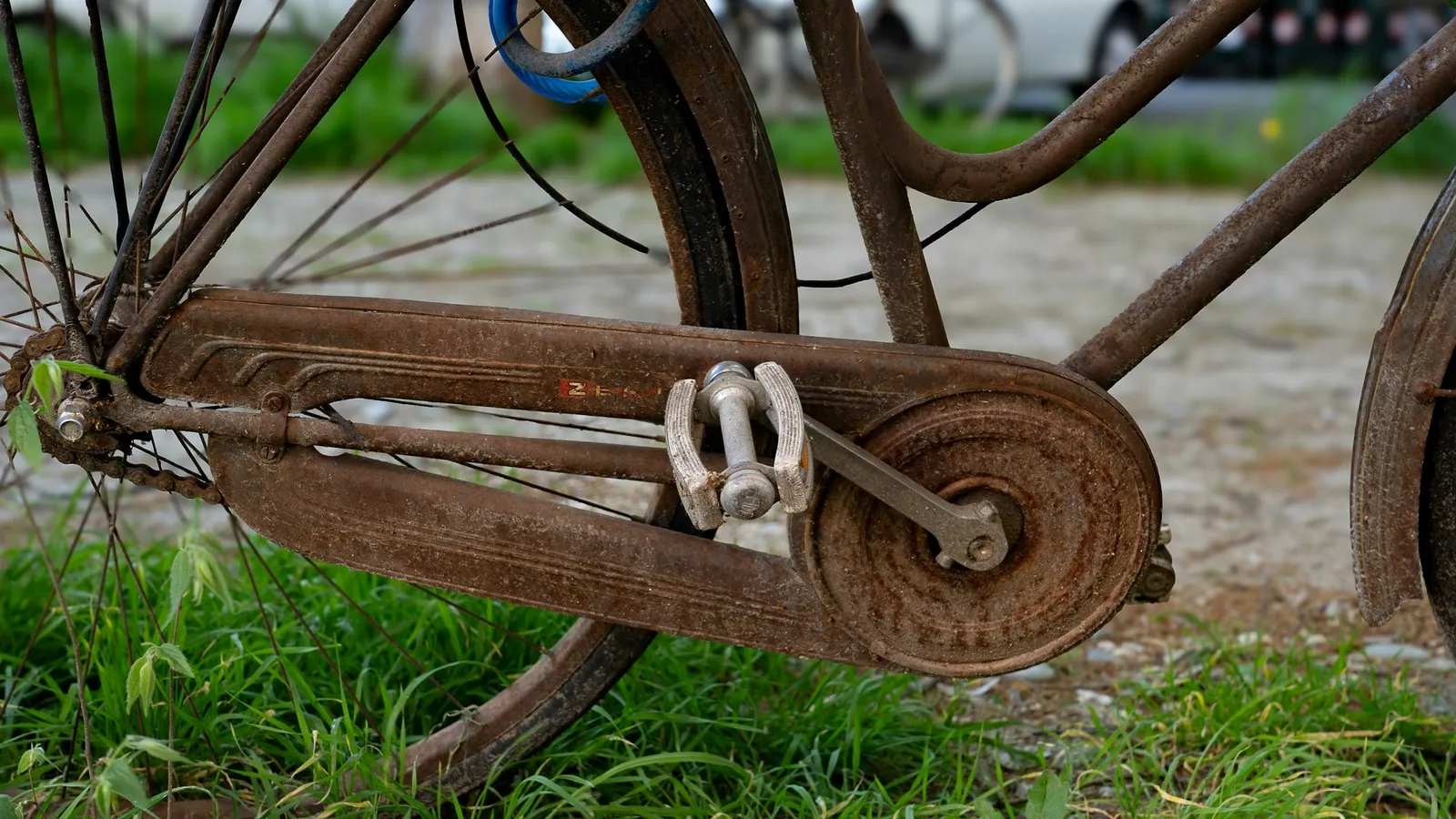
Iron left in moist air gets a coating of a brown, flaky substance called rust.
Silver turns black because it reacts with sulphur in the air to form silver sulphide.
Copper slowly loses its shine and gains a green coat when it reacts with moist carbon dioxide in the air. The green substance is basic copper carbonate.
Corrosion damages car bodies, bridges, iron railings and ships. Rusting is the corrosion of iron specifically.
Worked example 1: the three test tubes
This is NCERT Activity 3.14. Clean iron nails go into three test tubes:
A: ordinary water, corked. The nail has both air and water.
B: boiled distilled water with about 1 mL of oil on top, corked. Boiling removes dissolved air, and the oil stops air from dissolving again. The nail has water but no air.
C: anhydrous calcium chloride, corked. It absorbs moisture. The nail has dry air but no water.
After a few days, only the nail in A rusts. B shows that water alone is not enough; C shows that air alone is not enough. Conclusion: iron needs both air (oxygen) and water to rust.
Worked example 2: balancing a rust equation
Rust is a hydrated iron oxide; in Class 12, NCERT writes it as hydrated ferric oxide, Fe₂O₃·xH₂O. A simplified equation that ignores the water lets you practise balancing:
Fe + O₂ → Fe₂O₃
Oxygen: 2 on the left, 3 on the right. The lowest common multiple is 6, so write 3O₂ and 2Fe₂O₃.
Iron: now 4 on the right, so write 4Fe.
Final: 4Fe + 3O₂ → 2Fe₂O₃. Check: 4 Fe and 6 O on each side.
Iron gains oxygen, so it is oxidised.
A sample calculation. Suppose a dry nail weighs 5.00 g, and after rusting for a few weeks it weighs 5.12 g. These are made-up numbers for practice. The extra 0.12 g is oxygen and water from the air that have become part of the rust. Mass is not created; it is taken from the surroundings, as the law of conservation of mass says.
How is corrosion prevented?
NCERT lists painting, oiling, greasing, galvanising, chrome plating, anodising and making alloys. Two deserve a line each:
Galvanising coats iron or steel with a thin layer of zinc. NCERT notes that a galvanised article stays protected even if the zinc coating is broken, and asks you to reason why. Use the reactivity series: zinc is more reactive than iron, so it reacts first.
Alloying changes a metal's properties. Iron mixed with nickel and chromium gives stainless steel, which does not rust.
NCERT also describes the iron pillar near the Qutub Minar in Delhi, built more than 1600 years ago by Indian ironworkers, which is 8 m high, weighs 6 tonnes and is known for resisting rust.
What is rancidity, and how do we slow it?
When fats and oils are oxidised, they become rancid, and their smell and taste change. NCERT gives three ways to slow it: add antioxidants, keep food in airtight containers, and flush packets with a gas such as nitrogen. Nitrogen is used because it pushes out the oxygen that would otherwise oxidise the oil in the chips.
Food chemists study this closely. A review by Shahidi and Zhong (2010) explains that how easily a lipid oxidises depends on factors including how unsaturated its fatty acids are, environmental conditions and the use of antioxidants.
Which mistakes cost the most marks?
Saying iron rusts in water alone. Tube B proves it does not.
Calling any metal damage "rusting". Rusting is for iron; silver and copper corrode.
Forgetting why the water in tube B is boiled and covered with oil.
Explaining nitrogen flushing as "keeping chips fresh" without saying it removes oxygen.
Writing an unbalanced equation. Count atoms on both sides every time.
A revision plan for students and parents
Day 1: Draw the three test tubes and write one line under each.
Day 2: Answer the NCERT Chapter 1 questions on corrosion, rancidity and nitrogen flushing aloud.
Day 3: Walk around the house with a parent and list five examples of corrosion or rancidity, with one prevention method for each.
The rest of the chapter is in our post on chemical reactions and equations for Class 10. If balancing still feels like guesswork, the Fermi Problem Library has worked problems with a step-by-step solver that explains the reasoning rather than printing an answer.
This week, set up NCERT's three test tubes at home or in school, and write down what you see after four days.


