

On this page
New Questions and Ideas is Chapter 6 of NCERT's Class 6 history book Our Pasts I, as the chapter's exercise solutions show. It brings together thinkers who asked the same questions: why do people suffer, and how should we live?
Mahavira came from the Vajji sangha, so it helps to have our guide to kingdoms, kings and an early republic in Class 6 fresh in your mind.
What did the Buddha teach?
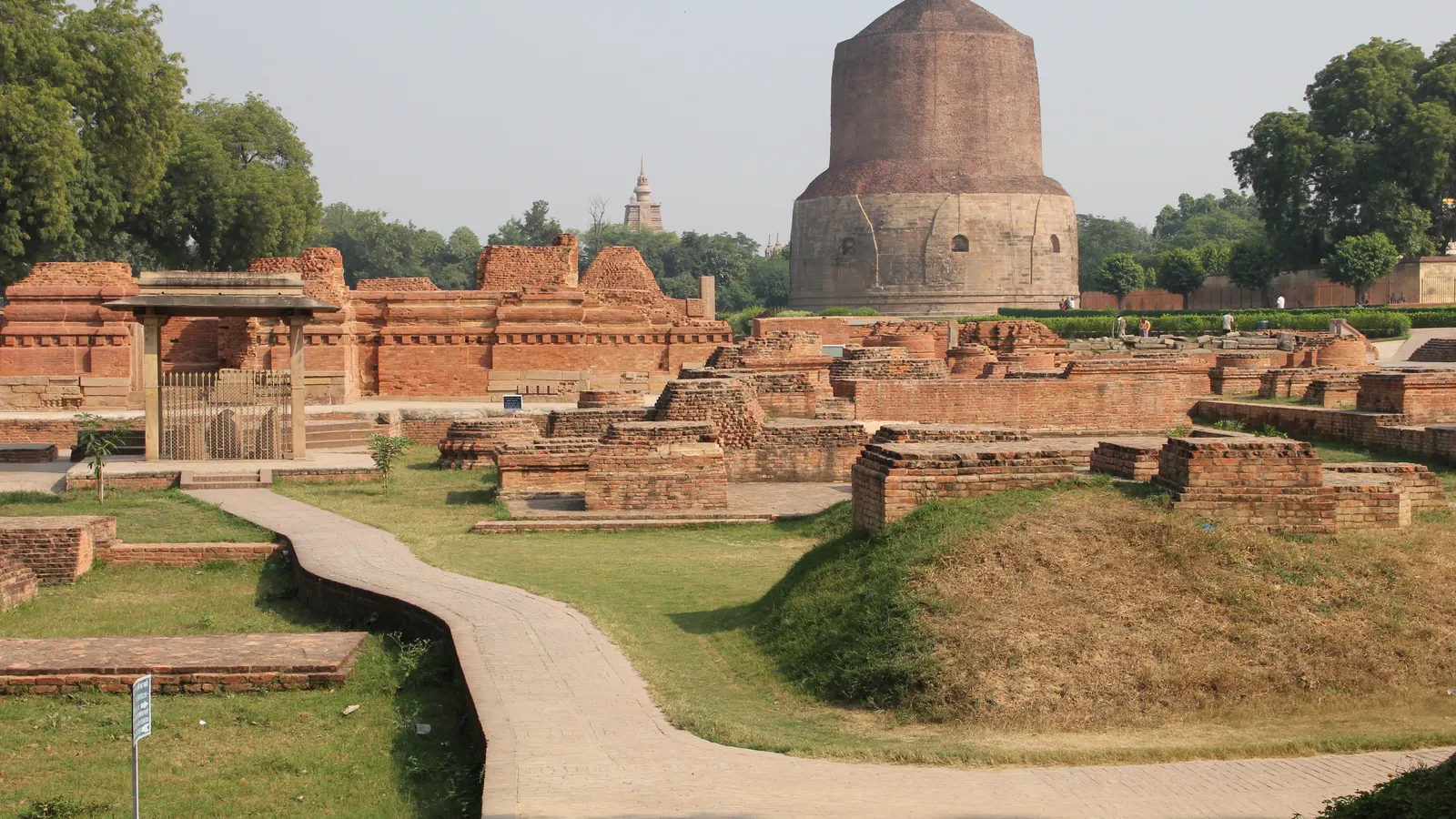
According to BYJU'S notes on the chapter, Siddhartha, also known as Gautama, was born about 2500 years ago. He belonged to a small gana called the Sakya gana and was a Kshatriya. He meditated under a peepal tree at Bodh Gaya in Bihar, where he attained enlightenment. He taught for the first time at Sarnath, near Varanasi, and spent the rest of his life travelling on foot until he died at Kusinara.
Buddhist tradition places his birth at Lumbini. His exact dates are uncertain: Wikipedia's article on the Buddha gives his birth as c. 563 or 480 BCE.
His main ideas:
Life is full of suffering and unhappiness, caused by cravings that are never satisfied. The Buddha called this thirst, or tanha.
Our actions (karma) affect us, in this life and the next.
He taught in Prakrit, the language of ordinary people, so that everyone could understand him.
He asked people to think for themselves rather than simply follow what he said.
The last three points are in the chapter's exercise solutions.
What did Mahavira teach?
Vardhamana Mahavira was the 24th and last Tirthankara of the Jainas, according to BYJU'S notes. He was a Kshatriya prince of the Lichchhavis, a group that was part of the Vajji sangha. At the age of 30 he left home to live in a forest, and for 12 years he led a hard, lonely life before he attained enlightenment.
His central teaching was ahimsa: not hurting or killing any living being, because life is dear to everyone. Those who wanted to know the truth had to leave their homes and follow ahimsa strictly.
Wikipedia's article on Mahavira adds that he was born at Kundagrama near present-day Vaishali in Bihar and died at Pawapuri. It lists five vows: ahimsa (non-violence), satya (truth), asteya (not stealing), brahmacharya (chastity) and aparigraha (non-attachment). His teachings were passed on by word of mouth for centuries, then written down at a council at Vallabhi, now in Gujarat (Jain councils).
What are the Upanishads, and who were the thinkers?
The word Upanishad came to be understood as "sitting near a teacher" (Wikipedia: Upanishads). The thinkers wanted to know the meaning of life, what happens after death and why sacrifices should be performed.
Their best-known idea is that the atman (the individual soul) and brahman (the universal soul) are ultimately one. That is the answer to a true-or-false question in the chapter's exercises.
Most Upanishadic thinkers were men, especially Brahmins and Rajas. Women thinkers took part too: Gargi was famous for her learning and debated in royal courts (BYJU'S notes).
Who could join the sangha?
The sangha was the community of monks and nuns who followed the Buddha. BYJU'S notes summarise it like this:
Its rules were written down in a book called the Vinaya Pitaka.
Its members included Brahmins, Kshatriyas, merchants, labourers, barbers, courtesans and slaves.
Men and women who joined were called bhikkhus and bhikkhunis, from the Prakrit word for a renouncer who begs for food.
Permanent shelters where monks lived were called viharas, or monasteries.
The rules also said a slave needed the master's permission to join. That is why the textbook asks whether joining would have been easy for slaves (exercise solutions).
Buddha vs Mahavira: how do they compare?
Copy this into your notebook as a two-column table; every fact comes from the sources above.
Name: Buddha, Siddhartha (also known as Gautama). Mahavira, Vardhamana.
Group: Buddha, the Sakya gana. Mahavira, the Lichchhavis of the Vajji sangha. Both were Kshatriyas.
Path to enlightenment: Buddha, meditation under a peepal tree at Bodh Gaya. Mahavira, 12 years of a hard, lonely life in the forest.
Core teaching: Buddha, end suffering by overcoming tanha (craving). Mahavira, follow ahimsa strictly.
Where he died: Buddha, Kusinara. Mahavira, Pawapuri.
How do you revise this chapter in 15 minutes?
Write the comparison above from memory, then check it and fix gaps in red.
Answer the slaves-and-sangha question in three sentences: the rule, why it was hard, your view.
Explain atman and brahman to someone at home in one sentence.
Put Bodh Gaya, Sarnath and Kusinara in order and say what happened at each.
When you reach the Mauryas, our guide to Ashoka, Kalinga and dhamma for Class 6 picks up the story.
For your science and maths chapters, Fermi's AI tutor works out what you already know and builds a plan for the session, so each revision sitting starts with a clear next step.


