On this page
If a NEET-UG or board question asks where agar, algin or carrageenan comes from, the answer sits in one paragraph of the NCERT Class 11 Biology chapter Plant Kingdom. That paragraph packs half a dozen examiner-friendly facts into a few lines, which is exactly why students mix them up. Here is each fact, where it comes from, and a short drill to make it stick.
Agar, algin and carrageenan: which algae are they obtained from?
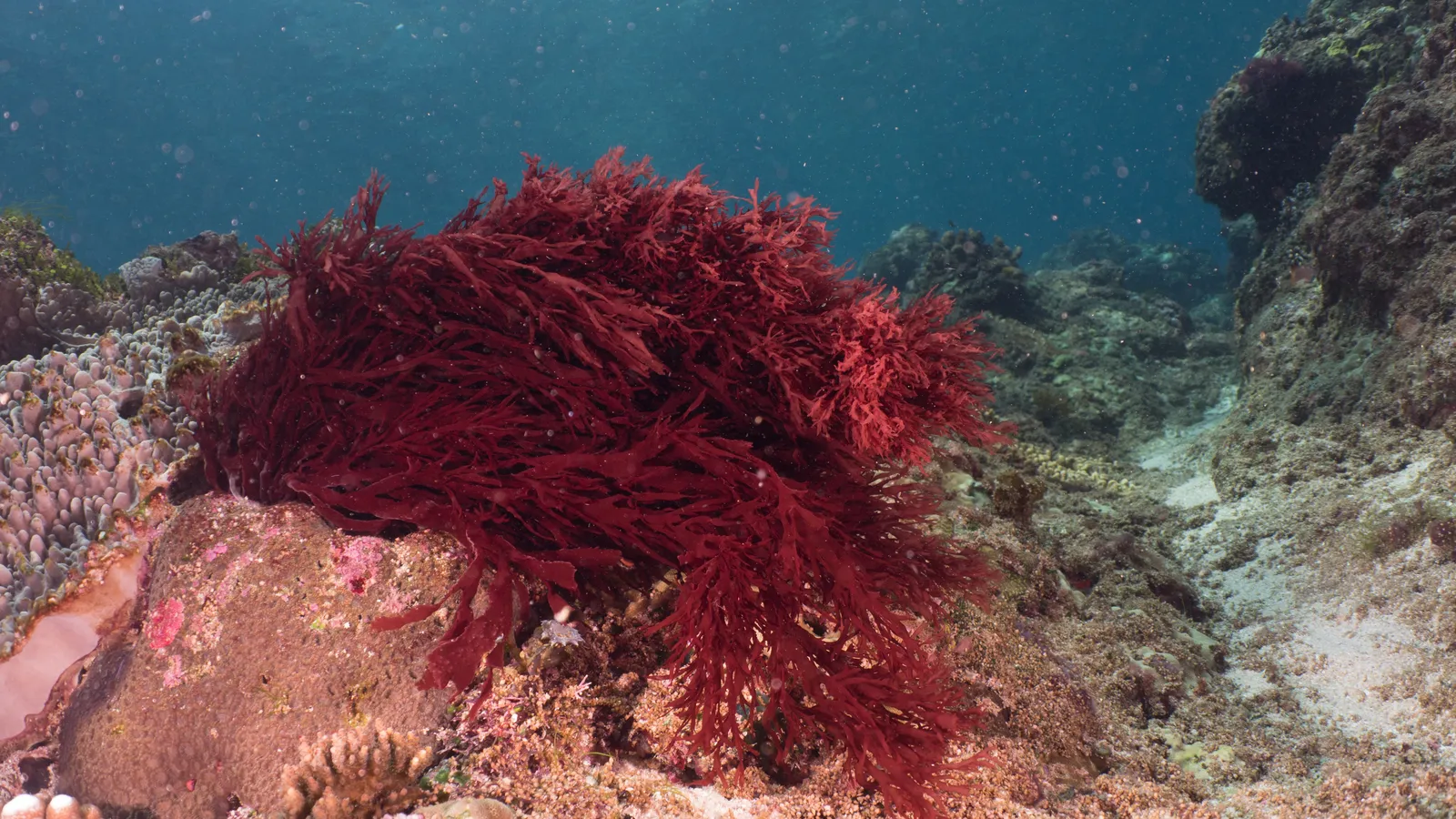
NCERT says certain marine brown and red algae produce large amounts of hydrocolloids, which it defines as water-holding substances (NCERT, Plant Kingdom). Then it names the products:
Algin comes from brown algae (class Phaeophyceae).
Carrageen, which most books and food labels call carrageenan, comes from red algae (class Rhodophyceae).
Agar is obtained from *Gelidium* and *Gracilaria*, and is used to grow microbes and in preparations of ice-creams and jellies.
Gelidium and Gracilaria are themselves red algae: the same chapter lists *Polysiphonia*, *Porphyra*, *Gracilaria* and *Gelidium* as common members of Rhodophyceae. So two of the three products come from red algae and one from brown algae.
The paragraph opens with a wider point you may also be asked: at least half of the total carbon dioxide fixation on earth is carried out by algae through photosynthesis, according to the same NCERT chapter.
Why does algin come from brown algae?
It helps to connect the product to the cell. In NCERT's description of brown algae, the vegetative cells have a cellulosic wall usually covered on the outside by a gelatinous coating of algin, and Table 3.1 lists the brown algal cell wall as cellulose and algin (NCERT, Plant Kingdom). Once you picture that slippery coat on a kelp frond, "algin means brown" is hard to forget.
The same table is worth learning whole, because questions often swap one column for another:
Green algae (Chlorophyceae): chlorophyll a and b; store starch; cellulose wall.
Brown algae (Phaeophyceae): chlorophyll a, c and fucoxanthin; store mannitol and laminarin; wall of cellulose and algin.
Red algae (Rhodophyceae): chlorophyll a, d and phycoerythrin; store floridean starch; wall of cellulose, pectin and poly sulphate esters.
If odd-one-out questions on these classes trip you up, our guide to exceptions across plant groups from algae to gymnosperms collects the usual traps.
Is Chlorella used as food, and how much protein does it have?
NCERT describes *Chlorella* as a unicellular alga rich in proteins that is used as a food supplement even by space travellers (NCERT, Plant Kingdom). That is the version to write in an exam answer.
If you want a number to go with it, a 2020 study in Frontiers in Nutrition measured protein at 65 ± 3% of dry matter in commercial Chlorella and Auxenochlorella biomasses, but only 20% in a lab-grown *Chlorella vulgaris* sample (Canelli and colleagues, 2020). The gap is a useful reminder that protein content depends on how the alga is grown, so "rich in proteins" is safer in an exam than any single percentage.
The NCERT paragraph also names seaweeds eaten as food: many species of *Porphyra*, *Laminaria* and *Sargassum* are among the 70 species of marine algae used as food (NCERT, Plant Kingdom). Note the mix: the chapter places Porphyra in red algae, and Laminaria and Sargassum in brown algae.
What are the common traps in algae product questions?
Putting Gelidium or Gracilaria under brown algae. Both are red.
Writing "agar from brown algae" because algin and agar sound alike. Algin is brown; agar is red.
Treating Chlorella as a source of agar. It appears in the paragraph as a protein-rich food supplement, not a gel source.
Forgetting what agar is used for: growing microbes, and ice-creams and jellies.
Mixing up the edible trio: Porphyra is red; Laminaria and Sargassum are brown.
If the class names themselves feel shaky, the Fermi Concept Library gives every concept in biology its own lesson and its place in the map, so you can see where algae sit before you memorise their products.
A five-minute self-test
Cover the answers in brackets, say each one aloud, then check.
Agar is obtained from which two genera? (Gelidium and Gracilaria)
Which class gives algin? (Phaeophyceae, the brown algae)
Carrageen comes from which class? (Rhodophyceae, the red algae)
Which unicellular alga is a protein-rich food supplement? (Chlorella)
Name the three edible marine genera NCERT lists. (Porphyra, Laminaria, Sargassum)
Name one use of agar. (Growing microbes, or making ice-creams and jellies)
Repeat it the next day and again after a week, and add any question you got wrong to the top of the list.
If you collect many examples like these, the blank-table method for plant and animal examples turns them into recall practice. For the green-algae side of this chapter, read the structure of Chlamydomonas. And when an MCQ on algae has you torn between two options, the Fermi Problem Library has worked problems with a step-by-step solver that explains the reasoning rather than printing an answer.