

On this page
When applying for financial aid, the numbers on your official forms only tell part of the story. A financial need statement gives you the space to explain the real-world circumstances behind those numbers. It is your chance to show a scholarship committee why their support matters and how it will help you succeed.
Whether you are applying for a university grant, a private scholarship, or a community award, the committee wants to understand the person behind the application. They have limited funds and want to invest them where they will make the biggest difference.
What is a financial need statement?
A financial need statement is a short essay, typically 250 to 500 words, that explains your current financial situation to a scholarship committee.
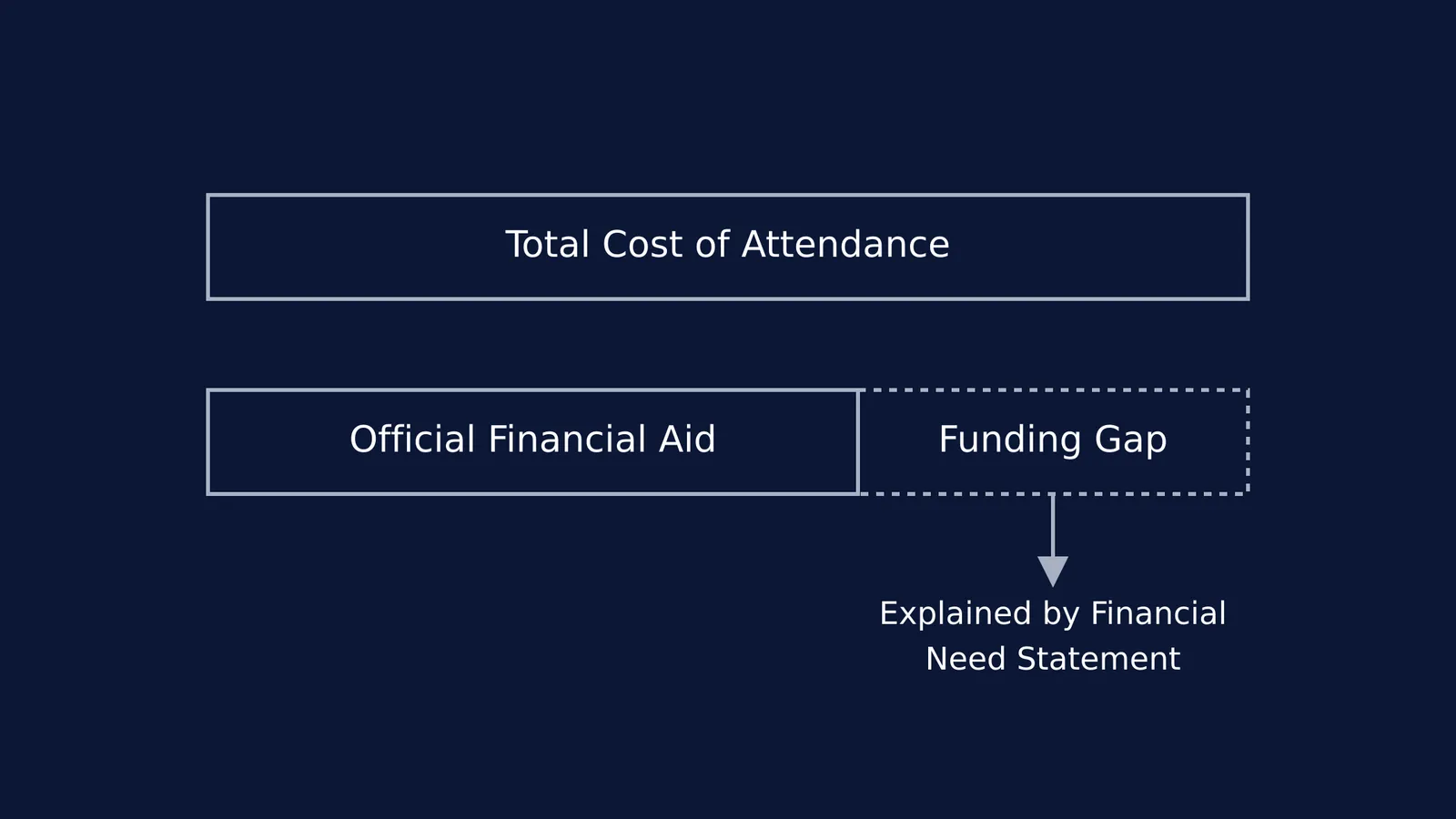
While official financial aid forms calculate your expected family contribution based on tax returns, these calculations often miss recent changes or hidden costs. If your family has experienced a sudden loss of income, high medical bills, or if you are supporting siblings, this statement provides the necessary context. According to a National Center for Education Statistics report, the average total aid for undergraduates receiving aid is $14,100. A well-written need statement helps explain your specific share of the remaining gap and how you plan to manage it.
What should you include in your statement?
A strong statement is honest, specific and forward-looking. You want to clearly explain your situation without losing sight of your educational goals.
A brief introduction: State your name, your major, and your career goals.
The specific hardship: Explain the circumstances creating your need. Be clear about events like a parent's job loss, a natural disaster, or living in a single-parent household.
The financial gap: Use concrete numbers. Mention the exact shortfall between your current aid and your tuition or living expenses.
Your own efforts: Show that you are proactive. Mention any part-time jobs, savings, or other grants you have secured.
The impact of the award: Explain exactly what the scholarship will allow you to do, such as reducing your work hours to focus on a senior project or affording required lab materials.
How can you show rather than tell?
Instead of making general statements like "we do not have much money," use brief, factual anecdotes that illustrate your situation.
For example, you might write, "My parents work multiple entry-level jobs to support our family of five, leaving a $3,000 gap in my tuition for the spring semester." This approach gives the committee a clear picture of your family's effort and the specific amount you need to stay enrolled.
Writing this statement takes time and care. When you return to your core subjects, the Fermi Problem Library has worked problems with a step-by-step solver that explains the reasoning rather than printing an answer.
What is an example of a good financial need statement?
Sometimes the hardest part of writing is staring at a blank page. Here is a script template of how a student might structure their letter to clearly state their need without losing focus on their academic goals.
"Dear Scholarship Committee,
I am a first-generation college student currently pursuing a degree in mechanical engineering. While I have been awarded a federal grant and a state merit scholarship, I still face a $4,500 funding gap for the upcoming academic year.
My family's financial situation changed significantly last year when my father was laid off. My mother works two part-time jobs, but our household income must support five people. To contribute, I work 20 hours a week as a library assistant, but these earnings only cover my books and transportation.
This scholarship would bridge the remaining gap in my tuition, allowing me to reduce my work hours during my senior project. By alleviating this financial burden, I can dedicate my full attention to maintaining my grades and completing my degree on time. Thank you for your time and consideration."
Notice how this example uses specific numbers, explains the change in circumstances, and connects the funding directly to the student's academic success.
What should you leave out?
While honesty is essential, you do not need to share every private detail of your family's life.
Avoid sharing overly emotional or dramatic stories that distract from the facts.
Do not list expenses that are not strictly related to your education or basic living needs.
Keep your tone positive and focused on your academic future.
If you are balancing applications with your regular coursework, efficiency matters. You can read our guide on Time blocking for students juggling school and coaching to help manage your schedule. For more funding ideas, see our list of Scholarships for science students in India: where to look.


