On this page
The landscape for veterinary professionals in India is expanding. According to the Ministry of Fisheries, Animal Husbandry and Dairying, there were 81,938 registered veterinary practitioners in India as of March 2023. With the country’s livestock population reaching 535.78 million in the 20th Livestock Census, the demand for skilled veterinarians across diverse sectors is growing.
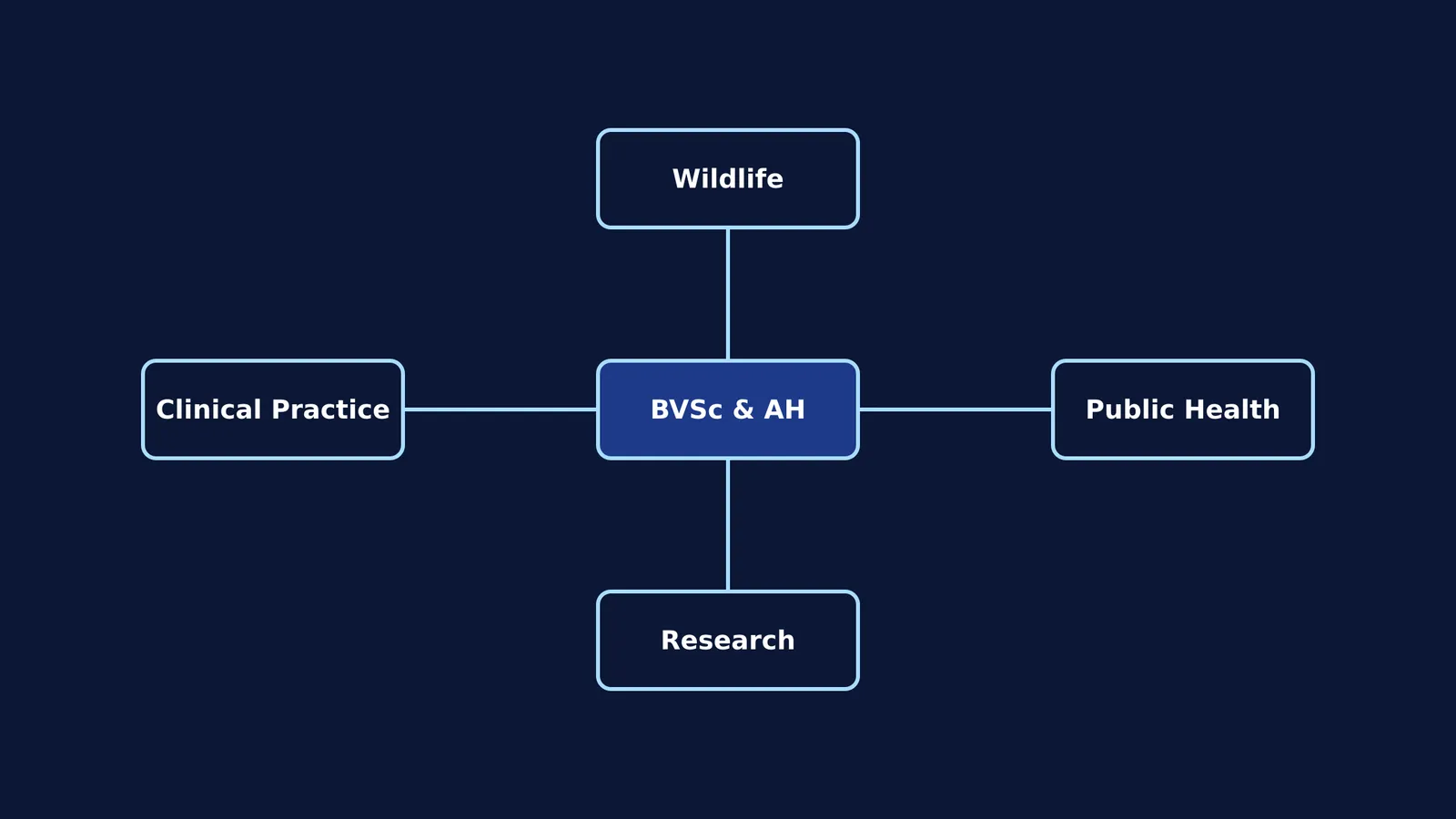
While private clinical practice remains a popular choice, a Bachelor of Veterinary Science and Animal Husbandry (BVSc & AH) degree offers options in government roles, public health, and research. Here is a look at the major career paths available to graduates.
Is clinical practice the most common path?
Setting up a private veterinary clinic is a traditional and growing career route. The increase in pet ownership, particularly in urban centres, has expanded the scope for small animal companions. Veterinarians now offer specialized services in dermatology, dentistry, and orthopaedics for pets.
Alongside independent clinics, there is a rise in multi-specialty corporate veterinary hospitals. These chains provide structured career progression, advanced diagnostic facilities, and a collaborative environment for young graduates. If you plan to pursue these roles right after college, our guide on how to get a job off campus as a fresher in India offers practical strategies.
What are the government and public health options?
Government roles provide job security and the opportunity to impact rural livelihoods. The most common entry point is as a State Veterinary Officer (VO) or Assistant Veterinary Surgeon, recruited through State Public Service Commissions. These officers manage government-run dispensaries and implement national health schemes.
Veterinarians also play a crucial role in public health and disease control. Initiatives like the National Animal Disease Control Programme (NADCP) require a large network of professionals to achieve its targets, such as the eradication of Foot and Mouth Disease and Brucellosis.
Another established avenue is the Indian Army’s Remount Veterinary Corps (RVC). Commissioned as officers, veterinarians in the RVC are responsible for the breeding, training, and healthcare of army dogs, horses, and mules.
Can veterinarians work in wildlife and research?
For those interested in conservation, roles as wildlife veterinarians in national parks, zoos, and NGOs offer a varied work environment. Organizations such as the Wildlife Institute of India (WII) frequently involve veterinarians in species recovery programs and disease monitoring in the wild.
In research and academia, institutions like the Indian Council of Agricultural Research (ICAR) and the National Dairy Development Board (NDDB) recruit scientists and technical officers. A Master of Veterinary Science (MVSc) is typically required for these roles.
The growing emphasis on the "One Health" approach—recognizing the interconnection between human, animal, and environmental health—has further integrated veterinarians into epidemiological research and zoonotic disease management.
How to decide your specialization?
Choosing the right path requires aligning your interests with the working environment. A simple framework can help structure your decision:
Identify your core interest: Do you prefer working with companion animals in a clinic, or are you drawn to large livestock in rural settings?
Consider the environment: Decide if you want the entrepreneurial challenge of private practice, the stability of a government job, or the investigative nature of research.
Plan your further education: While a BVSc & AH is sufficient for general practice, academic and highly specialized clinical roles often require an MVSc or PhD.
If you are currently studying and need to reinforce your understanding of core biological sciences, the Fermi Concept Library breaks down the foundational ideas you will rely on in practice, such as the acid-soluble pool vs acid-insoluble fraction of biomolecules. When you face tricky calculations—such as drug dosages or nutritional requirements—the Fermi Problem Library provides step-by-step reasoning rather than just printing an answer.