

On this page
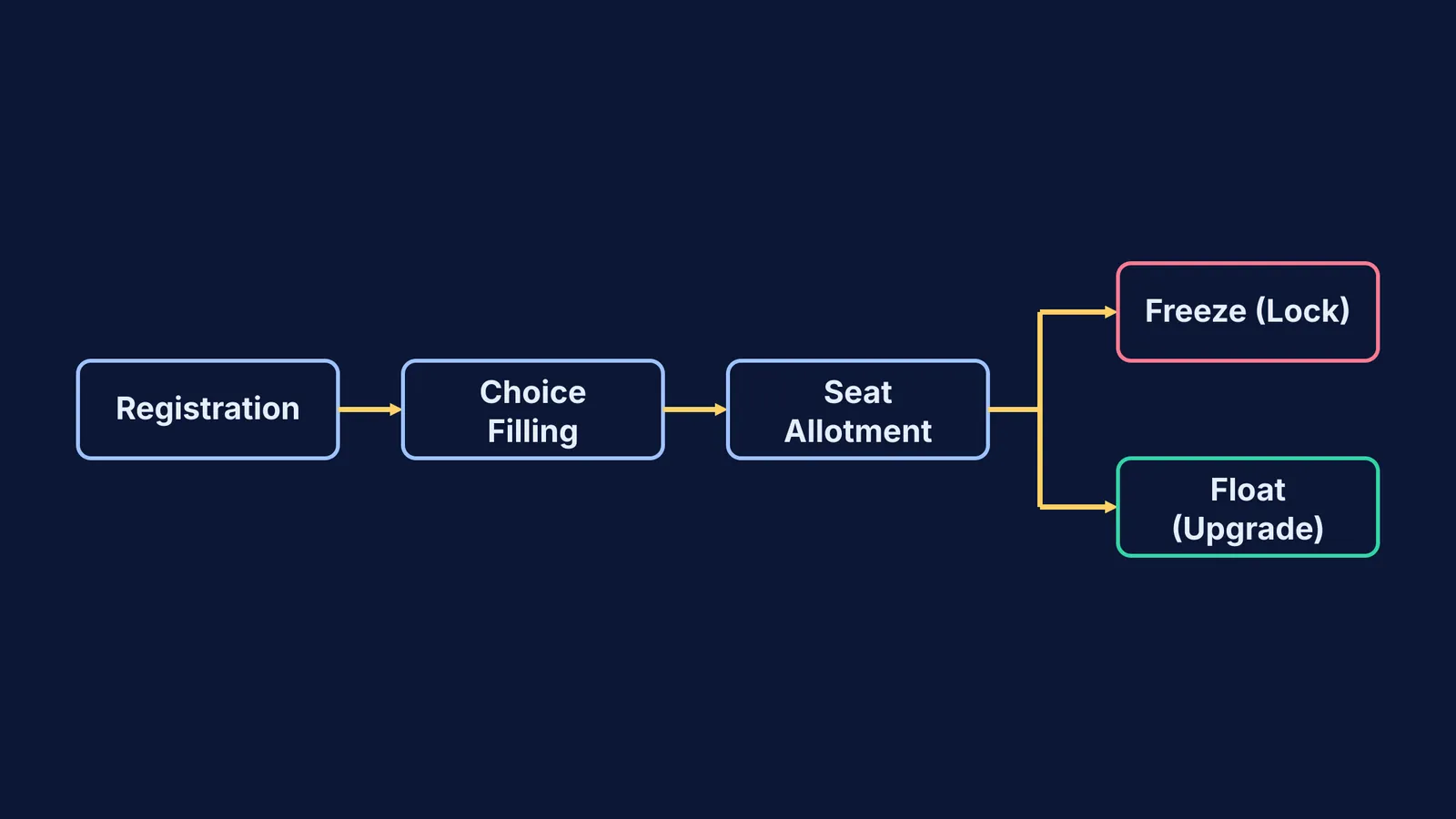
In short UPTAC choice filling for Uttar Pradesh engineering colleges requires candidates to register, pay the fee, and lock their preferred institutes and branches. According to the official UPTAC admissions portal, seats are allocated across multiple rounds, after which students must decide whether to "Freeze" their seat or "Float" it for a chance at an upgrade.
If you are aiming for a B.Tech seat in Uttar Pradesh through your JEE Main or CUET scores, the Uttar Pradesh Technical Admission Counselling (UPTAC) is your main route. The process, managed by Dr. A.P.J. Abdul Kalam Technical University (AKTU), handles admissions for hundreds of government and private engineering colleges across the state.
Getting a good rank is only half the work; the other half is navigating the choice filling and seat allotment process without making a mistake that costs you a preferred college.
What is UPTAC choice filling for UP engineering colleges?
After you register on the official UPTAC website, choice filling is the stage where you list the specific engineering colleges and branches you want to join, in order of preference.
The system uses this list, combined with your entrance exam rank and reservation category, to assign you the best possible seat during the allotment rounds. If you list a college first, the algorithm will try to place you there before checking your second choice. This makes the order of your list the most important part of the counselling process.
How do you register for UPTAC choice filling?
Before you can fill your choices, you must complete the initial registration. This involves uploading your documents (such as your mark sheets, category certificates, and domicile proof) and paying a registration fee.
Once your documents are verified by the officials online, the choice filling window opens. During this window, you can add, remove, and reorder as many options as you like. There is no limit to the number of choices you can submit. When you are satisfied with your list, you must lock it before the deadline. If you forget to lock it manually, the system will automatically lock your last saved preferences.
What do Freeze, Float, and Withdraw mean in UPTAC?
When the seat allotment results are published for a round, you will see which college and branch you have been assigned. At this point, you must make one of three choices to secure your position in the counselling process.
Freeze: Choose this if you are completely satisfied with the allotted seat and do not want to be considered for any other college. By freezing, you lock the seat and exit the upgradation process.
Float: Choose this if you accept the current seat but want to see if you can get a higher preference in the next round. If a better seat becomes available, you will be upgraded automatically and your previous seat will be cancelled. If no upgrade is available, you safely retain your current seat. The Float option ensures you cannot be downgraded to a lower preference Source.
Withdraw: If you decide you do not want the seat and wish to leave the counselling entirely, you can withdraw. Depending on the round, a portion of your fee may be refunded.
According to counselling rules, candidates who choose to Float in the final regular round (typically Round 4) will have their seats automatically frozen Source.
How does the seat allotment process work?
Once you select Freeze or Float, you must pay the seat acceptance fee to confirm your decision. If you fail to pay this fee before the deadline, your allotted seat is cancelled, and you are removed from the counselling process.
The seat acceptance fee is ₹20,000 for General and OBC candidates, and ₹12,000 for SC and ST candidates Source. This payment is made only once. If you pay the fee in Round 1 and choose to float, you do not have to pay it again in Round 2. This fee is later adjusted against your first-year tuition when you report to the college.
For families navigating this process, the stress of counselling can be just as high as the exam itself. Deciding whether to take a lesser branch at a top college or opt for a coaching or self-study for JEE next year is a common dilemma. If you are preparing for future attempts, remember that learning from mistakes is key to avoiding a situation where you plateau despite studying every day.
A practical checklist for UPTAC choice filling
To avoid common errors during the UPTAC process, follow this simple checklist:
Check past cut-offs: Look at the Opening and Closing Ranks (OR-CR) from previous years on the UPTAC portal to set realistic expectations.
Order matters: Always put your absolute dream college at the top, even if you think your rank is too low. Place your safety colleges at the bottom.
Pay on time: Keep the ₹20,000 or ₹12,000 seat acceptance fee ready in your bank account, as the payment window is usually short.
Prepare for the jump: If you secure your seat and begin classes, you will notice a steep jump in the difficulty of university physics and maths. If you ever struggle with those early college concepts, the Fermi Problem Library has a step-by-step solver that explains the reasoning rather than printing an answer.
Following these steps carefully will ensure you secure the best possible engineering seat your rank allows.


