On this page
If you like planning trips, talking to new people and fixing problems on the spot, a tourism degree can turn that into a job. The catch is that course names vary, quality varies even more, and a brochure rarely tells you what the internship really involves. Here are the main options, where they lead, and how to check a college before you pay a fee.
What is a travel and tourism management course after 12th?
It is an undergraduate business degree about how travel is planned, sold and run. You will mostly see two names.
BBA (Tourism & Travel): a three-year, full-time degree. The IITTM admission bulletin for 2026-29 describes the Indian Institute of Tourism and Travel Management as an autonomous body under the Ministry of Tourism, with the degree conferred by Jawaharlal Nehru University.
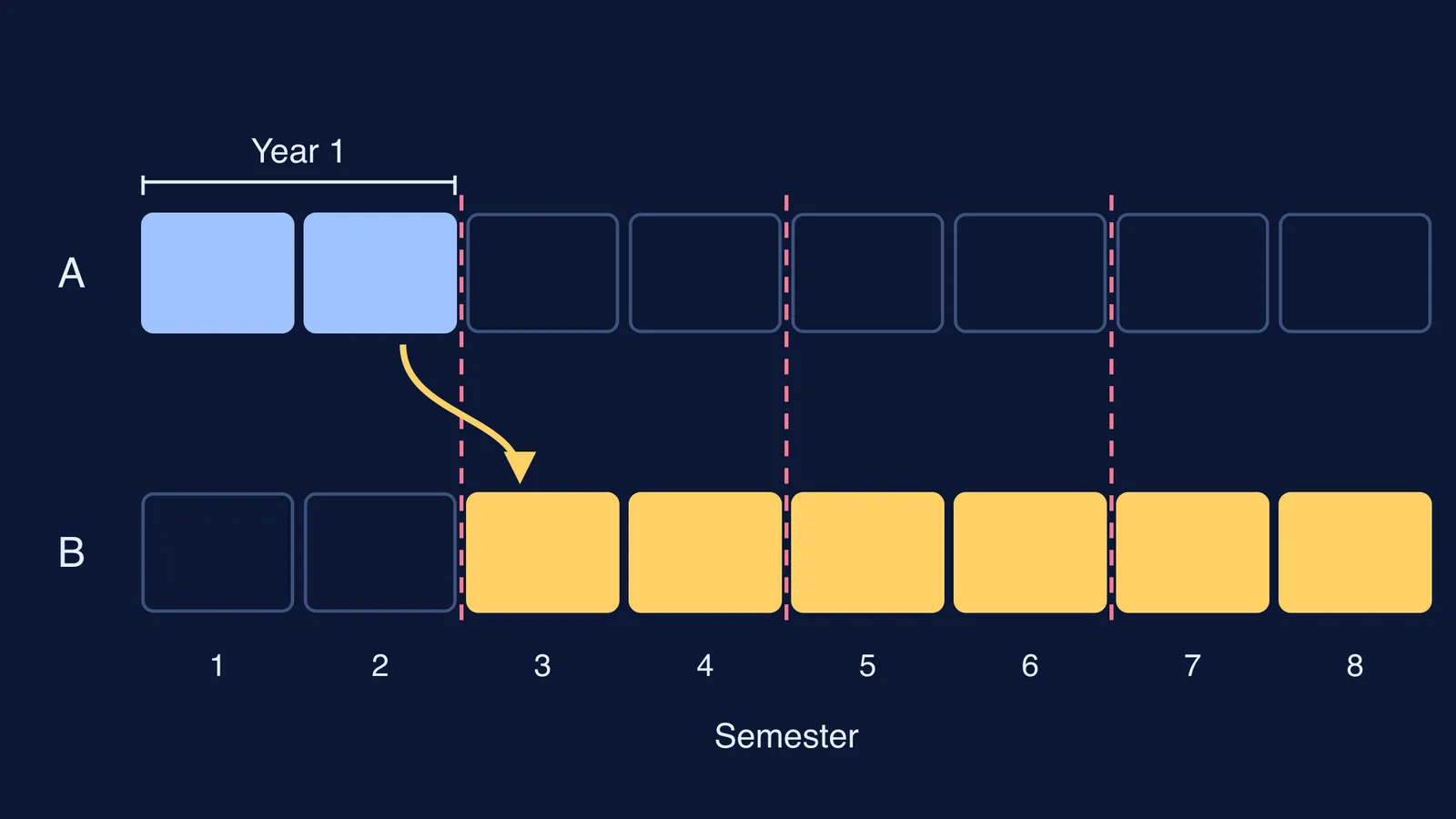
BTTM (Bachelor of Tourism and Travel Management): offered by several universities, and its length varies. At Bengaluru City University, the BTTM syllabus describes a four-year, eight-semester programme under the revised NEP scheme of 2024.
The name matters less than what you study and where you train. IITTM's BBA, for example, includes two compulsory foreign-language modules, a study tour and a summer internship.
Why consider the field at all? The Ministry of Tourism's India Tourism Data Compendium 2025 estimates that travel and tourism generated about 84.63 million jobs in India in 2023-24, counting direct and indirect employment. The same report counts 2,948.19 million domestic tourist visits in 2024.
How do you get into BBA (Tourism & Travel) at IITTM?
These are the rules in the IITTM 2026-29 bulletin. Dates and fees change every year, so read the current bulletin before you apply.
Eligibility: Class 12 in any stream from a recognised board.
Entrance: a CUET-UG score, or the IITTM Admission Test (IIAT): 100 multiple-choice questions on general awareness (50 marks), verbal ability (25) and quantitative ability (25), with no negative marking.
Selection: the test score counts for 70% and the group discussion, interview and counselling for 30%.
Seats: 375 across Gwalior, Bhubaneswar, Noida, Nellore and Goa.
Fees: an indicative Rs 3,06,500 in tuition over three years; hostel and programme-related fees are charged separately.
If the quantitative section worries you, practise problems where you can see every step. The Fermi Problem Library has a step-by-step solver that explains the reasoning rather than printing an answer.
What jobs does a tourism degree lead to?
CBSE's Tourism (806) curriculum lists careers including travel consultant, travel executive, tour operator, tourist guide, transport agent, front office executive, airline staff, hotelier and tourism manager.
Your first job is likely to be close to the customer: building itineraries, handling bookings, coordinating groups on the ground. Managing comes after you have done the work.
The kind of employer matters too. The Ministry of Tourism runs a voluntary scheme to approve tour operators. Its guidelines for inbound tour operators, revised in 2011, define one as a firm that arranges transport, accommodation, sightseeing, entertainment and other tourism services for foreign tourists, and grant approval after a committee's inspection. Approval is not compulsory, but it tells you a firm has been checked.
How do you judge a tourism course and its internships?
Use this checklist on every college you shortlist.
Who awards the degree? Check that the university is listed on the UGC website, which also publishes its list of fake universities.
Is the internship in the timetable? Ask which semester it falls in, how many weeks it runs and how many credits it carries. IITTM's 2026-29 bulletin gives the study tour and the summer internship 4 credits each.
Where did last year's interns go? Ask for the names of host organisations, not logos on a banner. Then check whether the tour operators among them hold Ministry of Tourism approval.
What did the interns actually do? Ask to see one past internship report.
What is the full cost? Add tuition, hostel, the study tour and travel to internship cities.
What do placement figures really mean? Ask how many students graduated, how many looked for jobs and how many were placed.
What should you ask when you call a college?
A short script helps you, or a parent, get straight answers in five minutes:
"Which university awards the degree, and is the course approved by it this year?"
"In which semester is the internship, how long is it, and where did last year's batch go?"
"Can I see one internship report and the syllabus for all semesters?"
"Out of last year's batch, how many looked for jobs and how many got one?"
Write down each answer and compare colleges side by side.
Your next step: download the current bulletin of two colleges, run them through the checklist, and decide which test, CUET-UG or a college's own, you will prepare for.