

On this page
A poor test result is difficult to talk about. The gap between what you hoped to achieve and the number on the paper can feel overwhelming, especially when you know your parents are invested in your success. However, avoiding the conversation usually makes the anxiety worse.
Why is telling parents about low marks so hard?
It is entirely normal to feel nervous before sharing bad news. A 2024 study published in the *Journal of Education and Health Promotion* found that 87% of students in Karnataka preparing for competitive exams experienced high perceived parental pressure, alongside high academic stress (10.4103/jehp.jehp_2094_23). When you are worried about disappointing your family, a simple conversation about a physics paper can feel like a referendum on your future.
However, hiding the result prevents you from getting the help you need. The World Health Organization's *Helping Adolescents Thrive* guidelines emphasize that caregiver support and nurturing environments protect adolescents against stress and improve their well-being. Open communication allows your parents to step out of the role of examiners and into the role of supporters. This can also help in treating exam nerves as energy rather than letting anxiety build up in secret.
How should I start the conversation?
Choose a quiet time when neither you nor your parents are rushed. Avoid bringing it up right as they leave for work or during a stressful moment. Start by setting the tone: "I have something difficult to share about my latest mock test. I would appreciate it if you could hear me out before we discuss it."
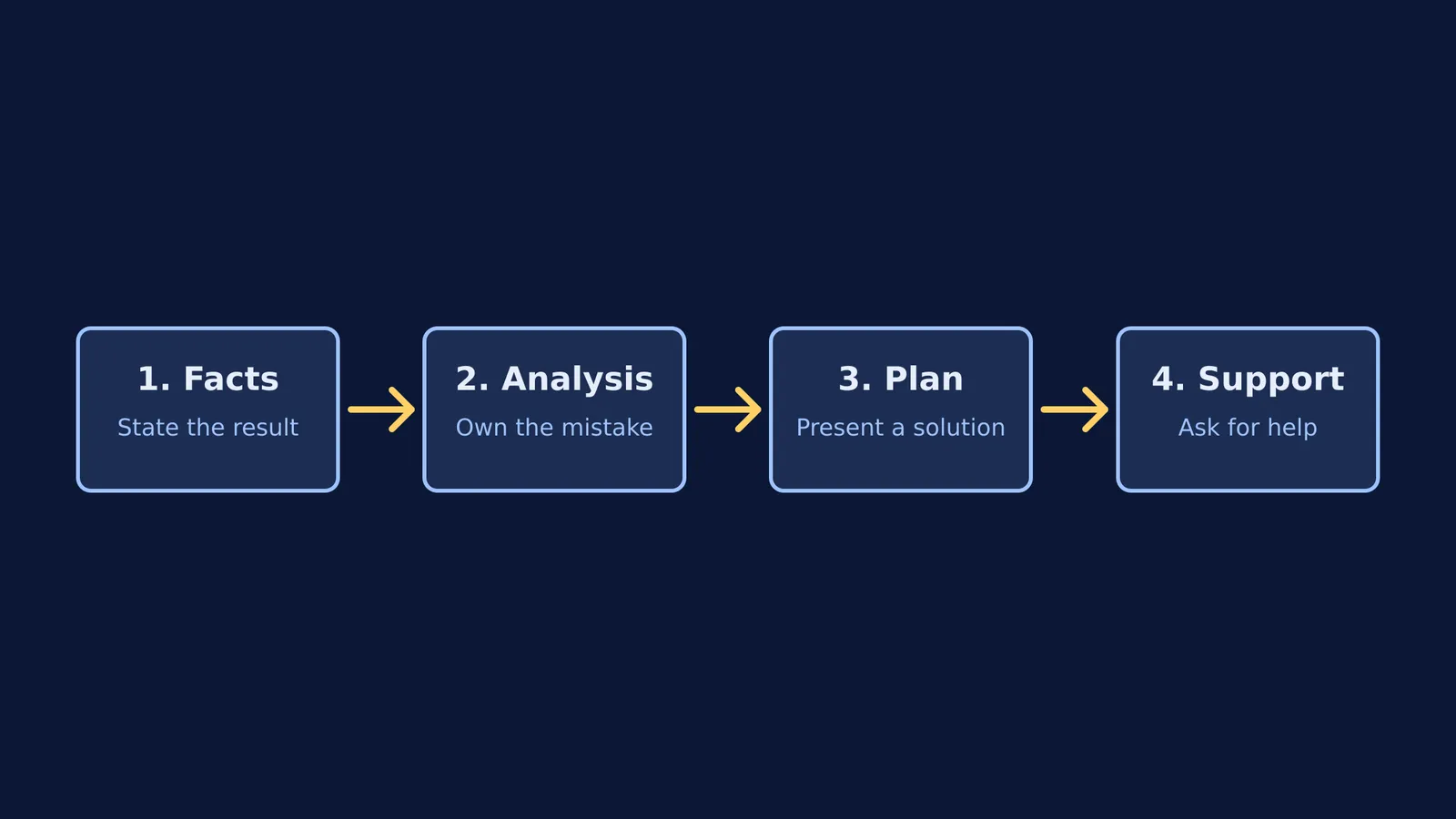
From there, follow this four-step framework:
State the facts first: Be direct and honest. "I received my math results today, and I scored a 55." Do not hide the paper or try to round up the number. Owning the reality is the first step to changing it.
Share your analysis: Explain what went wrong without making excuses. Did you run out of time? Did you misread the questions? For example, "I realise I struggled with the rotational mechanics numericals because I was applying the wrong formulas." If you are stuck on exactly where your reasoning failed, the Fermi Problem Library explains the step-by-step logic for difficult problems rather than just printing the final answer.
Present your plan: Parents react better to bad news when they see a solution attached to it. "I have spoken to my teacher and identified three chapters I need to review. I am setting aside an extra hour each evening to focus on these." If you need to rebuild your foundation in a specific topic, the Fermi Concept Library holds every concept in physics, chemistry, biology, mathematics and computing, each with its own lesson and its place in the map.
Ask for support: Tell them exactly how they can help you execute your plan, which makes it easier to build a study routine that lasts. "I need you to help me wake up early on weekends so I can get a head start," or "Can you help me stick to a schedule by checking in on me?"
What if they get angry?
Parents often react with frustration because they are worried about your future, not because they do not care. Listen to their concerns without arguing back immediately. Acknowledge their disappointment: "I understand why you are upset, and I am disappointed too. That is why I want to stick to my improvement plan." (Parents reading this can refer to our guide on talking to your teenager about marks without a fight).
If the academic pressure at home crosses from a healthy push into overwhelming distress—affecting your sleep, appetite, or daily functioning—it is important to seek external help. The Government of India’s Tele MANAS helpline (14416) provides free, confidential mental health support.
Telling your parents about a bad grade is never easy, but it is a necessary step. By coming prepared with a clear analysis and a strong plan, you show maturity and turn a moment of failure into a roadmap for success.


