

On this page
The last board paper is over and the days suddenly feel empty. Relatives ask what you are doing next, someone mentions a cousin who finished half of Class 11 physics over the holidays, and the break starts to feel like a test you could fail. It isn't one. A good break after Class 10 has three parts: rest, a skill, and a small head start. Here is a plan for each, with the numbers behind it.
How long is the break after Class 10, really?
For CBSE students it is shorter than it looks. According to CBSE's press release of 18 July 2026, the 2026 Main Board Examination ran from 17 February to 11 March, and the optional Second Board Examination ran from 15 May to 21 May. For regular students in 2026, CBSE counted the better of the two performances.
Many students took the second exam. The same release says 5,13,955 students sat it to improve their marks, and 3,08,095 of them did better than in the main exam.
So decide early. If you plan to take the second exam, the first part of your break is revision for those subjects, and the plan below starts after it. If not, or if you are with a different board, check your school's Class 11 start date and count backwards from there.
How much should you study in the summer after Class 10?
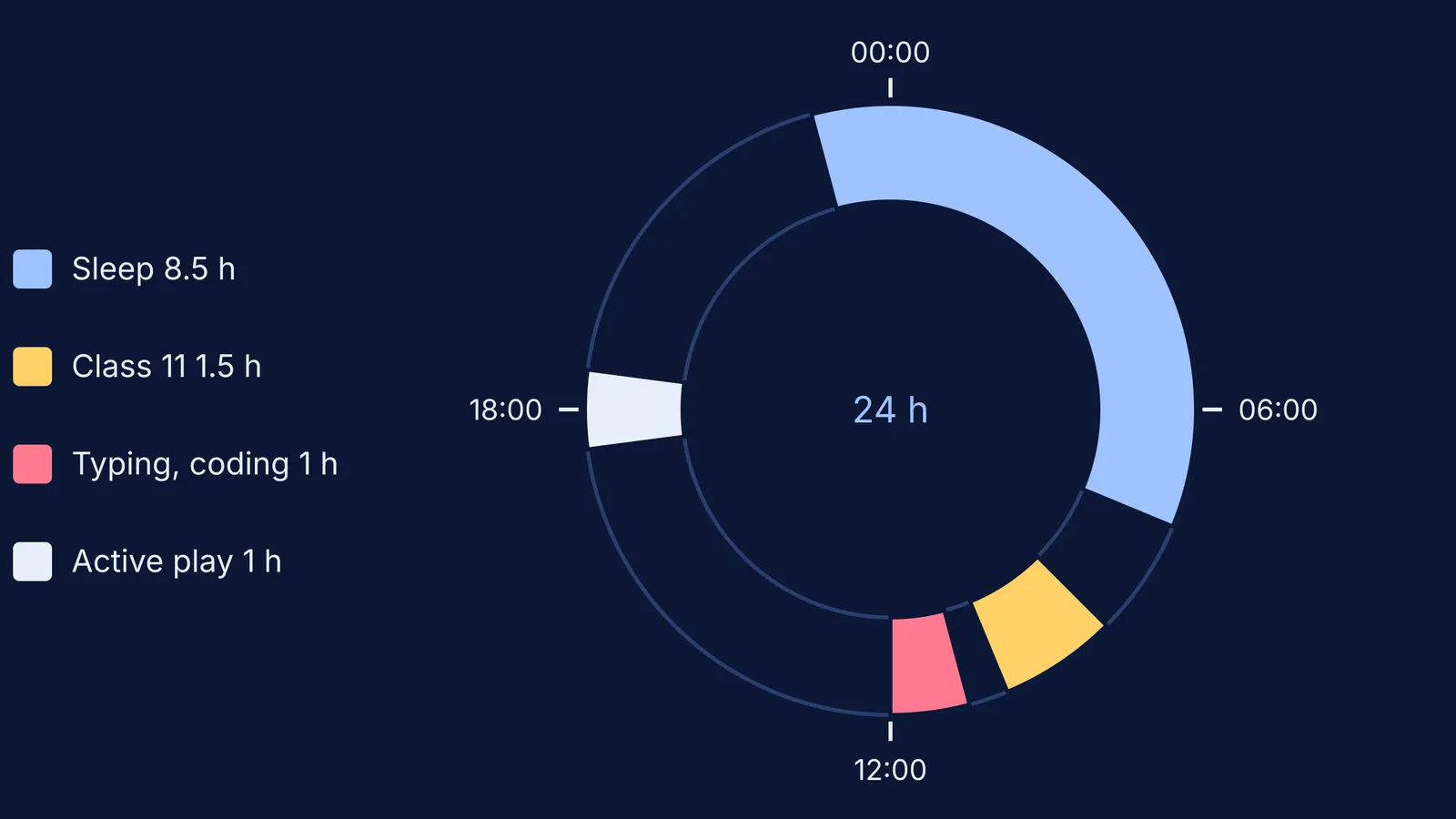
Less than you fear, and in shorter sessions. A review of ten study techniques by Dunlosky and colleagues in Psychological Science in the Public Interest rated practice testing and distributed practice (spreading study over many sessions) as the two most useful. It rated rereading and highlighting as low utility. That suggests 90 minutes a day of studying and self-testing, five days a week, will serve you better than one long weekend of rereading.
Here is a sample eight-week plan; trim the middle weeks if your break is shorter:
Week 1: no studying. Sleep, see friends, sort out your room and your phone.
Weeks 2 and 3: start a skill for 1 hour a day. Read one Class 10 maths chapter you found hard and redo its exercises.
Weeks 4 to 7: add 90 minutes of Class 11 preview in the morning. Keep the skill hour.
Week 8: test yourself on everything you previewed, without notes. List what you could not do. That list is your first month of Class 11.
Take at least one day a week fully off. We explain why in should you take a half day off studying every week.
Which Class 11 topics should you start with?
Start with the first two chapters of each Class 11 NCERT book in your stream, which you can download free from the NCERT textbooks page. The aim is that the first weeks of Class 11 feel familiar rather than foreign.
Use this loop for each section: read it once, close the book, write down what you remember, then try the in-text questions. If physics is in your stream, our research-based weekly plan for Class 11 physics shows how to set up the year.
Some Class 11 topics feel hard because an earlier idea underneath them is shaky, such as ratios and graphs in kinematics. The Fermi Concept Library gives every concept in physics, chemistry, biology, mathematics and computing its own lesson and shows its place in the map, so you can go back to the idea underneath. If you don't know where to begin, Fermi's AI tutor works out what you already know and builds a plan for the session.
Which skills are worth learning: typing, coding or something else?
Pick one or two skills you will use for years:
Touch typing: 15 to 20 minutes a day. Our two-week touch typing plan for students breaks it into daily steps.
Coding: choose one language, such as Python, and build one small thing you would actually use, like a marks calculator or a vocabulary quiz.
Something with your hands or body: swimming, cooking a full family meal, or a musical instrument.
How do you make sure the break is actually restful?
Guard sleep first. The American Academy of Sleep Medicine consensus statement recommends that teenagers aged 13 to 18 sleep 8 to 10 hours per 24 hours on a regular basis. Keep a fixed wake-up time, even on holidays.
Then move. The WHO recommends that children and adolescents aged 5 to 17 get at least 60 minutes of moderate to vigorous physical activity daily. Many fall short: the WHO physical activity fact sheet reports that, worldwide, 81% of adolescents aged 11 to 17 were physically inactive.
Tele MANAS details are on the Press Information Bureau update on the programme. Tonight, take a sheet of paper, write your eight weeks down, and put the week 1 rest days in first.


