

On this page
In a lot of Indian homes the living room is also the dining room, the TV room and the guest room. If that's where you study, change when, where and how you study rather than just trying to concentrate harder.
Why does talking distract you more than other noise?
Not all noise does the same damage. A 2013 review by Maria Klatte and colleagues, Does noise affect learning?, reports that meaningful speech causes stronger impairments than meaningless speech in school-related verbal tasks involving reading. The same review says children are less able than adults to ignore irrelevant sounds. So when a younger student says the TV makes it hard to work, the research backs them up.
A 2016 eye-tracking study in PLoS One by Jukka Hyönä and Miia Ekholm found that background speech in a foreign language did not disrupt sentence reading, while speech in the readers' own language did. The effects showed up mainly as extra rereading time.
The practical rule: block words first. A pressure cooker whistle is annoying, but a conversation or serial in a language you know is likely to pull at your attention harder.
How do you find quiet hours in a busy house?
Spend two days writing down when the house is loud and when it's calm. Here is an example of what that log might look like for a made-up family, the Sharmas: six people in a 2BHK, with a Class 11 student preparing for JEE Main.
5:30 to 7:00 am: quiet. Only one parent is awake.
7:00 to 9:30 am: loud. School runs, cooking, the news on TV.
2:00 to 4:00 pm: fairly quiet. Grandparents rest, younger sibling at tuition.
7:00 to 10:00 pm: loudest. Dinner, TV serials, phone calls.
After 10:30 pm: quiet, but the student is tired.
A plan that fits this log: new problem-solving and theory in the 5:30 am and afternoon slots, then revision, flashcards and copying formula sheets during the evening noise, since those are easier to pick up again after an interruption.
When you only get a 45-minute quiet window, you can't afford to spend 10 minutes working out what to do. Fermi's AI tutor works out what you already know and builds a plan for the session, so you sit down to a clear next step.
Do earplugs actually help you study?
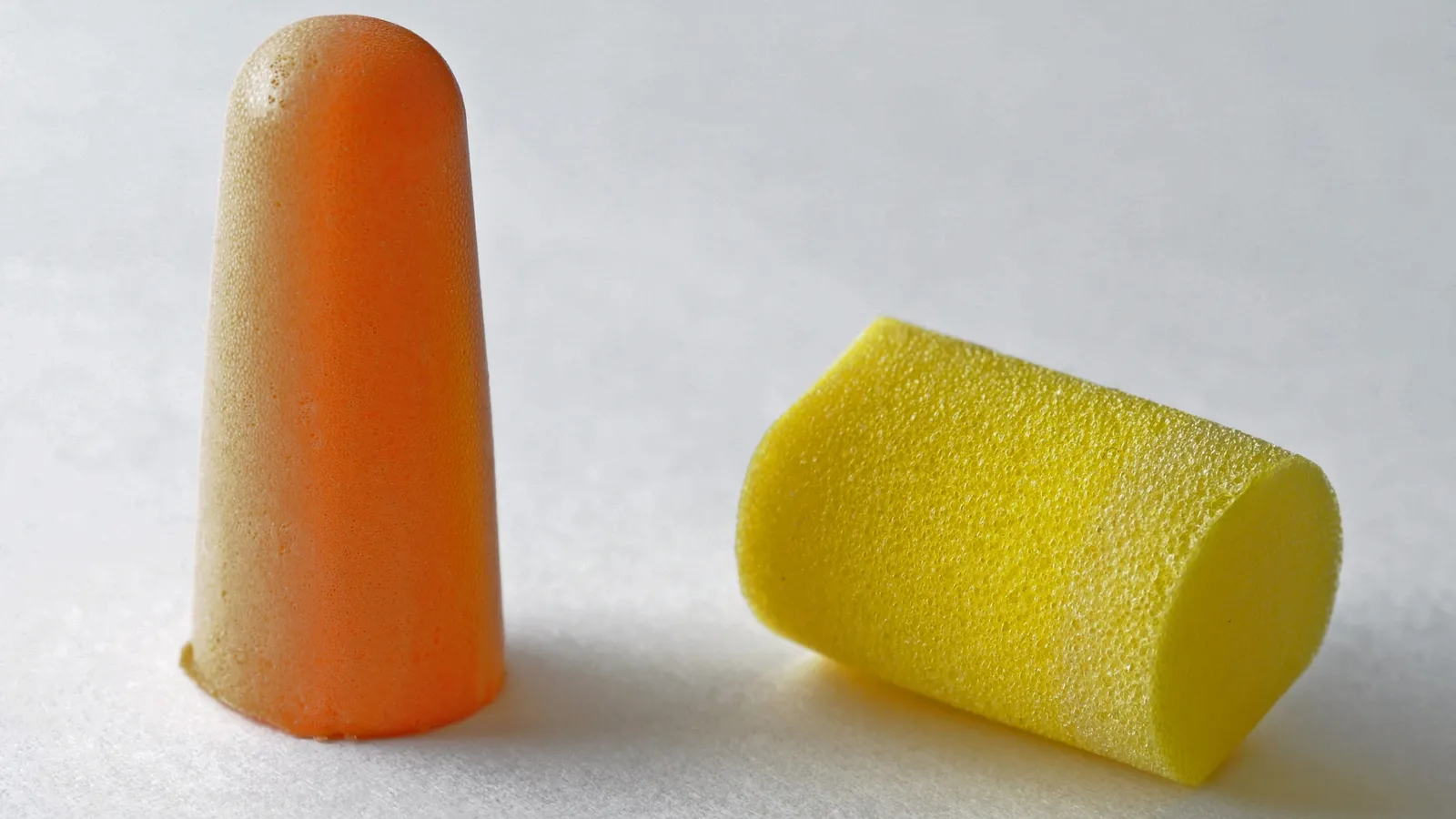
They help most if they fit. The NIOSH guide to wearing soft foam earplugs from the US Centers for Disease Control and Prevention gives three steps:
Roll the plug into a small, thin snake between your fingers.
Pull the top of your ear up and back with your other hand to straighten the ear canal.
Hold the plug in with a finger until it expands to fill the canal.
To check the fit, NIOSH suggests cupping your hands tightly over your ears. If sounds get much more muffled, the plug may not be sealing properly. If you'd rather use headphones, play something without lyrics, for the reasons above. Our post on when music while studying helps and when it hurts goes into this.
What goes in a portable study kit?
Without your own desk, keep everything in one bag so you can set up anywhere in two minutes:
A clipboard or lap board, so a bed or the floor works as a desk
Earplugs in a small case
Today's chapter and a single notebook, not the whole shelf
A small clip-on lamp for early mornings, so you don't wake the house
A sticky note for the door or chair that says what you're doing and when you'll finish
For short slots in a busy house, bring one worked problem rather than a whole chapter. The Fermi Problem Library has a step-by-step solver that explains the reasoning rather than printing an answer, so a 20-minute gap can still teach you a method.
Where can you study outside the house?
Find two backups within walking distance: a district or community library reading room, a school or college library open after classes, a temple or community hall with a quiet corner, or a friend's home at fixed hours. Visit each one at the time you'd actually use it, because a library that's calm at 11 am can be packed at 5 pm.
What should you say to your family?
Ask at a calm moment, not mid-evening. Try:
"I've worked out that I study best from 5:30 to 7 in the morning and from 2 to 4 in the afternoon. Could we keep the TV low from 2 to 4, and could I use the bedroom then? I'll do my revision in the living room during dinner."
Parents who want to go further can use our guides to setting up a family quiet hour and a parent's checklist for a home study space.


