On this page
Scientists are trained to ask questions, design experiments, and analyse data. But how do those findings shape the laws and funding that govern society? This is where science policy comes in. Working in science policy means translating complex research into government action, bridging the gap between the laboratory and the legislature.
What is science policy?
Science policy is concerned with the allocation of resources for the conduct of science towards the goal of best serving the public interest. This includes deciding which research areas get funding, how scientists are trained, and how scientific discoveries are translated into technological innovation.
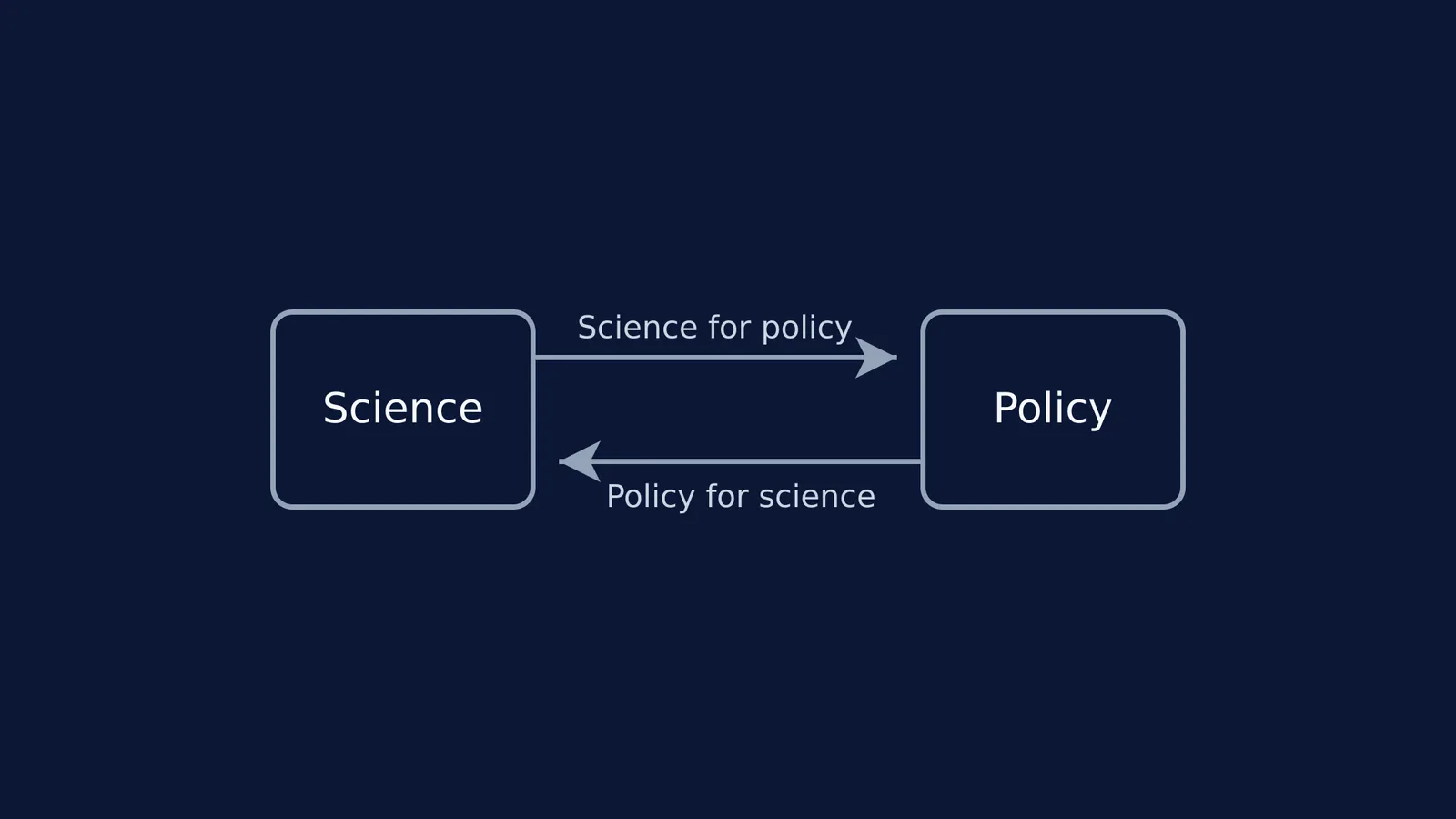
The field works in two directions:
Science for policy: Using scientific evidence to inform government decisions, such as setting air quality standards or managing a public health crisis.
Policy for science: Creating rules and budgets that govern how research is done, such as intellectual property laws or fellowship programmes.
Why is there a gap between science and policy?
Despite the importance of scientific evidence, there is often a disconnect between researchers and policymakers. A 2020 report in *Earth's Future* noted that there is a "dire need" for deeper science-policy engagement to face global challenges.
However, the report also highlighted that there is a lack of preparedness and training of scientists about what science-policy engagement is and how to get involved. Academic training focuses heavily on research methods and publication, leaving many scientists unaware of how to communicate their findings to government officials who need clear, actionable summaries rather than detailed academic papers.
When trying to build foundational scientific knowledge or clear up concept gaps in your own learning, you can use the Concept Library. But communicating those concepts to non-scientists requires a different set of skills.
How do scientists transition to policy roles?
Many scientists enter the policy world through specialised fellowships. In the United States, the AAAS Science & Technology Policy Fellowships place scientists in government offices. In India, programmes like the DST Science, Technology, and Innovation (STI) Policy Fellowships serve a similar purpose, bringing researchers into government departments to help draft policy documents and advise on science funding.
Beyond government, scientists also work in think tanks, research councils, and non-governmental organisations (NGOs). These roles often involve writing policy briefs, organising expert panels, and testifying before legislative committees.
What skills do scientists need for policy work?
To succeed in science policy, researchers need to develop skills outside the traditional academic toolkit:
Clear communication: Policymakers rarely have time to read a full research paper. Scientists must learn to write concise, one-page briefs that highlight the key findings and actionable recommendations.
Understanding the system: As the 2020 *Earth's Future* report suggests, scientists should understand the "science-policy system" where science and policy influence each other.
Networking and negotiation: Policy is built on relationships. Scientists must be able to work with people from diverse backgrounds, including lawyers, economists, and elected officials.
If you are a student considering your career options, it helps to explore different fields early. For example, learning How to get a job off campus as a fresher in India or Using AI to understand engineering branches before you choose can broaden your perspective on where a science degree can take you. If you are trying to understand complex research topics along the way, Fermi's AI tutor can help build a plan for your study session and teach through it.