

On this page
If you are applying to universities in the US, UK or elsewhere from an Indian school, the people reading your file have probably never seen your school. The same percentage from a CBSE school in Kanpur and an ISC school in Bengaluru looks identical on paper. The school profile is the document that tells them what that number means.
Most students only hear about it when a counsellor abroad asks for it. Here is what it is, why it matters and what to do if your school has never made one.
What is a school profile for college applications?
A school profile is a document that provides contextual data about a high school community, according to Common App's guide for counsellors. It usually covers the curriculum, grading system, special programmes, school policies and student body.
Your counsellor or principal uploads it once, and Common App attaches it to the school report sent for every student. Common App recommends keeping it to 1 to 2 pages and updating it every year.
More than 70% of applications submitted through Common App have a school profile attached, the same Common App guide says. Applications without one are more likely to come from students at small, charter, new or rural schools.
Why do admissions officers want it?
Admissions officers try to judge what you did with what was available to you. NACAC's best-practice guide notes that colleges factor in differences between schools when they read a student's academic record.
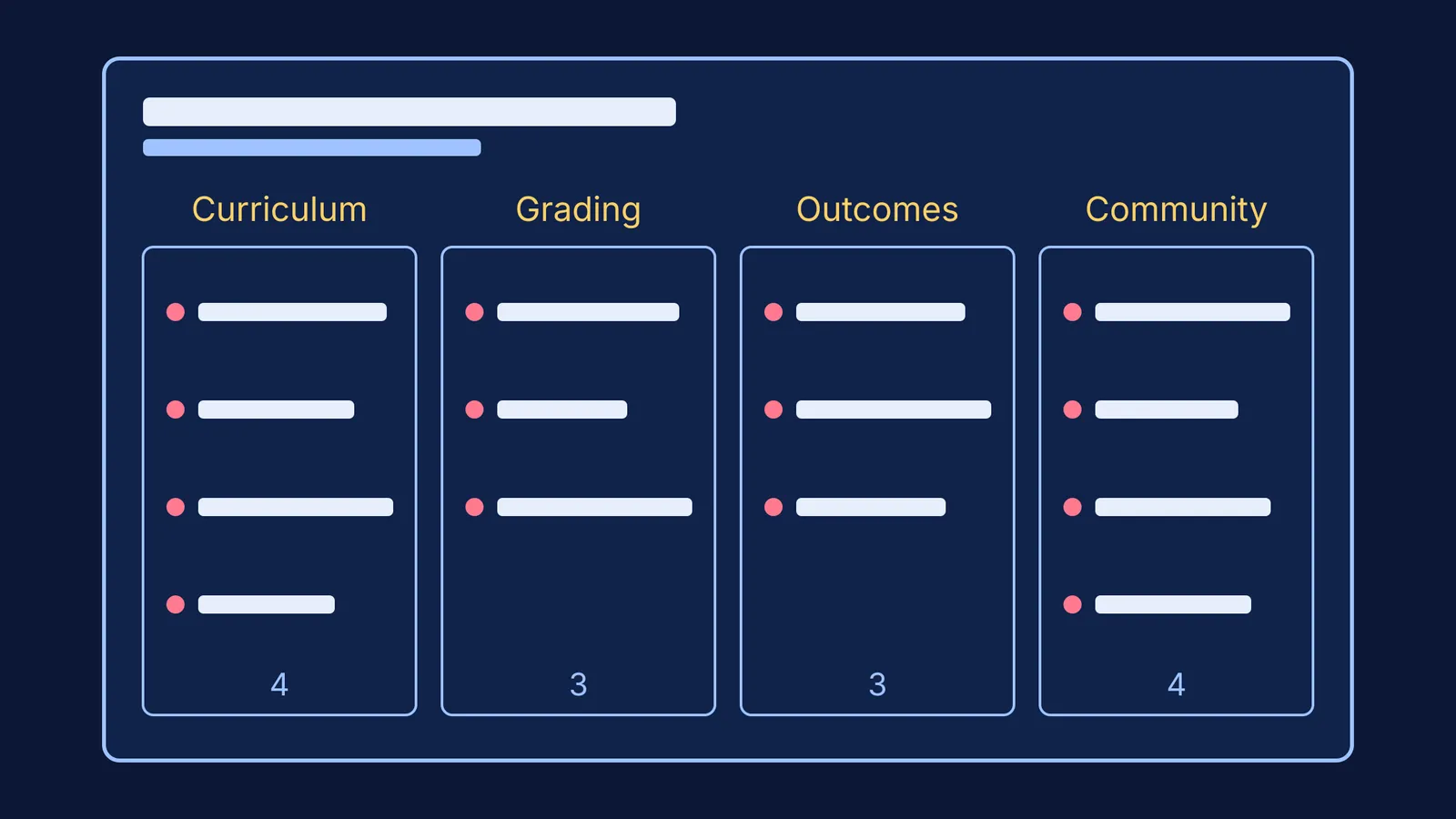
A 2022 study by researcher Tara Nicola (Journal of Diversity in Higher Education) identified 14 elements of a school profile, in four groups, that are particularly important: academic curriculum, grading systems, postsecondary outcomes and school community. Harvard's Making Caring Common project, drawing on her work, says that less than half of school profiles include the contextual information most valuable to admission officers.
The profile answers questions your transcript cannot. Did your school offer computer science, or did you skip it? Is 85% a top-ten mark or an average one? Do most students go on to college at all?
The UK works differently but asks for the same thing. A UCAS reference opens with a general statement about the school or college, and the whole reference has a limit of 4,000 characters. If your school writes UCAS references, that opening section is its school profile in miniature.
How do you ask your school for a school profile?
Start by asking whether one already exists. Some schools that send students abroad already have one, kept by a single teacher or the school office. Ask in Class 11 or early Class 12, well before your first deadline.
Here is a message you can adapt for your principal or class teacher:
If you have hired an agent, the profile still has to come from the school. Our guide on whether to hire a counsellor for abroad applications covers what you can and cannot hand over.
What should a school profile include if your school has none?
You can do the legwork, but the school must check every fact and issue the final version. Never send a profile you wrote yourself as if it were official. Use these four groups, which follow Nicola's elements as listed by Harvard's Making Caring Common:
Curriculum: your board, the streams and subject combinations offered, and what was not offered (no computer science, say, or no Maths with Biology).
Grading: how marks are given, what the pass mark is, whether the school ranks students, and how internal and board marks combine.
Outcomes: last year's board results in summary, such as the class average or how many scored above a set mark, and where students went next.
Community: city, school type (private, government-aided, Kendriya Vidyalaya), class size and how students are admitted.
Add the school's address, the counsellor or principal's name and an email that someone answers. Board-specific detail matters: our explainer on how CBSE results work for foreign universities covers predicted grades and timing.
One thing a profile does well is explain a gap that is the school's, not yours. If your school did not offer a subject you want to study, you can show your interest another way; Fermi Courses has university-level courses from working scientists, with an AI tutor on every lecture.
Parents can help here too: a visit to the school office can sometimes move things along faster than an email. For how marks from earlier years fit into the picture, read whether Class 11 marks matter for college applications.
Your next step: send the message above this week, and ask for a copy of whatever comes back so you can check it before it goes out.


