

On this page
Deciding to study abroad is an exciting step, but the application process can quickly feel overwhelming. You have to juggle university research, essays, visa rules, and strict deadlines. Many families wonder if paying a professional is worth the expense, or if doing it yourself is the better choice.
According to British Council research, approximately 76% of prospective Indian students use or plan to use an agent for their international applications. However, going the DIY route is entirely possible and offers distinct advantages. Here is how to evaluate the costs, spot the warning signs, and decide which path is right for you.
What is the real cost of a study abroad consultant?
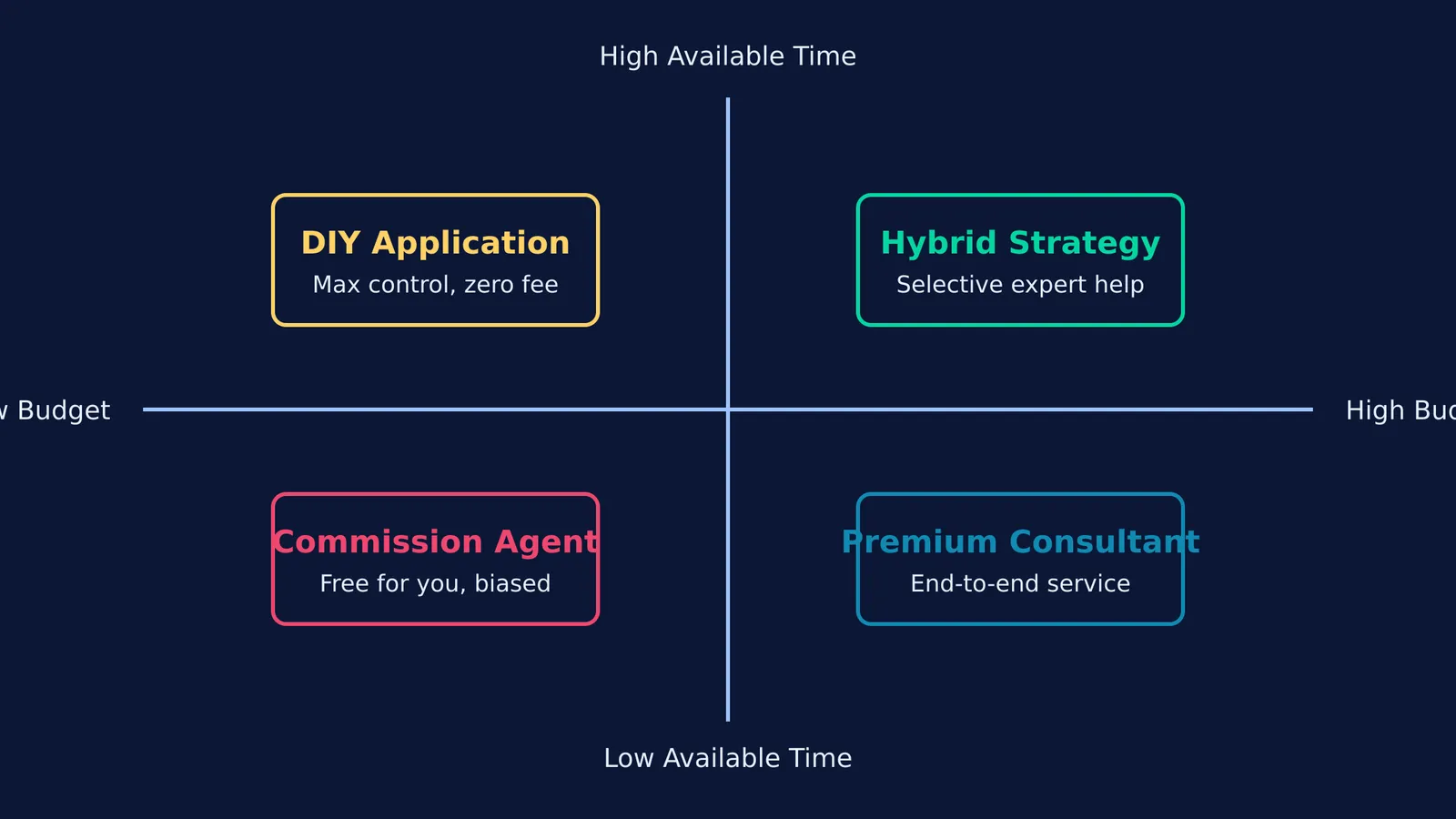
Consultants in India generally operate on one of three models, and understanding how they make money is the first step in judging their value.
Commission-based agents: These consultants do not charge you a fee. Instead, they earn a commission—typically 10% to 15% of your first-year tuition—from their partner universities once you enrol. While this saves you upfront costs, their recommendations may be biased toward institutions that pay them, rather than top-tier universities that do not.
Fixed-package consultants: You pay a flat fee for end-to-end services. This covers university shortlisting, editing your statement of purpose (SOP), and visa assistance. According to Eduler, such fees can range from zero up to a few lakhs of rupees depending on the provider.
Premium mentorship: For students aiming at Ivy League schools or highly competitive programs, premium services provide intensive profile building over an extended period. This model is often the most expensive.
What can you do yourself in a DIY application?
A Do-It-Yourself (DIY) application requires extensive research, but it ensures your application reflects your genuine voice. You control the narrative, save significant money, and build organizational skills you will need when living independently in a new country.
When you apply without a consultant, your first step is researching the exact entry requirements on official university websites. You will need to track deadlines for standardized tests like the IELTS or GRE, gather letters of recommendation, and write your statement of purpose. If you are highly organized and applying to straightforward programs, you can manage the timeline yourself using a simple spreadsheet.
However, this means taking full responsibility for interpreting complex visa requirements and ensuring financial documents meet the strict formats required by embassies.
While you handle the paperwork, you still have to secure the academic grades required for admission. If you find yourself overwhelmed and not knowing where to start with your studies, Fermi's AI tutor works out what you already know and builds a plan for the session, so you sit down to a clear next step.
How to judge a study abroad consultant's value?
If you decide to hire a consultant, treat the first meeting as a job interview. You are the employer, and a valuable consultant acts as a bridge to the university, not a barrier.
A trustworthy counsellor will focus on your profile before selling a service. They should ask about your academic background, your budget limits, and your long-term career goals. If they immediately offer the same three to five universities to everyone regardless of their profile, they are likely prioritising their commission over your future.
To test their value, ask specific questions during your initial consultation:
"Can I see the official university page for the entry requirements and tuition fees you just quoted?"
"What is your written refund policy if my visa is rejected?"
"Do you receive commissions from the universities you are recommending to me?"
As a parent navigating these choices, it can also be challenging when your child's career choice differs from yours. A neutral, high-quality consultant can sometimes help mediate these discussions by providing objective data on employment prospects and graduate outcomes.
What are the red flags in paid services?
Because your future and finances are at stake, you must be vigilant. Walk away immediately if you encounter these warning signs:
Impossible guarantees: No consultant can offer a guaranteed visa or guaranteed admission to a selective university. Visa decisions are made solely by government immigration officers.
Withholding portal access: You should always have the login credentials for your own university application portals. If a consultant refuses to share them, they might be submitting incorrect information without your knowledge.
Suggesting fake documents: If a consultant offers to "adjust" your bank statements or create fake work experience, stop the process. Submitting forged papers can lead to a visa rejection or further penalties.
Personal account payments: Never pay your university tuition fees into a consultant’s personal bank account. Legitimate tuition payments go directly to the university through their official portal.
Whether you choose a DIY approach or hire a professional, the final responsibility for the application rests with you. By doing your own research first—perhaps starting by talking about STEM careers beyond engineering and medicine—you can ensure your university list matches your actual ambitions.


