On this page
Quiz competitions in schools test your recall speed as much as your knowledge. Whether you are preparing for an inter-house quiz bowl or a national tournament, success comes down to a strategy that covers all subjects effectively.
What are the roles in a quiz bowl team?
In quiz bowl tournaments, the game format is split into two phases: tossups and bonuses. Any individual player can buzz in to answer a "tossup" question, but conferring is not allowed. If a player gets it right, the team earns a "bonus" question, during which the team is permitted to confer with each other to agree on an answer before the captain delivers it. A standard quiz bowl team consists of four active players (Wikipedia). To maximise your chances, divide the knowledge base so each player specialises in one or two areas:
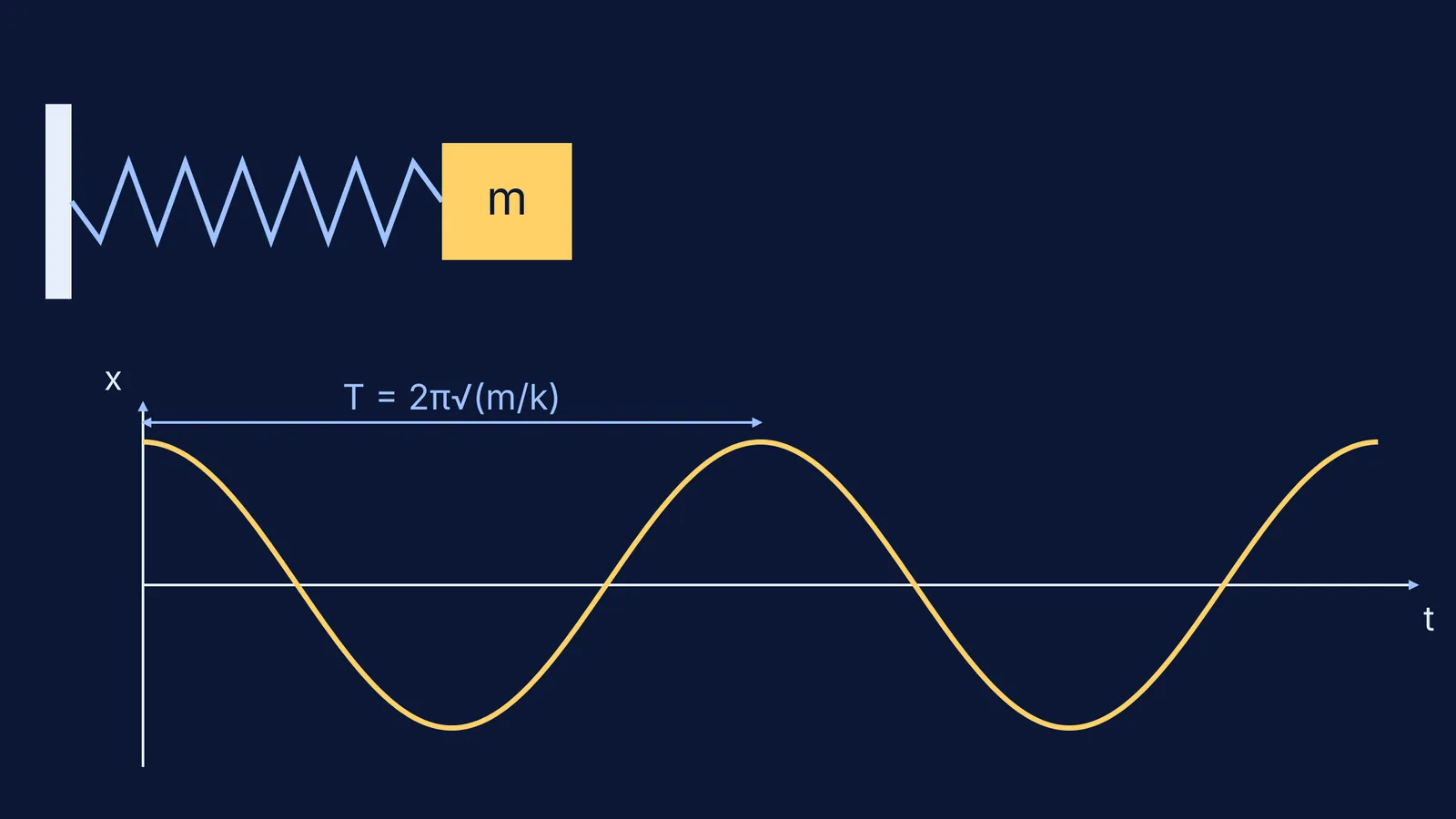
Science and Mathematics: One player covers biology, chemistry, physics, and maths. If your science specialist needs help picturing complex topics like fields or waves, the Fermi Simulation Lab provides interactive simulations for the ideas that are easier to see than to read.
History and Geography: Another player locks down world history, capitals, and historical dates.
Literature and Fine Arts: A third focuses on authors, books, art, and classical music.
Generalist: The team captain often acts as a generalist who picks up current events and sports, and makes the final call during bonus rounds.
How does spaced repetition help memorise facts?
Quiz bowl requires you to recall obscure facts in a fraction of a second. Simply reading lists of facts is not enough because without review, human memory typically halves newly learned knowledge in a matter of days or weeks (Wikipedia). This exponential memory decay is known as the forgetting curve, a concept first hypothesised by Hermann Ebbinghaus in 1885. He measured memory retention using a concept he called "savings"—the relative amount of time saved when relearning information you have forgotten.
To counter this exponential decay, students must use spaced repetition. This technique involves reviewing flashcards or notes at expanding intervals—for instance, after 1 day, 4 days, and 10 days. The increased difficulty of retrieval at these longer intervals creates a deeper level of processing in your long-term memory. Most spaced repetition software adjusts intervals dynamically, aiming for 90% of all material correctly recalled at any given time (Wikipedia). By interrupting the forgetting curve just before a memory fades, each review makes the memory more stable and flattens the curve.
You can read more about what the 2014 Freeman active learning meta-analysis found regarding active recall and student performance.
How to prepare for school quiz competitions?
Building a study habit is a marathon, not a sprint. Success is less about general intelligence and more about mastering the specific "canon" of recurring clues. Here is a practical framework to prepare for your next tournament:
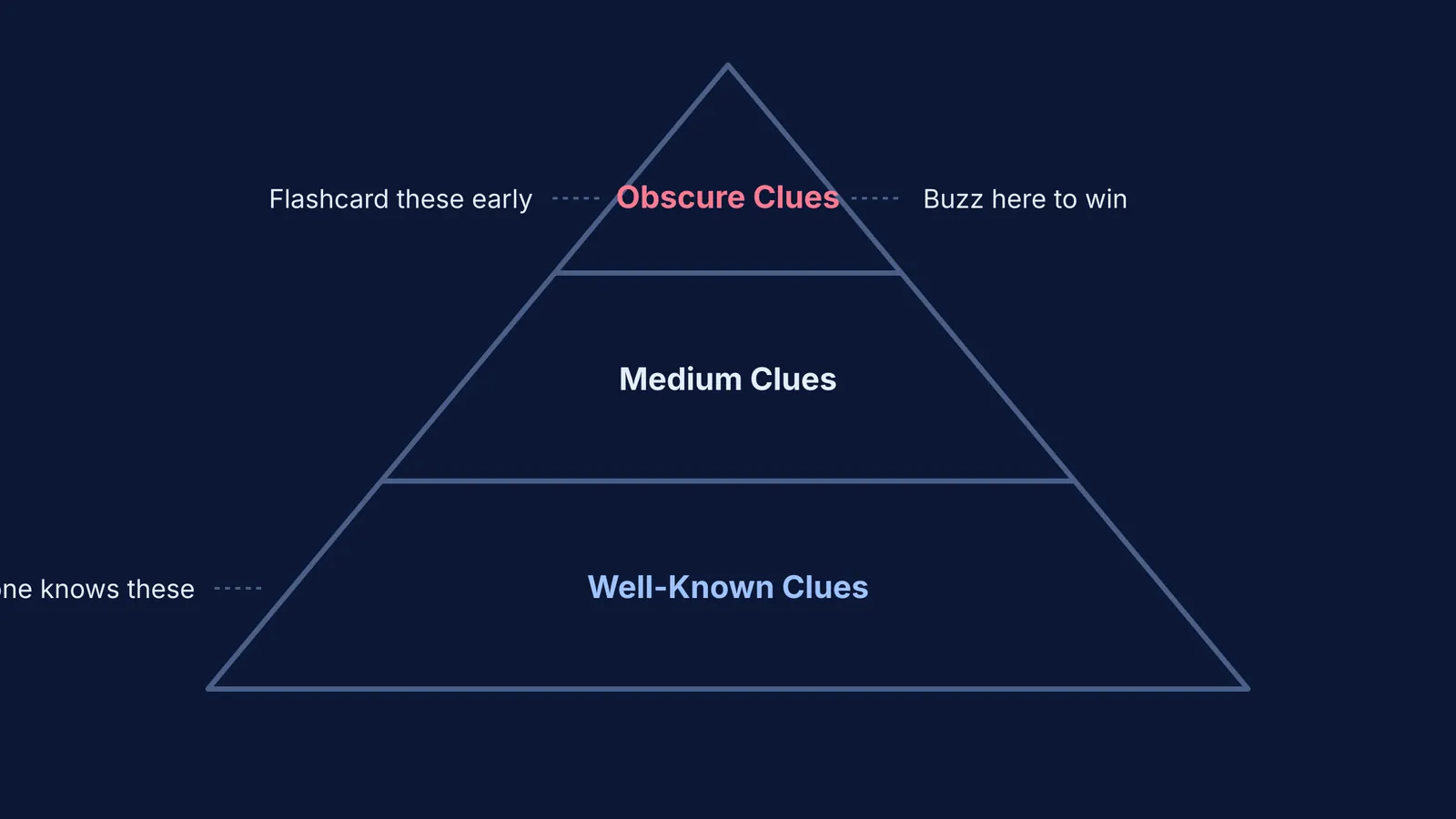
Flashcard early clues: Quiz questions are "pyramidal", meaning they start with obscure, difficult clues and end with well-known, easy ones. When building your spaced repetition deck, always put the obscure, early clue on the front of your flashcard. This trains you to recognise the answer much earlier in the reading.
Read the canon: Familiarise yourself with frequently asked topics by reading old question packets. Note down the specific facts, dates, or works of literature that appear repeatedly. Organizations often publish frequency lists of the most common topics.
Buzzer practice: Speed matters immensely. Run mock rounds with your team where you use a buzzer system or just slap the desk. Learn to buzz in as soon as you recognise a unique clue, rather than waiting for the end of the question. To keep your mind sharp during long practice sessions, read what to do in a study break, according to the research.
Write your own questions: One of the best ways to learn a topic deeply is to research and write an original, pyramidal question about it. This forces you to uncover both the hardest and easiest clues associated with an event or scientific principle.
Learn concepts, not just trivia: For science categories, understanding the underlying mechanism helps you answer multiple questions. Rote learning will only get you so far if a question focuses on the application of a theory. The Fermi Concept Library contains every concept in physics, chemistry, biology, mathematics and computing, each with its own lesson and its place in the map.
If you are balancing quiz practice with demanding competitive exams, consider supporting your child's olympiad preparation: time and pressure to manage workloads and avoid burnout.
Consistent practice and a divided team strategy will make you much faster on the buzzer. Start building your flashcard decks today.