On this page
Replicating the Sun's energy on Earth relies on plasma physics. As global investment in clean energy accelerates, the demand for physicists and engineers to build and operate fusion reactors is growing rapidly.
In India, the central hub for this work is the Institute for Plasma Research (IPR) in Gandhinagar. A career in plasma physics and fusion research involves rigorous physics training, competitive national exams, and the opportunity to work on international megaprojects.
What does a career in plasma physics and fusion research involve?
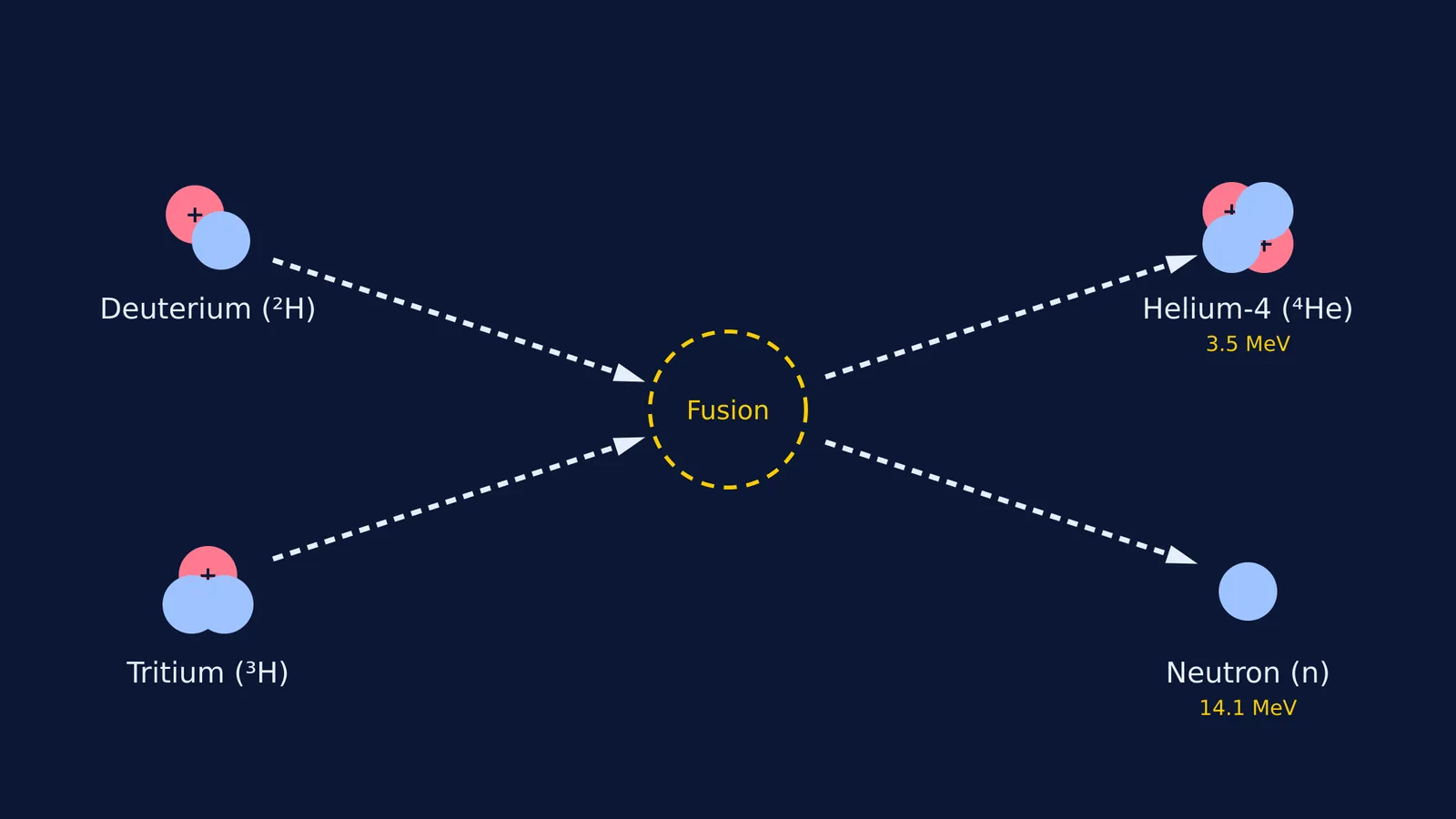
Plasma is the fourth state of matter, forming a superheated gas where electrons are stripped from their nuclei. Since plasmas in fusion reactors reach temperatures much hotter than the Sun's core, they cannot touch physical walls. Instead, they are contained using immense magnetic fields in massive devices called tokamaks.
A career in this field means working on the physical machinery or the theoretical physics that makes this containment possible. As a researcher or engineer, your daily work might involve designing cryogenic cooling systems, modelling how charged particles move in magnetic fields, or analyzing diagnostic data from a tokamak's sensors. The field is highly interdisciplinary, requiring mechanical engineers to build the vacuum vessels and physicists to interpret the behaviour of the plasma inside.
Visualising how these magnetic fields trap charged particles can be difficult with only textbook equations. If you want to build an intuition for these interactions, the Fermi Simulation Lab lets you adjust magnetic field strengths and see how particle trajectories change in real time. For more context on magnetic forces, see how they influence motion in Charged particles in a magnetic field: predict the circle's radius.
What is the path to joining ITER and global fusion projects?
The flagship project in modern fusion research is the International Thermonuclear Experimental Reactor (ITER), currently being built in southern France (iter.org). It is a massive international collaboration designed to prove that a fusion power plant is scientifically and technologically feasible at scale.
India is one of the seven main partners in the project and contributes 9% of the total construction cost (iter.org). This contribution is managed by ITER-India, a nodal agency under the IPR. Working at IPR often means contributing directly to ITER by delivering critical components like the massive cryostat and cooling systems.
Working on such projects requires a deep understanding of the fundamentals. Whether it is calculating the forces in the magnetic coils or modelling the fluid dynamics of the cooling systems, the underlying physics is critical. (If you need to review these basics, this guide explains How to visualise the magnetic field of a wire, loop and solenoid.)
How do you start a career in plasma physics in India?
You do not need a specialized undergraduate degree in plasma physics to enter the field. The most common entry routes are through core engineering branches or pure physics programs.
For science students, the standard path is completing a Bachelor of Science (B.Sc.) followed by a Master of Science (M.Sc.) in Physics. For engineering students, a Bachelor of Technology (B.Tech.) or Bachelor of Engineering (B.E.) in Mechanical, Electrical, Electronics, or Instrumentation engineering is highly valued, as fusion experiments require complex and massive physical infrastructure to operate.
To join institutions like IPR as a researcher, you typically need to clear national-level exams such as GATE (Graduate Aptitude Test in Engineering) or the CSIR-NET. Securing a high rank in these exams qualifies you for rigorous technical interviews conducted by the Department of Atomic Energy (DAE).
If you join a DAE institute as a Junior Research Fellow (JRF) to pursue a Ph.D., you receive a monthly stipend of ₹37,000 (dst.gov.in). Preparing for the GATE and NET requires a deep understanding of core concepts like electrodynamics and statistical mechanics. If you find you have concept gaps during your revision, the Fermi Concept Library has a lesson for every concept in physics and chemistry to help you fill those gaps.
How do you prepare in high school and college?
If you want to build a career in fusion research, use this roadmap to guide your academic choices from high school through postgraduate studies:
Master classical mechanics and electromagnetism (High School): The principles of fusion rely entirely on how forces and fields interact. Focus heavily on mastering these units during your board and entrance exam preparation, rather than just memorising the formulas.
Choose a core discipline (Undergraduate): Enroll in a B.Sc. in Physics or a B.Tech. in Mechanical or Electrical Engineering. Fusion requires theoreticians to model the plasma and practical engineers to build the superconducting magnetic coils.
Target national exams (Postgraduate): If you take the physics route, complete your M.Sc. and begin preparing early for GATE, JEST, or CSIR-NET. Consistent, focused practice with previous years' papers is the most reliable way to clear the strict cutoffs.
Apply to IPR and DAE institutes: Monitor the Institute for Plasma Research careers portal for Ph.D. admissions, which usually open annually around April, or look out for direct recruitment advertisements for Project Scientific Officer positions.
For more on preparing for competitive exams, read our guide on how to learn physics from first principles.