On this page
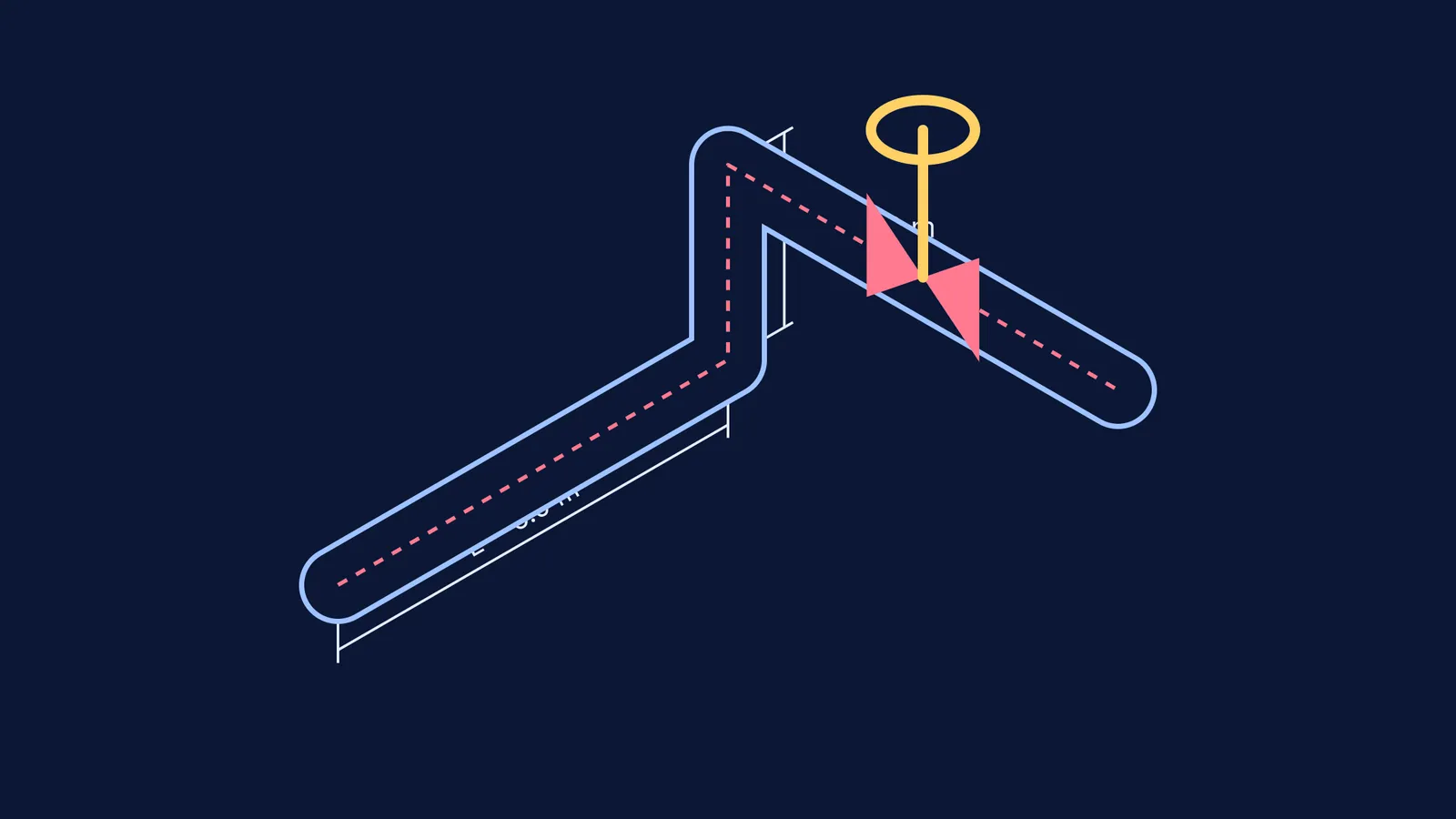
In any refinery, power plant or chemical unit, fluids must be moved from one place to another safely. The engineering discipline of pipe network analysis determines the flow rates and pressure drops in individual sections of a system. A piping design engineer uses this data to route the pipes, select materials, and ensure the entire system will not crack under thermal expansion or extreme pressure. In fluid dynamics, this analysis covers hydraulics networks with many interconnected branches, which is a common problem in hydraulic design.
As a mechanical engineering student, you already have the foundation. Mechanical engineering is the study of physical machines and mechanisms that may involve force and movement. It is an engineering branch that combines engineering physics and mathematics principles with materials science to design, analyze, manufacture, and maintain mechanical systems. It is one of the oldest and broadest of the engineering branches. Piping engineering is the practical application of these subjects on a massive scale. If you are struggling with the underlying physics of fluid mechanics, the Fermi Concept Library holds every concept in physics, chemistry, biology, mathematics and computing, each with its own lesson and its place in the map, so you can find your concept gaps.
What does a piping design engineer do?
The job is typically split into two main tracks:
Layout and design: You figure out the most efficient physical path for pipes to travel through a crowded plant. You must avoid structural beams, leave room for maintenance workers to reach valves, and keep pipe lengths as short as possible to save costs. You also have to consider the operational requirements of the equipment connected to the pipes.
Stress and materials: You calculate the forces acting on the pipes. A pipe carrying high-temperature steam will expand, pushing against its supports. You must design expansion loops and choose materials that can absorb this stress safely. [TODO: Add specific examples of material choices for high-temperature and high-pressure applications in refineries.]
If you want to practice calculating fluid flow before you graduate, you can try problems on the volume of a hollow cylinder pipe.
What software do piping engineers use?
Piping design has moved from physical drafting boards to fully digital 3D environments, making the design process faster and less prone to errors.
PDMS: Plant Design Management System (PDMS) is a multi-user 3D CAD software package for engineering offshore and onshore plants. It is now part of AVEVA's software suite. This software allows multiple engineers to work on the same 3D model simultaneously.
Stress analysis software: Tools like CAESAR II are used to simulate how the pipe will behave under heat and pressure. [TODO: Provide examples of how finite element analysis is applied in these simulations to predict failure points.]
You will often use these tools to spot "clashes"—where a pipe hits a beam or another pipe—before the plant is even built. If you need help visualising 3D intersections in your coursework, Fermi's AI tutor can draw the figure, run the simulation, and check your understanding as it goes.
Why are the ASME codes so important?
You cannot design piping on intuition alone. You must follow strict international codes to ensure safety and compliance, preventing catastrophic failures in industrial plants.
The ASME Boiler and Pressure Vessel Code (BPVC) is a set of standards published by the American Society of Mechanical Engineers (ASME) that provides rules for the design, fabrication, inspection, testing, and certification of boilers and pressure vessels.
ASME B31.3 is the widely used standard for process piping in chemical plants and refineries. It dictates the minimum requirements for materials and components.
These codes tell you exactly what wall thickness you need for a given pressure and what welding methods are acceptable. Knowing how to read and apply them is what separates a mechanical graduate from a hired piping engineer. [TODO: Discuss how engineers stay updated with the biennial revisions of the ASME codes.]
How can mechanical students prepare for a piping career?
Master your core subjects: Fluid mechanics, thermodynamics, and strength of materials are non-negotiable. These form the basis for all piping design calculations.
Learn a 3D modeling tool: Get hands-on practice with AutoCAD Plant 3D, PDMS, or SP3D by taking a student certification course. Familiarity with the interface is a huge advantage.
Read the codes: Skim the first few chapters of ASME B31.3 to understand how codes govern real-world design choices. Look for the sections on material stress limits.
Practice reading P&IDs: Piping and Instrumentation Diagrams are the standard blueprints of the industry. They show the logical flow, rather than the physical layout.
Once you have built your skills, you can read our guide on how to get a job off campus as a fresher in India to start your career. [TODO: Include tips on building a portfolio of piping design projects to show during interviews.]