

On this page
The myth of the perfect first semester is deeply ingrained. Incoming students are often told that college will be the best time of their lives, filled with instant friendships and endless social events. However, the reality of the "transition effect" is often starkly different. When the structured environment and established social networks of high school fall away, it is entirely normal to feel adrift as you settle into a new routine. Acknowledging this gap between expectation and reality is the first step toward managing it effectively.
Why is feeling lonely in first year of college so common?
First-year students are navigating a massive life shift. They are managing new academic pressures, living with strangers in residence halls, and trying to figure out where they belong in a vast campus. This combination of stressors creates a significant vulnerability to isolation. Without the daily interactions they were used to at home, students can easily slip into patterns of withdrawal.
According to a 2024 survey report by Active Minds and TimelyCare, 64.7% of college students report feeling lonely. The same data highlights that students experiencing this loneliness are over four times more likely to face severe psychological distress. The transition to university life forces students to rebuild their entire support system from scratch, often leading to a "belonging gap" in the early months. This gap is a natural consequence of arriving in a new place where deep connections have not yet had time to grow.
Does making new friends immediately cure first-year loneliness?
It might seem that the fastest cure for campus loneliness is making new friends immediately, but research points to an unexpected anchor: parents. The push to socialize constantly can sometimes be counterproductive if those new relationships are still superficial.
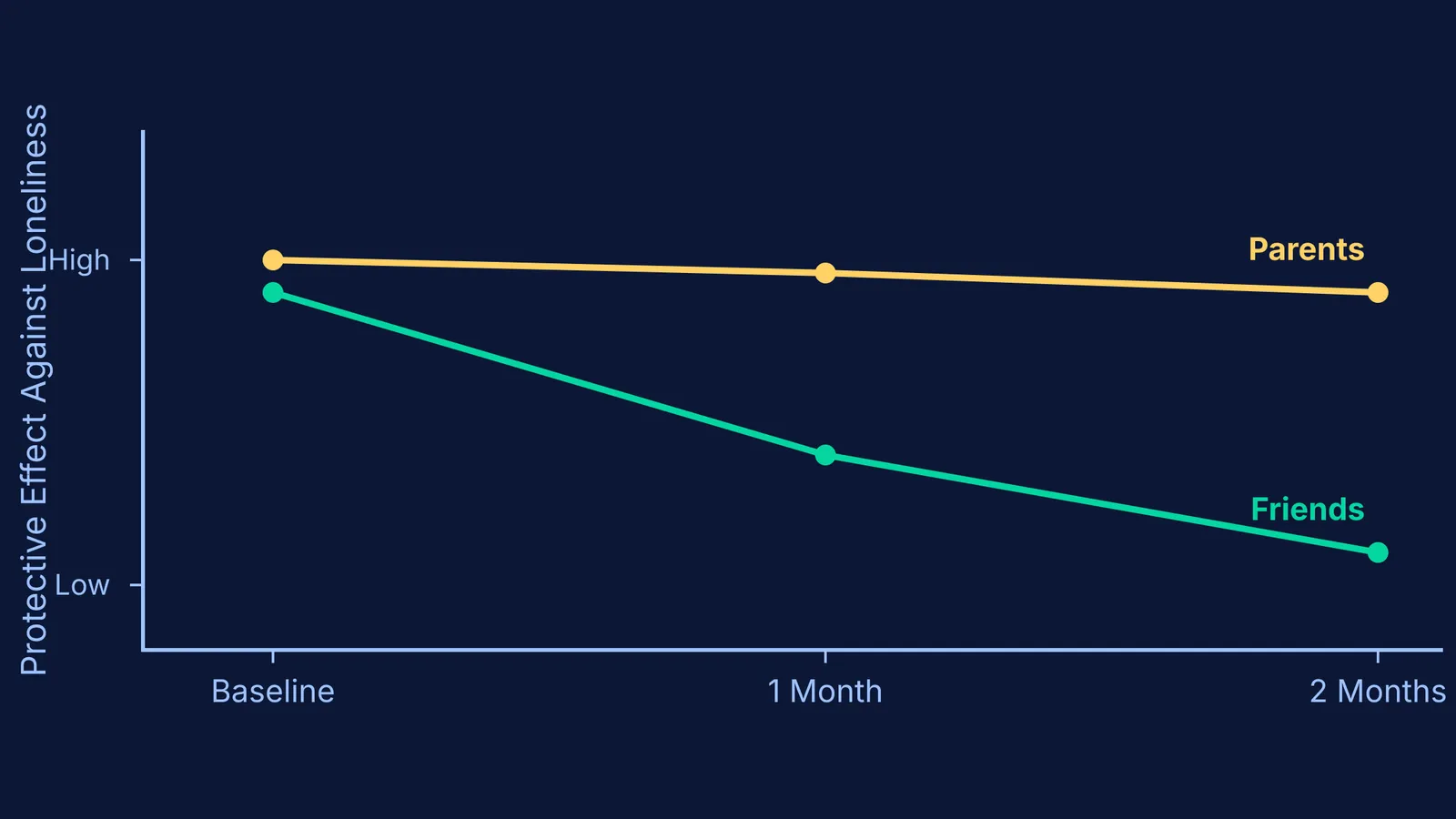
A 2024 longitudinal study published in *Child Psychiatry and Human Development* tracked first-year college students over two months to see how their relationships affected their feelings of isolation. The researchers found that while good relationships with new friends initially helped, their protective effect against loneliness attenuated over time. As the semester progressed and academic stress increased, the comfort of new, developing friendships was often not enough to fully buffer against feelings of isolation.
By contrast, the study found that the quality of a student's relationship with their parents continued to predict lower loneliness even two months post-baseline. Keeping a strong, supportive connection with family provides a stable foundation while students figure out their new social landscape. This stable base gives students the confidence to step out and engage with their campus community without feeling entirely untethered.
Parents can support this by checking in regularly without micromanaging, practicing autonomy-supportive parenting that respects the student's growing independence. Simple acts like listening without immediately trying to solve every problem can reinforce this supportive dynamic.
How can you build a social network in college?
Building a social network takes time. Instead of trying to find best friends immediately, focus on small, low-stakes interactions that build familiarity and a sense of belonging over time.
The "familiar face" strategy: Sit in the same general area for your lectures. Simply being a familiar face makes it easier to strike up a conversation about an upcoming assignment before class starts, gradually turning strangers into acquaintances.
Join one low-commitment group: You do not need to run for student council in your first term. Join a casual club, a study group, or an intramural sports team where the activity itself is the focus. Shared activities remove the pressure of maintaining a conversation.
Protect your academic time to free up social time: Academic stress often breeds isolation because students feel they have no time to socialize. Fermi's AI tutor works out what you already know and builds a plan for the session. When your studying is efficient, you have the mental energy to grab a coffee with a hallmate. For a sustainable approach, learn how to build a study routine that lasts longer than a week.
Where can you find help for college loneliness?
If feelings of isolation begin to affect your ability to attend class, sleep, or eat properly, it is time to seek professional support. Prolonged loneliness can turn into anxiety; recognizing and treating exam nerves as energy is only possible when you are well-supported emotionally.
Most universities have dedicated counselling centres for students. These centres are familiar with transition-related struggles and can offer targeted strategies. In India, you can also reach out to the national mental health helpline, Tele MANAS, at 14416 for immediate, confidential support. Do not hesitate to use these resources; they exist specifically to help students navigate this challenging period.


