On this page
A lot of people think leadership means giving speeches or holding the title of president. In reality, leadership is just the habit of taking responsibility. It starts long before you run for an official board position.
According to a study published by the U.S. National Center for Education Statistics, 30.6% of students who participate in extracurricular activities maintain a GPA of 3.0 or above, compared to only 10.8% of non-participants. The benefits of participating go far beyond academic marks: clubs offer a low-stakes environment to learn how to work with people, solve problems, and communicate effectively.
Before you consider a title, volunteer for a specific, bounded task. Offer to manage the signup sheet for the next debate, or send the weekly email for the science club. This builds reliability. When you show up on time and do what you said you would do, people begin to trust you. Over time, these small acts of service build the foundation of genuine leadership.
How do you organise people in a school club?
The hardest part of any event is getting people to do what they agreed to do. When you take on a small leadership role, you will quickly discover that emails go unread, schedules clash, and volunteers forget their assignments.
Instead of getting frustrated, use this as a chance to learn project management. Managing peers requires patience and clarity.
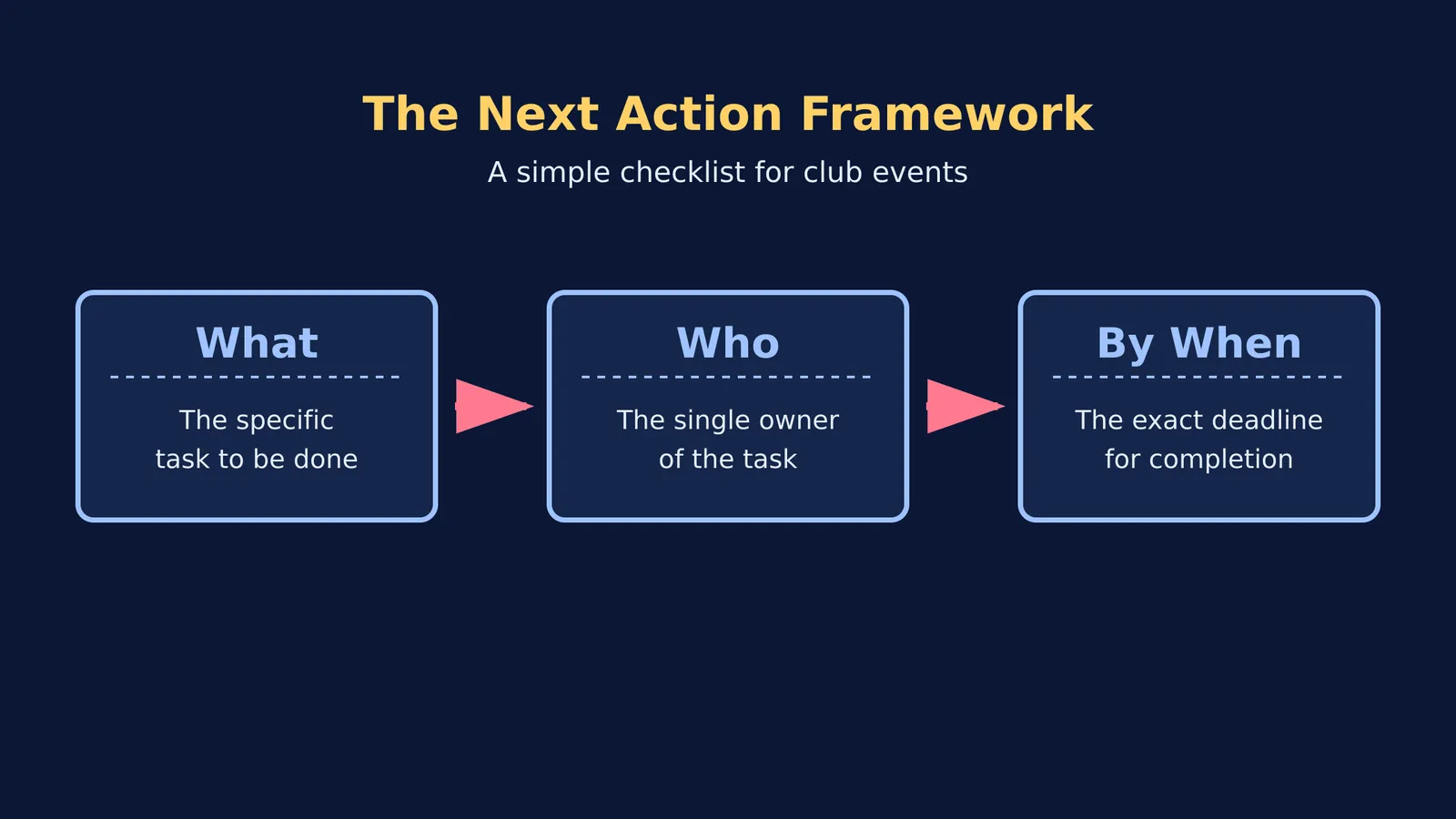
Set clear deadlines: Do not say, "Please send me your slides soon." Say, "Please send me your slides by 4:00 PM on Thursday."
Follow up: A good leader does not assume a task is done just because an email was sent. Check in gently a day before the deadline.
Delegate by strength: If a club member hates speaking in public but loves design, put them in charge of the posters. Recognizing what people are good at makes the whole team stronger. If you are struggling to coordinate group sessions, consider reading our guide on running study groups that work.
What should you do when an event goes wrong?
Extracurricular activities are a real-world laboratory because the consequences of your decisions are immediate. If you forget to book the projector, the meeting cannot happen. If you do not advertise the bake sale, nobody will buy the cookies.
Mistakes are inevitable. The guest speaker will cancel at the last minute, or the budget will run short. When this happens, reframe the failure as feedback. Do not hide the mistake or blame someone else. A strong leader owns the problem and focuses on the solution.
After the event, sit down with your team and ask: "What went well, and what do we need to fix for next time?" This process of reflection turns a chaotic failure into a system upgrade. If the posters were printed too late, the next action is to create a checklist that moves the printing deadline forward by a week.
Why is it important to step back sometimes?
Leadership is not about doing everything yourself. In fact, doing too much leads to burnout and prevents other members from stepping up. When you are given a responsibility, your job is to make sure it gets done, not necessarily to do every part of it manually.
If you are leading a committee, your primary goal is to empower others. Give clear instructions, provide the resources they need, and then step back. This teaches you how to trust your team. It also creates a pipeline of younger students who are ready to take over when you graduate. True leadership is leaving the club stronger than you found it.
How do you balance leadership roles with academics?
When you start taking on more responsibilities, your free time shrinks. You can no longer rely on cramming the night before an exam; you need your study hours to be as efficient as possible.
Instead of staring at a blank page, Fermi's AI tutor can work out what you already know and build a plan for the session, so you sit down to a clear next step. If you missed a class because you were setting up a debate tournament, you can find the exact lesson in the Fermi Concept Library and catch up quickly.
Studying efficiently leaves you with the energy you need to lead, and helps you in building a study routine that lasts. When you manage your time well, you do not have to choose between getting good grades and making an impact in your school community.