

On this page
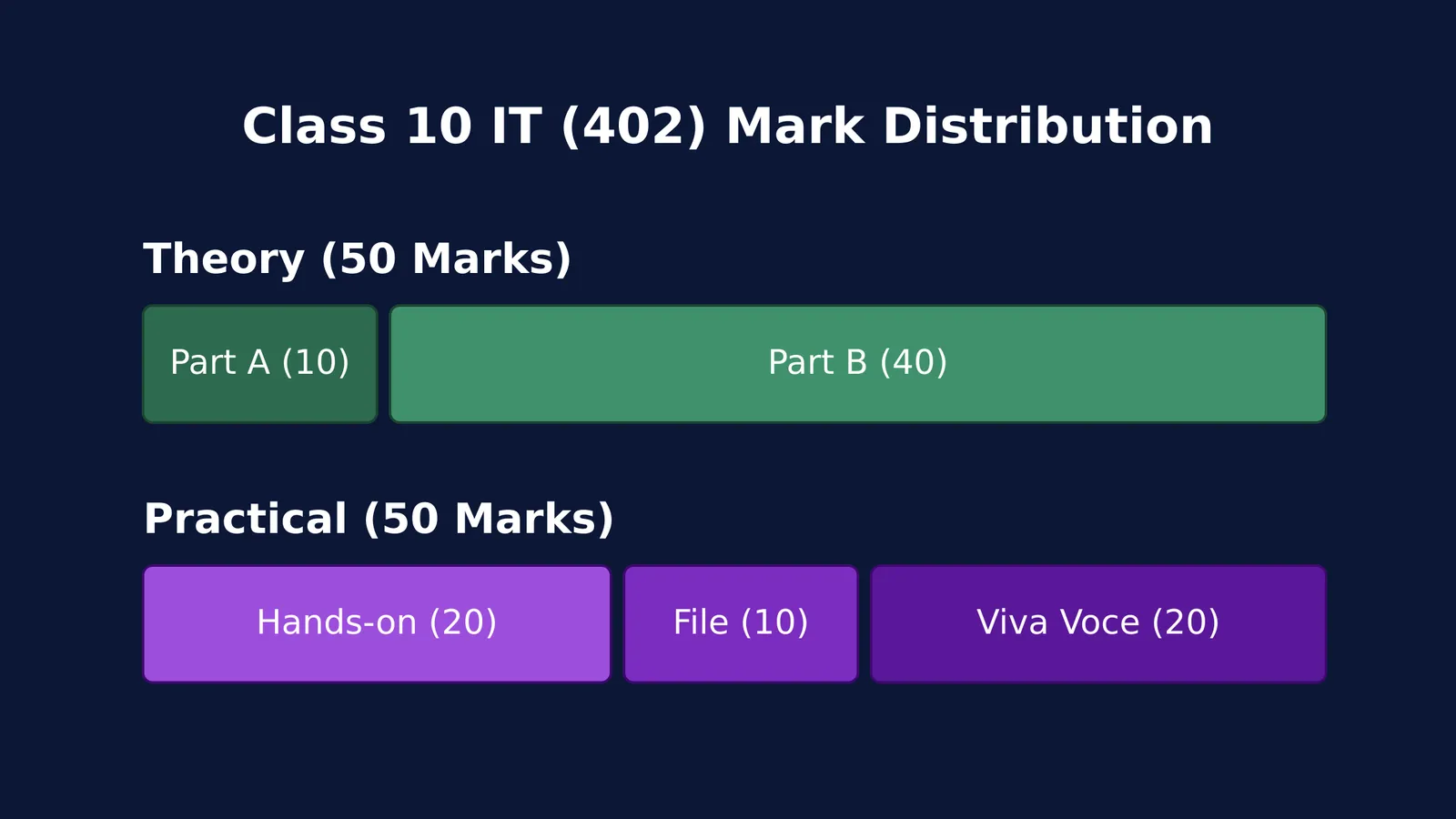
The CBSE Class 10 Information Technology (Subject Code 402) exam is an opportunity to learn practical software skills. The 2024–25 syllabus splits the subject into two equal halves: a 50-mark theory exam and a 50-mark practical exam (CBSE Academic).
The curriculum has shifted focus to open-source software, specifically LibreOffice (Writer, Calc, and Base), and covers networking and workplace health and safety. Here is how to structure your preparation for both the theory and practical sections, whether you are revising during the term or following a school holiday study plan.
How is the Class 10 IT 402 syllabus structured?
The official 2024–25 curriculum divides the theory paper into two parts:
Part A: Employability Skills (10 marks). This covers general skills needed in any workplace, including communication, self-management, basic ICT operations, entrepreneurship, and green skills. It is designed to prepare students for professional environments beyond school.
Part B: Subject-Specific Skills (40 marks). This is the core technical section. It includes Digital Documentation (8 marks), Electronic Spreadsheets (10 marks), Database Management Systems (12 marks), and Web Applications and Security (10 marks). These units dive deep into creating templates, linking spreadsheet data, writing SQL commands, and understanding internet security threats.
The practical exam carries another 50 marks, split into a hands-on practical test (20 marks), a practical file or portfolio (10 marks), and a viva voce (20 marks).
How should you prepare for the IT 402 theory exam?
The biggest mistake students make with IT is treating it like a history subject. You cannot learn software by only reading about it. When the textbook shows a SQL command like `SELECT` or `UPDATE`, open LibreOffice Base and type it in. As the 2013 Dunlosky review of study techniques found, practice testing is far more effective than re-reading. Test yourself by closing the book and trying to build a small database from scratch.
The syllabus gives the highest weightage (12 marks) in Part B to the Database Management System (DBMS) unit. You will need to understand concepts like primary keys, foreign keys, and referential integrity. You must also be able to write basic SQL queries using commands like `INSERT`, `DELETE`, and `ALTER`. If you are struggling to picture how relational databases connect tables, Fermi's AI tutor can work out what you already know and build a plan for the session to explain it from first principles.
The Web Applications and Security unit (10 marks) includes a section on workplace safety alongside internet fundamentals. It focuses on hazard types, evacuation plans, and emergency procedures, as well as protecting data from phishing and malware. Because it relies on standard protocols, it is a reliable place to score marks by memorising the textbook definitions and listing safety steps clearly in your answers.
How should you prepare for the IT 402 practical exam?
According to the CBSE guidelines, your practical file is worth 10 marks and serves as proof of your work throughout the year. Keep it updated with screenshots of your work in LibreOffice Writer, Calc, and Base. Ensure that you document every step, from applying styles in Writer to setting up a one-to-many relationship in Base.
For the viva (20 marks), the examiner wants to verify that you performed the practical tasks yourself. Be ready to explain the steps you took in your own words. Knowing the difference between "Consolidating" data and "Linking" data in a spreadsheet, and being able to explain when you would use each, matters more than reciting a definition. The examiner might ask you how you would freeze rows or share a document, so practical familiarity is essential.
Finally, solve the official 2024–25 Sample Question Paper (SQP) released by CBSE. The exam has no negative marking, and the subjective section now includes case-based questions that test how you would apply a tool to a real-world scenario. Practicing these papers under timed conditions will help you manage the two-hour duration of the theory paper effectively.
Download the official syllabus and sample papers from the CBSE Academic portal to start your revision.


