On this page
The gig economy offers a flexible way for college students to earn money and build a resume before graduation. Instead of waiting for placements, you can sell your skills online today. However, navigating international freelance platforms requires knowing what to sell, how to price it, and how to stay safe from common scams.
What freelance skill should I learn?
As a fresher, you might not have a long CV, but you have time to learn a specific, high-demand skill. India had an estimated 7.7 million gig workers in 2020–21, according to the NITI Aayog. While the gig economy is vast, college students usually focus on high-skill digital tasks like web development, graphic design, content writing, or data analysis.
Start by picking one narrow niche rather than offering to do everything. If you choose to learn the mathematics or computing concepts needed for data analysis, you can use Fermi's AI tutor. The tutor teaches rather than answers, working out what you already know and building a plan for the session, so you sit down to a clear next step in your learning.
How do I build a freelance portfolio?
Clients care about what you can do, not where you are studying. Before you apply for your first job on platforms like Upwork or Fiverr, you need a portfolio of two to three realistic sample projects.
Coders: Build a simple web dashboard, or start by learning how to build your first mobile app as a student. Push your code to a public repository so clients can review it (see our guide on how to build a GitHub profile as a student).
Writers: Write three well-researched articles on topics you want to be hired for, and publish them on a free blog platform.
Designers: Create sample brand kits, logos, or social media graphics for imaginary companies to demonstrate your aesthetic range.
How much should a student freelancer charge?
Pricing is often the hardest part for students. It is tempting to offer your work for almost nothing to secure your first client, but pricing yourself too low can attract bad clients who expect endless revisions and devalue your time.
Most platforms also take a fee that you must account for. Fiverr charges a 20% commission on every transaction, meaning you only keep 80% of what the client pays (Fiverr Help Center). You must factor this cut into your prices. If your goal is to earn ₹1,000 for a task, you need to charge at least ₹1,250 to cover the platform's share.
Start with a reasonable entry-level rate for your niche and increase it as you gather positive reviews and build a reputation for reliability.
How can I avoid common freelance scams?
New sellers are prime targets for scammers on freelance platforms. Since you do not have an established history, bad actors will try to exploit your eagerness to land a first job. Watch out for these three common traps:
The off-platform trap: If a client immediately asks you to contact them on Telegram, WhatsApp, or Discord, refuse. Moving communication off the platform strips you of payment protection and violates the terms of service.
The free sample scam: A client may ask you to complete a "short test task" before they hire you. If the task is a complete piece of work, like writing a full article or coding a whole web page, they are likely trying to get free labour from multiple students.
Upfront fees: A legitimate client will never ask you to pay a "security deposit," an "onboarding fee," or money for "special software" before you start working. If a client asks you to send them money, it is a scam.
How do I get my first freelance client?
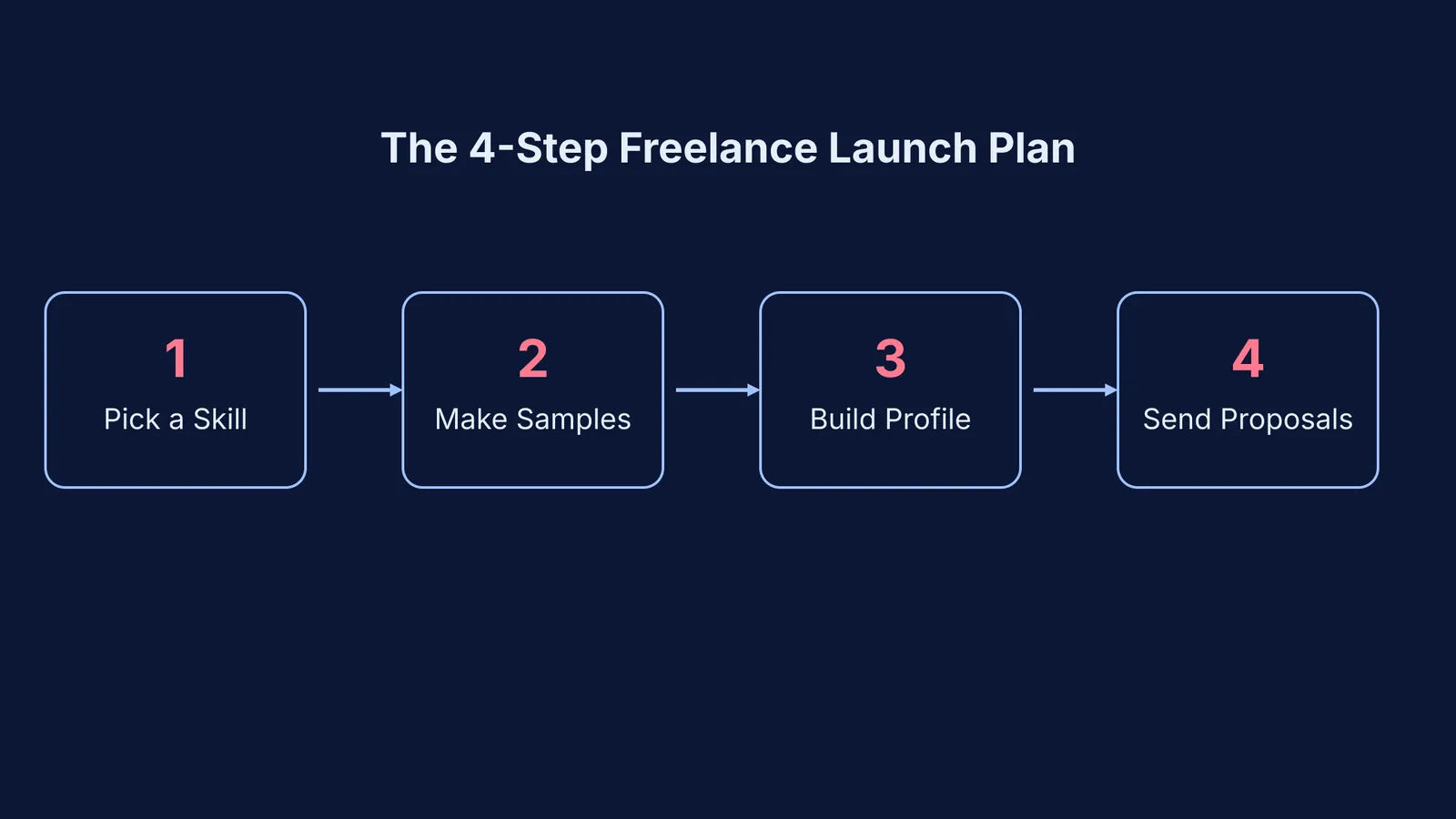
Instead of waiting for an off-campus job search after you graduate, use your college years to build a steady freelance habit. Follow this launch plan:
Pick one skill: Choose a specific digital service you can learn and practice within a month.
Create three samples: Build a mini-portfolio that proves you can deliver high-quality work.
Set up your profile: Register on a platform like Fiverr or Upwork. Write a clear, error-free description of what you do, and upload your best samples.
Send tailored proposals: Do not copy and paste the same message to every client. Write two sentences explaining exactly how you will solve their specific problem based on their job posting.
Working as a freelancer in college teaches you communication, time management, and negotiation—skills that will serve you long after you complete your degree.