

On this page
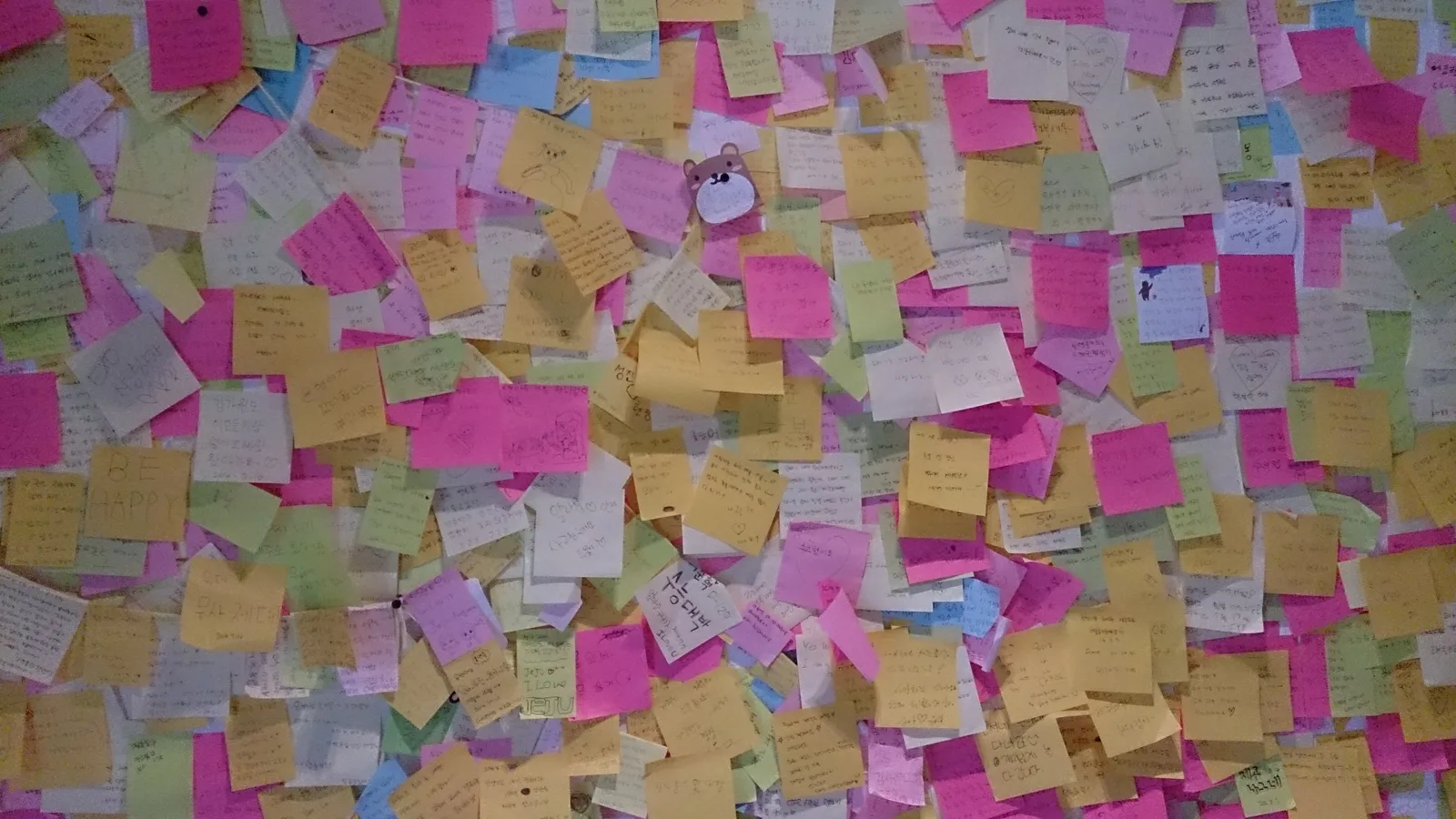
Walk into the room of many JEE or NEET aspirants and you will find the same things: a periodic table above the desk, a sheet of trigonometric identities near the mirror, a row of sticky notes on the cupboard door. Putting them up feels like progress. But does looking at them every day put the formulas in your head? Memory research says not by itself, though the same chart becomes useful once you change how you use it.
Do formula charts on the wall help you memorise?
Being in front of your eyes is not enough. In a study by Alan Castel, Michael Vendetti and Keith Holyoak, people who worked in an office building were asked where the nearest fire extinguisher was. Despite years of exposure to it, a majority failed to remember its location, even though they found it quickly when asked to search for it. The researchers describe this as a difference between seeing an object and noticing it.
A second study tested something people see even more often. Only 1 participant out of 85 correctly drew the Apple logo from memory, and fewer than half picked the correct logo from a set of options.
Your formula chart can go the same way. After the first week it turns into wallpaper: it feels familiar, and familiarity is easy to mistake for knowing. We have written more about this trap in why rereading feels like learning when it isn't.
What actually makes a formula stick?
Pulling it out of your memory, not putting it in front of your eyes. Henry Roediger and Jeffrey Karpicke had students study prose passages and then either take recall tests or restudy the material the same number of times. On a test 5 minutes later, restudying did better; on tests 2 days and 1 week later, the students who had practised recall remembered substantially more, even though restudying made students feel more confident.
A large review of 10 common study techniques by John Dunlosky and colleagues reached a similar conclusion. Practice testing and distributed practice were rated high utility, while rereading and highlighting were rated low utility.
A chart you glance at is rereading. A chart you test yourself against is practice testing.
How do you turn a wall chart into a recall prompt?
Use a simple routine: question on the wall, answer out of sight, recall before you check.
Put the question on the wall, not the answer. A sticky note says "Lens formula, with sign convention?" or "Moment of inertia of a disc about a diameter?" The answer goes on the back or in your notebook.
Recall before you look. Say it or write it on scrap paper, including what each symbol means and when the formula applies.
Check, then mark. Flip the note. Right: add a small tick. Wrong or shaky: write the correct version once, then try again later that day.
Rotate. When a note has ticks from three different days, take it down and put up a new one.
Keep the full chart in a drawer. It is your answer key, not your decoration.
What does a kinematics poster look like as recall questions?
Before: a printed poster with v = u + at, s = ut + ½at² and v² = u² + 2as.
After: three sticky notes.
"No time given in the question. Which equation?" (Back: v² = u² + 2as.)
"Ball dropped from rest. Distance fallen after time t?" (Back: s = ½gt², because u = 0.)
"Taking up as positive, what sign does the acceleration due to gravity get?" (Back: negative, a = −g.)
These test when to use each equation, which is what exam problems ask you to do. Next step: building your own formula sheet and testing yourself on it.
What can't a wall chart do?
Explain where a formula comes from. If you cannot say what a symbol means or why the formula holds, a chart will not fix that. The Fermi Concept Library has a lesson for each concept in physics, chemistry, biology and mathematics, so you can go back to the idea behind a formula you keep forgetting.
Give you practice applying it. Knowing v² = u² + 2as is different from spotting that a problem needs it. For that you need worked problems; the Fermi Problem Library has a step-by-step solver that explains the reasoning rather than printing an answer.
Schedule your revision. A wall shows you the same notes every day. Distributed practice, the other technique the Dunlosky review rated high utility, means spreading reviews out over days; see how to make flashcards that work for physics and chemistry.
A note for parents
Instead of asking "Have you looked at your chart today?", try "Don't look. What's the formula for the area of a sector?" A quick question at dinner, with "I don't know" treated as a normal answer, is practice testing; a new poster is not.
Tonight, take one chart down, turn three of its formulas into questions, and stick those up instead.


