

On this page
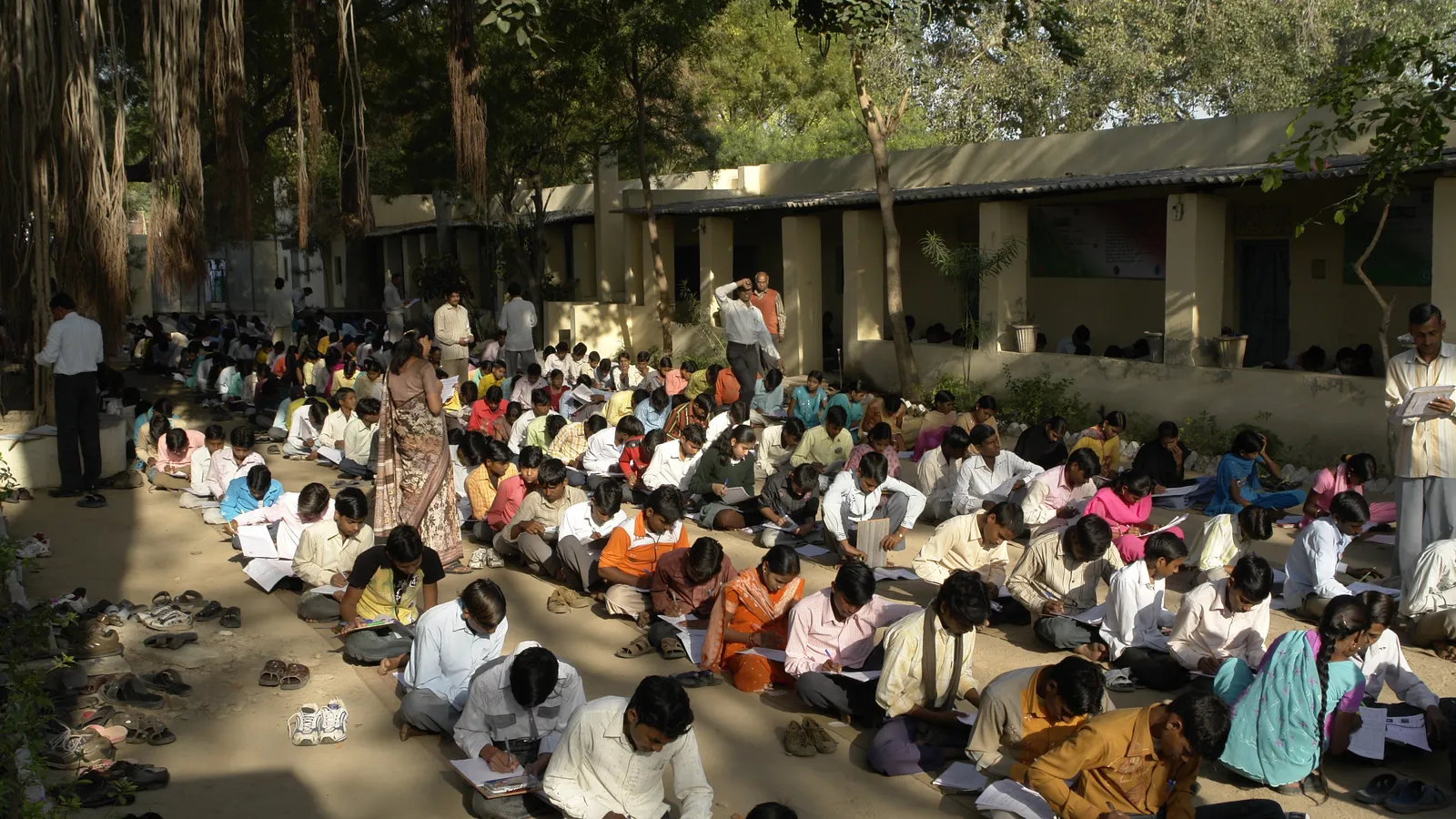
You have prepared for months, and then the hall hands you something you never practised for: a rattling fan, an AC set to freezing, invigilators chatting by the door, or a neighbour clicking a pen for three hours. None of this is your fault, and much of it can be fixed or reduced quickly, within the rules.
Why do small noises in the exam hall break your focus?
A Bayesian meta-analysis by Vasilev, Kirkby and Angele pooled 65 studies and found that background noise, speech and music all have a small but reliable harmful effect on reading. Speech you can understand (along with music with lyrics) distracted readers most, and more than speech they could not understand. So a whispered conversation in a language you know pulls at you more than traffic outside.
A meta-analysis by Szalma and Hancock combined 797 effect sizes from 242 studies and found that whether noise was steady or came and went was one of the main things that changed its effect. A sudden tap is a different problem from a steady hum, and you can handle them differently.
How do you handle each distraction in the exam hall?
The rule of thumb: if a fix is quick and needs no talking, do it yourself. If it needs someone else, raise your hand once, early.
Steady noise (fan, generator, traffic): give it a few minutes and see if you settle into it. If it still bothers you, ask to change seats.
Talking invigilators or people outside: this is the kind of sound that distracts readers most. Raise your hand and ask politely (script below).
A tapping neighbour: don't speak to them, since talking to another candidate can look like copying. Tell the invigilator quietly.
A freezing AC: ask early, before your hands go stiff (more below).
People turning pages or leaving early: this tells you nothing about your paper. Keep your eyes on your own sheet and clock.
Your own racing thoughts: use the 3-step reset further down.
What you may carry differs by exam. Earplugs, a shawl or a jacket are fine only if your admit card or the official instructions say so. If unsure, assume no, and check a few days before rather than at the gate.
What should you say to the invigilator?
Keep it short, quiet and about a fix, not a complaint. Raise your hand, wait for them to come to you, and say one of these:
"Sir/Ma'am, the talking near the door is making it hard to concentrate. Could it be a little quieter, please?"
"The student behind me keeps tapping. Could you ask them to stop, please?"
"I'm right under the AC and it's very cold. Could I move seats, or could it be turned up a little?"
Then go straight back to your paper. If nothing changes, use the reset and carry on.
How do you stay focused in a cold exam hall?
Cold is not only uncomfortable; it may slow you down. Studies of office work summarised by Lawrence Berkeley National Laboratory found performance was highest at about 71°F (around 22°C) and fell as the air got warmer or colder. These were office tasks, not exams.
Wear full sleeves or layers only if your exam's dress code allows it; some entrance exams set strict rules.
Ask to move away from the vent before the paper starts.
Warm your writing hand between questions by tucking it under your arm for a few seconds.
Eat a proper meal beforehand so you are not cold and hungry.
How do you get your focus back after a distraction?
Even with every fix in place, your mind will drift. Use this 3-step reset:
Notice: tell yourself, "I've lost the thread." Don't fight it.
Anchor: put your pen tip on the last line you understood, then reread the whole question from the start.
Re-enter: write one small thing down, such as the given values or a diagram. Getting something on the page gives you a way back in.
If a question still won't come back, mark it and move on; see how to check answers in the last minutes of an exam.
Practise this in mock tests: sit at least one with a fan on or family moving around. If a distraction made you lose the method halfway through a problem, rework it afterwards with the Fermi Problem Library, whose step-by-step solver explains the reasoning, so the method holds up next time.
Nerves make every noise louder. A good night's rest helps (see what science says about sleep before an exam), and so does reframing exam nerves as energy.
The Health Ministry's Tele MANAS service offers 24x7 tele-mental health counselling on the toll-free number 14416, across India.
Before your next exam, write the three invigilator lines on a card and read them once, so they are ready when you need them.


