

On this page
Most students focus entirely on tuition fees when planning to study overseas, spending hours comparing university brochures and scholarship options. However, the day-to-day cost of living—encompassing rent, groceries, daily transit, and health insurance—often accounts for a massive portion of the overall educational budget. Estimating these costs accurately is essential to avoid financial stress mid-semester, allowing you to focus on your coursework rather than worrying about whether you can afford your next electricity bill.
What are the official financial requirements?
Before building a personal budget, look at the host country's student visa requirements. Immigration authorities set a minimum amount you must have in your bank account, which serves as a realistic baseline for survival costs in that country.
For Canada, a single applicant must prove they have $20,635 CAD for their first year of living expenses (excluding tuition and travel) official IRCC guidelines.
For the UK, you must show £1,529 per month for up to 9 months if studying in London, or £1,171 per month outside London UK Government student visa rules.
How is a typical student budget broken down?
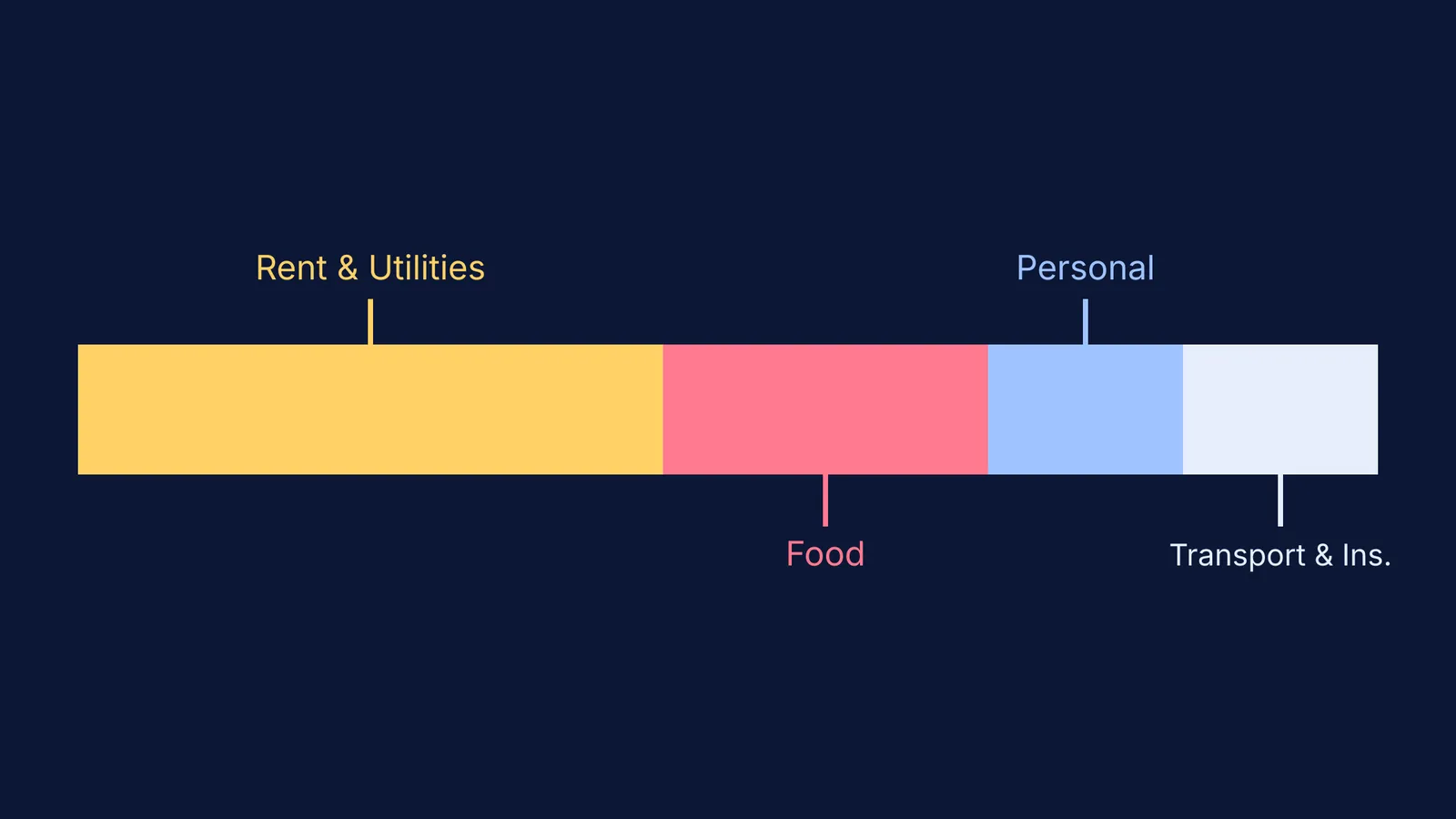
While costs vary wildly between a bustling hub like New York and a smaller university town, the proportion of your money going to different needs stays roughly the same. A standard monthly budget breaks down into four main categories.
1. Rent and utilities
Housing will always be your largest expense. This includes your room, electricity, heating (which can spike in winter), water and internet. To keep this manageable, many students opt for university-managed dorms or share off-campus apartments. If you are preparing for exams and studying in a hostel, having a quiet, reliable space is worth the investment.
2. Food and groceries
Cooking at home is the easiest way to control this bucket. Students who cook most of their meals spend significantly less than those relying on university dining plans or eating out. Use tools like Numbeo to check the price of basic staples—such as milk, rice or chicken—in your destination city.
3. Personal and entertainment
This covers clothes, toiletries, phone bills, streaming subscriptions, and going out with friends. It is important to separate your strict survival needs from these discretionary wants. While it is tempting to explore every aspect of a new city, creating a secondary discretionary budget ensures you do not accidentally overspend on entertainment at the expense of your core necessities.
4. Transportation and health insurance
In cities with robust public transit networks, a monthly student pass is usually heavily discounted and provides a cost-effective way to commute between campus and home. In locations where cars are necessary, this budget must absorb higher costs for fuel and maintenance. Additionally, comprehensive health insurance is typically mandatory for international students, so you should research your host country's healthcare system and your specific university requirements.
How can you handle the first month buffer?
When you first arrive, you will face several one-time setup costs. These include a security deposit for your apartment, buying bedding, kitchen utensils, textbooks, and perhaps a winter coat.
A common rule is to budget extra funds for your first month to absorb these shocks without dipping into your tuition savings.
How can you plan for self-study and support?
Studying in a new country often means leaving behind your usual support network. If you decide to save money by self-studying rather than paying for extra local tutoring, maintaining your academic momentum is crucial. Fermi's AI tutor works out what you already know, builds a plan for the session, and teaches through it—writing on a board and checking understanding as it goes. This allows you to build a study routine that lasts even when managing a tight budget away from home.
By mapping out these categories before you apply, you can focus on your studies rather than worrying about the next rent payment.


